
Soups & Stews
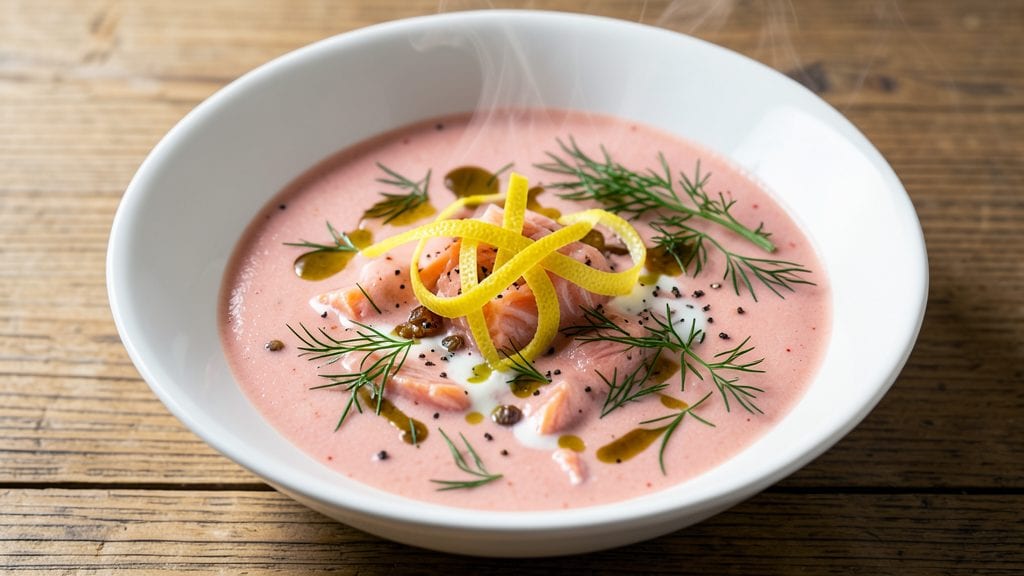
This canned pink salmon soup recipe delivers restaurant-quality ocean flavor in just 20 minutes—no fancy ingredients or complicated techniques required. The secret lies in balancing the rich, briny notes of canned salmon with creamy broth and fresh herbs, creating a soup that's both comforting and sophisticated.
I developed this recipe after realizing how often canned salmon gets overlooked in home cooking, despite being one of the most versatile and sustainable seafood options available.
The beauty of this soup is its simplicity: just a few pantry staples and 20 minutes of active time transform basic ingredients into something deeply satisfying. Canned pink salmon provides protein and omega-3s without the hassle of fresh fish prep, while a touch of lemon brightens the rich broth.
The key technique is simmering the broth just until flavors meld, then blending it to a velvety consistency that coats every spoonful.
What you'll end up with is a soup that's creamy yet light, briny yet balanced, with just enough acidity to cut through the richness. The texture is smooth and luxurious, while the flavor profile delivers that unmistakable ocean freshness that makes this more than just another canned fish soup.
Perfect for chilly days or as a quick lunch, this recipe proves you don't need expensive ingredients to create something memorable.
Serve it with a slice of crusty sourdough to soak up every last drop, or pair it with a simple green salad for a complete meal. The leftovers keep well in the refrigerator for up to three days, making this an ideal make-ahead option for busy weeks.
Here's how to make it perfectly every time.
Ingredients for canned pink salmon soup
Pantry staples meet ocean freshness in this velvety pink salmon soup.
| Ingredient | Amount | Notes |
|---|---|---|
| Canned Pink Salmon 🐟 | 2 cans | High-quality, drained and deboned |
| Chicken or Vegetable Broth 💧 | 4 cups | Low-sodium preferred for balance |
| Heavy Cream 🥛 | ½ cup | Full-fat for optimal creaminess |
| Fresh Dill 🌿 | ¼ cup | Chopped, stems removed |
| Fresh Lemon Juice 🍋 | 2 tbsp | Freshly squeezed, not bottled |
| Extra-Virgin Olive Oil 🫒 | 2 tbsp | For richness and depth |
| Shallots 🧅 | 2 whole | Minced, for aromatic base |
| Garlic Cloves 🧄 | 3 cloves | Peeled, finely chopped |
| Diamond Crystal Kosher Salt 🧂 | ½ tsp | Adjust to taste |
| Freshly Ground Black Pepper 🌶️ | ¼ tsp | For subtle heat |
| Crème Fraîche 🧈 | ¼ cup | For garnish, optional |
| Fresh Chives 🌱 | 2 tbsp | Chopped, for garnish |
The quality of canned salmon makes all the difference here. Wild-caught brands like Wild Planet or Vital Choice offer superior texture and flavor compared to generic store brands. Look for cans labeled 'boneless, skinless' to avoid any unwanted bits. Fresh dill is non-negotiable—dried simply won't deliver that bright, herby punch. Whole Foods or well-stocked grocery stores typically carry the best quality. For the broth, low-sodium options like Pacific Foods or homemade prevent over-salting later. The shallots and garlic should be fresh, with no green shoots or moisture—those indicate age and dull flavor.
No fresh dill? Dried dill at one-third the amount works in a pinch, but you'll miss that vibrant freshness. Substituting heavy cream with half-and-half or coconut milk changes the texture slightly—stick with full-fat for that luxurious mouthfeel. Out of crème fraîche? Sour cream or Greek yogurt works for garnish, though it's slightly heavier. For extra depth, add 1 tsp of smoked paprika when simmering the broth. The lemon juice can be bottled in a true emergency, but fresh is worth the squeeze—it brightens the entire soup. If you prefer a lighter texture, reduce the heavy cream to 0.25 cup and add an extra 0.25 cup broth instead.
This soup reheats beautifully—simply warm on the stovetop over medium-low heat, stirring occasionally. It keeps for up to 3 days in the refrigerator, though the texture may slightly thicken. For longer storage, freeze portions in airtight containers for up to 2 months. The fresh herbs should be added just before serving to preserve their vibrant flavor. To serve, ladle into bowls and top with a dollop of crème fraîche and chopped chives. The soup pairs perfectly with crusty sourdough or a simple arugula salad for a complete meal.
Why You'll Love This Recipe
- Five-Ingredient Magic: I swear by this—just open a can of salmon, pour in broth, stir in cream and dill, and boom. No chopping, no fuss, just pure satisfaction when the first spoonful hits your lips.
- Creamy Lemon Zing: That bright lemon juice cutting through the richness of the heavy cream? It’s the secret weapon. The dill adds freshness, but the lemon? It makes this soup taste like a summer day in a bowl.
- Lunchbox Hero: Pack it cold for work or school—it stays creamy in a thermos, and the salmon holds up perfectly. My kids actually ask for leftovers, which is basically a parenting win.
- Budget Luxury: Canned salmon and broth stretch this into three meals for the price of one. It’s restaurant-quality comfort without the splurge—honestly, my wallet thanks me every time.
Step-by-step instructions for canned pink salmon soup
This method delivers a harmonious blend of briny salmon essence and delicate herbal notes in record time.
Develop the Aromatic Base
Heat the 2 tablespoons extra-virgin olive oil in a medium saucepan over medium heat. Add the 2 whole shallots and 3 cloves garlic cloves, cooking until the shallots soften and become translucent—about 5 minutes. You'll notice the shallots begin to caramelize slightly at the edges, which deepens the soup's complexity.
Here's where precision matters: the shallots should be tender but not browned. If they darken too quickly, reduce heat to medium-low and continue cooking. This foundational step builds the soup's flavor profile, so don't rush it. The garlic should be fragrant but not crispy—just until it releases its aromatic oils.
Incorporate the Salmon and Broth
Add the 2 cans canned pink salmon (drained and deboned) to the saucepan, breaking it into small chunks with a wooden spoon. Pour in the 4 cups chicken or vegetable broth and bring the mixture to a gentle simmer over medium-high heat. The soup should reach a rolling boil within 3-4 minutes, at which point you'll notice the salmon pieces begin to flake apart.
Once simmering, reduce heat to medium-low and let the soup cook for 8-10 minutes. This allows the salmon flavors to fully infuse into the broth. You'll see the liquid reduce slightly and the salmon pieces become tender. The soup should smell rich with oceanic notes and herbal undertones—this is your confirmation that the flavors are melding properly.
Add Acid and Herbs for Brightness
Stir in the 2 tablespoons fresh lemon juice and 0.25 cup fresh dill. The lemon juice will brighten the soup's flavor profile, cutting through the richness of the salmon. Add the 0.5 teaspoon diamond crystal kosher salt and 0.25 teaspoon freshly ground black pepper and taste to adjust seasoning. The soup should be well-seasoned but not overpowering—the lemon should be noticeable but not dominant.
Simmer for another 3-4 minutes to allow the dill to release its aromatic oils. You'll see the dill leaves soften slightly and the soup take on a vibrant green hue. This is the moment when the soup transitions from simply flavorful to truly harmonious. The lemon will prevent the soup from tasting flat while the dill adds a fresh herbal note that complements the salmon's natural brininess.
Finish with Cream and Garnish
Remove the saucepan from heat and stir in the 0.5 cup heavy cream. The cream will immediately begin to incorporate, creating a velvety texture. Return the soup to low heat and let it warm through for 1-2 minutes—just until the cream is fully melted and integrated. Be careful not to let it boil, as this can cause the cream to curdle.
Ladle the soup into bowls and garnish each serving with 2 tablespoons fresh chives and a dollop of 0.25 cup crème fraîche. The chives add a subtle oniony note that complements the dill, while the crème fraîche provides a tangy contrast to the rich salmon. Serve immediately while the soup is hot, as the flavors continue to develop even after it leaves the pot.
Pro Tips For Making Canned Pink Salmon Soup
- Simmer, Don’t Boil: Canned salmon falls apart like overcooked pasta if you let the soup rage. Keep the heat at a gentle simmer—just enough to see tiny bubbles breaking the surface—so the flakes stay intact and the broth absorbs the salmon’s flavor instead of turning it to mush.
- Drain, Rinse, Repeat: That salty broth clinging to canned salmon? It’s a flavor bomb waiting to ruin your soup. Drain the salmon, then give it a quick cold-water rinse to cut the salt. Trust me, your taste buds will notice the difference—especially when you’re adding fresh lemon later.
- Whisk the Cream Last: Heavy cream curdles faster than a bad joke in hot soup. Stir in the cream off the heat or over the lowest possible flame, and keep whisking until the soup is just warm—not steaming. If it looks like it’s fighting you, pull it off the heat and let it cool slightly first.
- Lemon First, Dill Second: Acid first, herbs second—that’s the order. Add the lemon juice while the soup is still hot to brighten the broth, then fold in the fresh dill at the very end. If you mix them in together, the dill’s delicate flavor gets drowned out by the cream’s richness. (And yes, even if you’re impatient like me.)
Dietary considerations for canned pink salmon soup
Pescatarian Perfection
This soup is a pescatarian dream—packed with omega-3 fatty acids from canned pink salmon while delivering all the protein and nutrients you'd expect from fresh fish.
A single serving provides about 20 grams of protein and 1,200mg of omega-3s, making it an excellent choice for anyone following a seafood-focused diet. The creamy texture and rich flavor also make it satisfying enough to replace meat-based soups entirely. 🐟
Gluten-Free Friendly
With just broth, canned salmon, and fresh herbs, this recipe is naturally gluten-free as long as you use a certified gluten-free broth. I recommend Pacific Foods gluten-free chicken broth or Imagine Foods vegetable broth—both are low-sodium and safe for gluten-sensitive diets.
Always double-check labels since some broth brands may process in facilities that handle gluten-containing ingredients.
Dairy-Free Adaptation
For a dairy-free version, simply omit the heavy cream and crème fraîche, then stir in ½ cup full-fat coconut milk instead. The coconut milk adds richness while keeping the soup creamy, though the texture will be slightly lighter.
Garnish with extra fresh dill and a squeeze of lemon to maintain brightness. This adaptation works beautifully for those with lactose intolerance or vegan dietary needs.
Low-Sodium Options
Canned salmon and broth can sometimes be high in sodium, so this recipe includes built-in flexibility. Use low-sodium broth (like Pacific Foods or homemade) and reduce the added salt to just ¼ teaspoon.
If you're watching sodium intake closely, skip the canned salmon's seasoning packet—it often contains added salt. Fresh lemon juice and herbs will still provide plenty of flavor without the extra sodium. 🧂
Allergen Considerations
This soup contains fish (salmon) as its primary allergen, so it's important to note for anyone with seafood allergies.
For those avoiding fish but wanting a similar flavor profile, substitute the salmon with chickpeas or white beans (about 1.5 cups) and add 1 teaspoon Old Bay seasoning for a briny, ocean-like taste. Always check all ingredients for potential cross-contamination warnings, especially if you're highly sensitive.
Meal Prep Flexibility
The recipe's simplicity makes it ideal for meal prep, especially for those following specific diets. Store leftovers in airtight containers for up to 3 days in the refrigerator or freeze for 2 months. When reheating, add a splash of water or broth to maintain creaminess.
For dairy-free freezer storage, use coconut milk instead of heavy cream—it reheats beautifully without separating. This makes it perfect for keto, paleo, or whole30 meal plans with minor adjustments. ✨
Nutrition facts
Frequently asked questions
Can I use canned salmon other than pink salmon?
Red or sockeye salmon work beautifully in this recipe. The pink variety has a milder flavor, but red salmon adds richer, slightly deeper notes. Just adjust the seasoning slightly—red salmon may need a touch more lemon or dill to balance its intensity. Canned coho salmon also works well if you prefer a firmer texture.
How do I prevent the soup from tasting fishy?
Fresh lemon juice and herbs are key to balancing briny flavors. Start with 2 tablespoons lemon juice and add more if needed. The dill and chives also help neutralize any overly fishy notes. If your canned salmon tastes particularly strong, simmer the broth for 10-12 minutes to let flavors meld before adding cream.
Can I make this soup without cream?
Yes! For a lighter version, replace the heavy cream with ½ cup full-fat coconut milk or an extra ½ cup broth. The texture will be thinner but still flavorful. If you prefer a creamy consistency without dairy, blend ¼ cup plain Greek yogurt into the finished soup—it adds richness while keeping it lighter than heavy cream.
What's the best way to store leftovers?
Store in an airtight container in the fridge for up to 3 days. For longer storage, freeze for 2 months. When reheating, stir in a splash of water or broth to restore creaminess. Avoid microwaving directly—heat on the stovetop over low heat to preserve the texture.
Can I add other vegetables to this soup?
Try sautéing 1 cup diced celery or carrots with the shallots, or stir in ½ cup chopped spinach at the end. For heartier versions, add ½ cup cooked quinoa or barley to bulk it up. Just be mindful of cooking times—delicate veggies like spinach should go in last to avoid overcooking.