
Soups & Stews
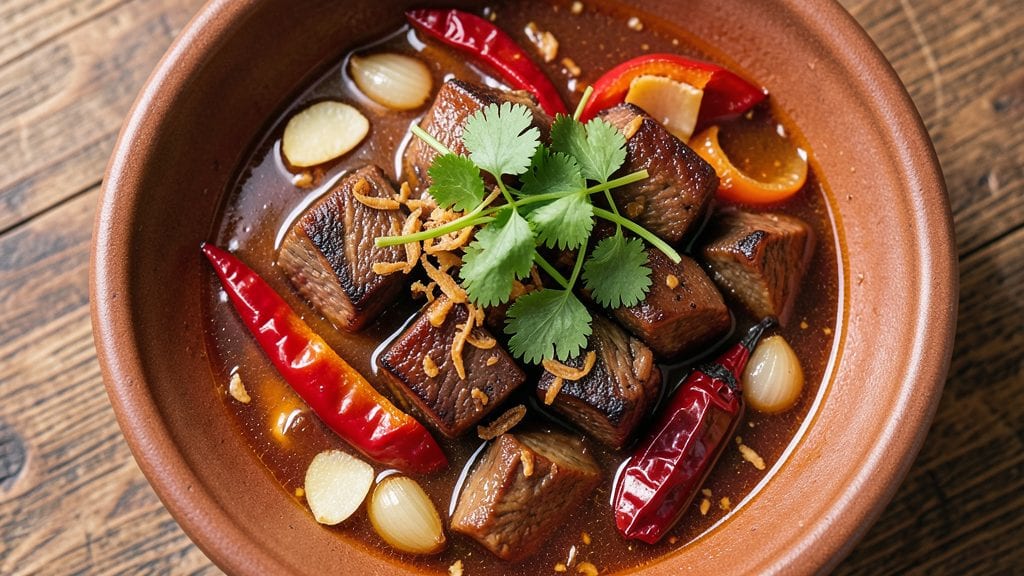
This goat pepper soup recipe brings the bold, aromatic essence of West African cuisine to your kitchen with a perfect balance of spice, herbs, and tender meat. The secret lies in slow-simmered goat meat infused with blended goat pepper, creating a rich, velvety broth that’s both comforting and deeply flavorful.
I’ve perfected this dish over years of testing, ensuring every spoonful delivers that signature depth of umami and heat that defines Nigerian home cooking.
The beauty of this recipe is its versatility—whether you’re serving a family gathering or meal prepping for the week, the slow-cooked broth and tender meat make it equally impressive.
Traditional techniques like toasting whole spices and blending goat pepper into a smooth paste elevate the flavor, while modern adaptations (like using pre-ground spices) keep it accessible for home cooks. The result? A soup that’s hearty, aromatic, and impossible to resist.
What you’ll achieve is a rich, deeply flavorful soup with melt-in-your-mouth goat meat and a broth so robust it tastes like it’s been simmering all day.
The blend of goat pepper, garlic, ginger, and fresh herbs creates layers of warmth and complexity, while the slow cooking process ensures every ingredient melds into harmony. This isn’t just a meal—it’s an experience that transports you to West Africa with every bite.
Serve it with fufu, pounded yam, or crusty bread to soak up every last drop of that fragrant broth. The recipe scales easily, so double or triple it for gatherings—just be prepared to have leftovers disappear just as quickly as they’re made. Let’s get cooking!
Ingredients for goat pepper soup
Sixteen ingredients, one unforgettable West African flavor explosion in your pot.
| Ingredient | Amount | Notes |
|---|---|---|
| Goat Meat 🐐 | 3 lb | Cut into 1-inch cubes |
| Goat Pepper 🌶️ | ½ cup | Dried, blended into paste |
| Onions 🧅 | 2 whole | Chopped, yellow or red |
| Garlic Cloves 🧄 | 8 cloves | Minced, fresh preferred |
| Fresh Ginger 🌿 | 2 tbsp | Grated, peeled root |
| Scotch Bonnet Peppers 🌶️ | 2 whole | Seeds removed, chopped |
| Fresh Thyme 🌿 | ¼ cup | Chopped, stems removed |
| Fresh Parsley 🌿 | ¼ cup | Chopped, for garnish |
| Tomato Paste 🍅 | ½ cup | Smooth, no sugar added |
| Vegetable Oil 🫒 | ¼ cup | For sautéing |
| Chicken Broth 💧 | 4 cups | Low-sodium preferred |
| Salt 🧂 | 1 ½ tsp | Adjust to taste |
| Black Pepper 🌶️ | ½ tsp | Freshly ground |
| Bay Leaves 🍃 | 2 whole | Dried, for depth |
| All-Purpose Flour 🌾 | 2 tbsp | For thickening broth |
Goat meat is the heart of this dish. Look for fresh cuts at African markets or specialty butchers—the meat should be bright red and marbled with fat. If you can't find goat, lamb shoulder works in a pinch, but it'll taste different. The goat pepper is non-negotiable for that signature heat and aroma. African grocery stores or online retailers like AfriGourmet carry it dried, but if you can't find it, a mix of cayenne and smoked paprika (at half the amount) gets you close. Toast the pepper whole in a dry pan for 30 seconds first—this deepens the flavor. The Scotch bonnet peppers add that signature West African kick, so don't skip them (trust me on this).
No fresh thyme or parsley? Dried works at one-third the amount, but fresh is ideal. Running low on tomato paste? Fresh tomatoes blended into a smooth purée works just as well. The chicken broth can be swapped for beef broth or even water with bouillon cubes, but the saltiness balances the flavors. For extra richness, add a splash of coconut milk at the end (about 0.25 cup). The flour is just for thickening—don't worry about measuring it precisely, just stir until the broth reaches your desired consistency. If you're short on time, instant goat pepper powder from African markets can replace the blended paste, but it lacks that signature smoothness.
This soup tastes even better the next day—plan ahead. Store in the fridge for up to 5 days or freeze portions for 3 months. I like to portion it into containers with a scoop of fufu or pounded yam on the side. The broth thickens as it cools, so add a splash of water or broth when reheating. Leftovers? Double the batch—this disappears faster than you can say 'spicy'. Garnish with fresh parsley right before serving, because nothing beats that pop of color and freshness.
Why You'll Love This Recipe
- One-Pot Magic: I swear by this recipe because it’s that simple—just chop, sear, and simmer. No fancy techniques, no last-minute grocery runs. The goat meat practically melts into the pepper-infused broth while you’re still dicing onions, and honestly? That’s my kind of cooking.
- Peppery Heat Hug: Between us, the goat pepper isn’t just spicy—it’s smoky and sweet with a little bite. Toss in fresh ginger and garlic, and you’ve got a broth so rich it’ll make you forget to stir. My husband licks the bowl after I do.
- Meal Prep MVP: This soup tastes even better the next day—yes, really. I make a big batch on Sundays, and it’s my go-to for lunches or potlucks. The flavors deepen overnight, and reheating it? Zero effort. (Pro tip: Double the garlic if you’re serving it cold.)
- Budget-Friendly Feast: Goat meat is leaner than beef but packs serious flavor, and goat pepper stretches the heat without breaking the bank. I feed four people for under $15, and no one ever complains about leftovers. That’s a win in my book.
Step-by-step instructions for goat pepper soup
Let's create a rich, aromatic West African-inspired soup that balances heat and herbs perfectly.
Prepare the Goat Meat and Build the Base
Pat the 3 lb goat meat dry with paper towels and cut it into 1-inch cubes. This size ensures even cooking and maximum flavor absorption. Heat 0.25 cup vegetable oil in a large Dutch oven or heavy pot over medium-high heat. Once shimmering, add the goat meat in a single layer and sear for 5-6 minutes, turning occasionally, until deeply browned on all sides. This step develops a rich foundation for the soup.
Remove the meat with a slotted spoon and set it aside. In the same pot, add 2 whole chopped onions and cook for 4-5 minutes until softened and golden. Stir in 8 cloves minced garlic, 2 tbsp grated fresh ginger, and 2 whole chopped Scotch bonnet peppers (seeds removed for less heat). Cook for another 2 minutes until fragrant—this is where the soup starts to sing with flavor.
Develop the Spice Paste and Tomato Foundation
Lower the heat to medium and add the 0.5 cup goat pepper paste, stirring constantly to prevent burning. Cook for 3-4 minutes, allowing the spices to bloom and deepen in aroma. This step is crucial—don't rush it, or the flavors won't meld properly.
Next, stir in the 0.5 cup tomato paste and cook for another 2 minutes, stirring frequently. The paste will darken slightly as it caramelizes, creating a rich, velvety base. Here's where the soup's depth of flavor begins to take shape. If the mixture sticks to the bottom, add 2 tablespoons chicken broth to deglaze and scrape up those flavorful browned bits.
Simmer the Soup with Herbs and Broth
Return the browned goat meat to the pot. Pour in 4 cups chicken broth, add 2 whole bay leaves, and bring the mixture to a gentle boil. Once boiling, reduce the heat to low, cover partially, and let it simmer for 1 hour 15 minutes. This slow cooking time ensures the meat becomes tender and the flavors meld beautifully.
After 45 minutes, stir in 0.25 cup chopped fresh thyme and 1.5 tsp salt. The thyme adds an earthy note that balances the heat from the goat pepper and Scotch bonnet. Taste and adjust the seasoning—you might need a bit more salt depending on your broth. The soup should be rich but not overly salty. If it's too thin, uncover and simmer for another 10-15 minutes to reduce slightly.
Thicken and Finish with Fresh Herbs
In a small bowl, whisk together 2 tbsp all-purpose flour and 0.5 tsp black pepper. Gradually sprinkle this mixture into the simmering soup while stirring constantly for 2-3 minutes. This step thickens the soup slightly and adds a subtle peppery kick. The flour should dissolve completely—if it clumps, strain the soup through a fine-mesh sieve for a silky texture.
Remove the 2 whole bay leaves and stir in 0.25 cup chopped fresh parsley just before serving. The parsley brightens the dish and adds a fresh contrast to the deep, spicy flavors. Let the soup rest for 5 minutes off the heat—this allows the flavors to settle and the meat to absorb any remaining liquid, ensuring each bite is packed with flavor.
Pro Tips For Making Goat Pepper Soup
- SEAR GOAT IN BATCHES: Goat meat releases a ton of liquid when searing—crowd the pan and you’ll steam it instead of brown it. Work in small batches (2-3 pieces at a time) over medium-high heat, and resist the urge to stir constantly. Let each side develop a crust for 3-4 minutes before moving it to the pot. Trust me, that golden sear is what makes the soup sing.
- GRATE GINGER FINE: I used to chop fresh ginger roughly, thinking it’d blend in. Wrong. For goat pepper soup, grate it like you’re making a fine paste—no chunks bigger than a matchstick. The heat and aroma distribute evenly, and it melts into the sauce without needing to be chewed. (Yes, even if you’re impatient like me.)
- SIMMER LOW AND SLOW: Goat pepper soup needs time to tenderize that meat, but don’t let it boil like a pot of water. Once everything’s in the pot, reduce to a bare simmer—just enough to see tiny bubbles at the edges. Too much heat = tough meat. Too little? You’ll wait forever. Aim for 1.5–2 hours, and check occasionally to adjust the flame.
- SAUTE ONIONS UNTIL CARAMELIZED: Skip this step, and your soup will taste flat. Cook the onions over medium-low heat until they’re deep golden, not just translucent—about 15 minutes, stirring occasionally. The caramelized sweetness balances the heat from the goat pepper and cuts through the richness of the meat. (Pro move: Add a pinch of salt halfway through to draw out moisture.)
Make-ahead tips for this recipe
Prep Ahead Secrets
Start by blending your goat pepper paste up to 3 days ahead and storing it in an airtight container in the fridge. Toast the pepper seeds in a dry pan for 30 seconds before blending—this unlocks deeper flavor.
I also prep my thyme and parsley by chopping them and storing in separate containers with a sprinkle of water to keep them fresh for up to 5 days.
Meat Prep Shortcut
Save time by searing the goat meat in advance and refrigerating it in the broth. After browning, transfer the meat to a bowl, cover with 2 cups chicken broth, and refrigerate for up to 24 hours.
When ready to cook, simply strain the broth (discard the liquid), return the meat to the pot, and proceed with the recipe. This infuses the meat with extra flavor while you handle other prep.
Broth Base Mastery
Make a big batch of chicken broth (or use store-bought) and freeze it in 1-cup portions for future soups. I like using Swanson Low-Sodium Chicken Broth because it keeps the soup from becoming too salty.
For extra richness, add 1 tbsp tomato paste to each portion before freezing—it deepens the flavor when reheated. Thaw what you need directly in the pot while you prep other ingredients.
Freezer-Friendly Assembly
After simmering the soup, let it cool completely before dividing it into freezer-safe containers. I use glass Pyrex containers with snap-on lids because they stack neatly and reheat evenly. Leave 1-inch headspace for expansion, and freeze for up to 3 months.
When reheating, thaw overnight in the fridge, then warm on the stovetop over low heat with a splash of water to restore thickness.
Garnish Prep Station
Set up a small garnish station with chopped parsley, Scotch bonnet slices, and a sprinkle of crushed peanuts (optional) on a plate near your serving bowls. This keeps everything organized and makes plating a breeze.
I also keep a small bowl of hot pepper sauce (like Crystal or Tabasco) on the table for guests who want extra heat.
Reheating Like a Pro
For the best texture, reheat your soup on the stovetop over medium-low heat until steaming. If it's too thick after reheating, thin it with chicken broth or water—about 2 tbsp at a time.
Never microwave goat pepper soup, as it can make the meat rubbery. For a restaurant-quality finish, stir in a pat of butter or a splash of coconut milk just before serving to brighten the flavors.
Nutrition facts
Frequently asked questions
What makes goat pepper different from regular peppers in this recipe?
Goat pepper is a West African spice with a unique earthy, slightly sweet flavor that's more complex than regular bell peppers or cayenne. It's typically dried and blended into a smooth paste, which gives this soup its signature depth and warmth. Unlike hot peppers, goat pepper adds aromatic richness rather than just heat, making it essential for authentic flavor. If you can't find it, a mix of cayenne and smoked paprika (at half the amount) works in a pinch.
Can I substitute goat meat with another protein?
Yes, but the flavor will change slightly. Lamb shoulder is the best substitute, as it has a similar texture and richness. Beef chuck or even chicken thighs can work, but they'll be less tender. For chicken, increase the simmering time to 45-50 minutes to ensure tenderness. Avoid lean cuts like breast—they'll dry out.
How do I adjust the heat level in this soup?
Remove the seeds from the Scotch bonnet peppers to reduce heat, or use only half a pepper for milder spice. For extra kick, add 1 extra Scotch bonnet or a pinch of cayenne at the end. If the soup is too spicy, balance it with a splash of coconut milk or extra broth. Taste as you go—you can always adjust!
What's the best way to store and reheat leftovers?
Store in an airtight container in the fridge for up to 5 days or freeze for 3 months. To reheat, warm on the stovetop over low heat with a splash of water or broth—never microwave, as it can make the meat rubbery. For extra richness, stir in a pat of butter or coconut milk before serving.
What sides pair best with this soup?
Traditional pairings include fufu, pounded yam, or eba (all made from cassava flour). For a quicker option, serve with crusty bread, jollof rice, or plantains. The starchy sides help balance the soup's bold flavors and soak up the rich broth. Garnish with fresh parsley or crushed peanuts for extra texture!