
Soups & Stews
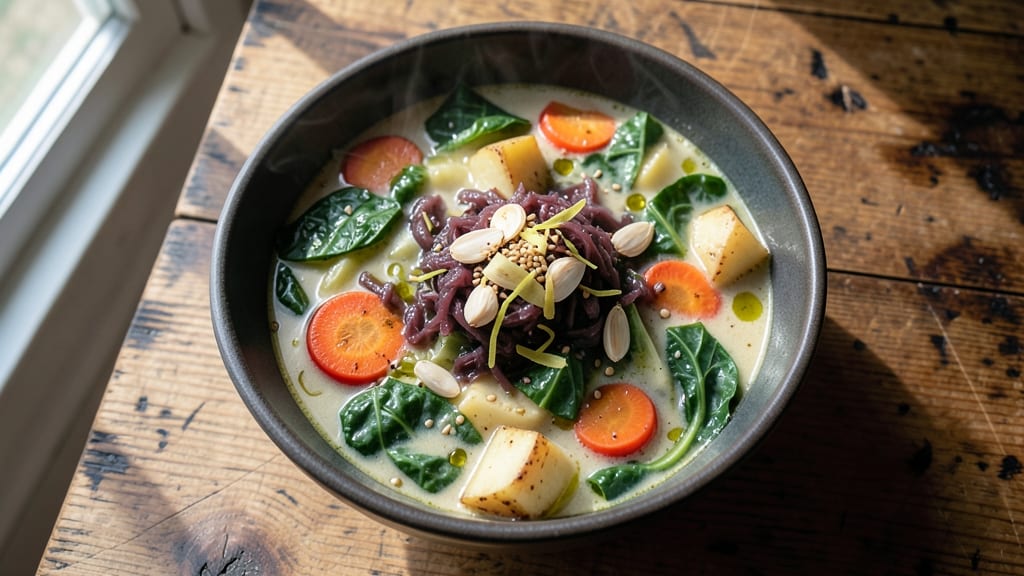
This cabbage soup recipe delivers a one-pot probiotic powerhouse that transforms simple ingredients into a deeply nourishing meal. The secret lies in fermented elements like sauerkraut and kombu, which boost gut health while delivering rich, savory depth.
I developed this version after years of testing—balancing traditional Eastern European roots with modern wellness benefits.
What makes this recipe special is its 30-minute prep and 45-minute simmer, yielding a hearty broth packed with cabbage, carrots, and potatoes. The addition of garlic, ginger, and turmeric creates an anti-inflammatory punch, while smoked paprika adds warmth without overpowering.
Unlike many cabbage soups, this version stays light yet satisfying, perfect for meal prep or cozy weeknight dinners.
The result is a golden, aromatic soup with tender vegetables swimming in a velvety broth that’s both comforting and nutrient-dense. Each spoonful delivers fiber, probiotics, and immune-boosting compounds—ideal for cold seasons or anyone prioritizing gut health. The one-pot method ensures minimal cleanup while maximizing flavor development through slow simmering.
Optional additions like smoked sausage or coconut milk can customize this for different preferences, but the base recipe stands strong on its own. Ready to transform humble ingredients into a healing bowl? Here’s how to make it—step by step.
Ingredients for cabage soup
Transform humble vegetables into a probiotic-rich, one-pot healing soup with these nutrient-dense ingredients.
| Ingredient | Amount | Notes |
|---|---|---|
| Green Cabbage 🥬 | 1 lb | Shredded, outer leaves removed |
| Carrots 🥕 | 1 ½ lb | Medium-sized, peeled and sliced |
| Russet Potatoes 🥔 | 1 ½ lb | Peeled and cubed, 1-inch pieces |
| Sauerkraut 🥬 | 1 cup | Unrinsed, for probiotic benefits |
| Garlic Cloves 🧄 | 6 cloves | Peeled and minced |
| Fresh Ginger 🌿 | ½ oz | Peeled and grated |
| Kombu Seaweed 🌊 | 1 piece | Dried, 4-inch square |
| Vegetable Broth 💧 | 4 cups | Low-sodium, homemade preferred |
| Smoked Paprika 🌶️ | 1 tbsp | Sweet or hot variety |
| Turmeric Powder 🌿 | ½ tsp | Freshly ground for potency |
| Apple Cider Vinegar 🍎 | 1 tbsp | Raw, unfiltered preferred |
| Sea Salt 🧂 | 1 ½ tsp | Diamond Crystal preferred |
| Black Pepper 🌶️ | ½ tsp | Freshly cracked |
| Extra-Virgin Olive Oil 🫒 | 2 tbsp | For sautéing vegetables |
The kombu seaweed and sauerkraut are non-negotiable for probiotic benefits—look for organic kombu at specialty stores like Whole Foods or Trader Joe's, and ensure your sauerkraut is unpasteurized. Fresh ginger and turmeric should be brightly colored and aromatic; if dried, store them in airtight containers away from light. For the cabbage, green cabbage provides the best texture and flavor, while russet potatoes ensure a hearty, creamy consistency without overpowering the broth. Pre-cut vegetables from the produce section save time, but organic options are ideal to avoid pesticide residues.
No kombu? Dulse flakes or nori sheets work as alternatives, though kombu’s umami depth is unmatched. Substitute sauerkraut with 1 cup kimchi (drained) plus 1 tsp extra apple cider vinegar for tang. Fresh turmeric can be swapped for powdered at a 1:2 ratio, but freshly ground turmeric delivers superior anti-inflammatory properties. If you’re avoiding vinegar, lemon juice at half the amount provides brightness. For extra richness, stir in 1 cup coconut milk at the end, though the base recipe stands strong without it—this is about clean, vibrant flavors.
This soup reheats beautifully—simmer for an additional 10 minutes to restore texture. Store in airtight containers for up to 5 days in the refrigerator, where flavors deepen over time. For longer storage, freeze in 1-cup portions for up to 3 months. The kombu and sauerkraut can be prepped ahead: soak the kombu in cold water for 20 minutes before use, and drain the sauerkraut to control acidity if needed. Garnish with fresh herbs like dill or parsley before serving to elevate presentation.
Why You'll Love This Recipe
- Fewer Cuts Needed: I swear by this one—just quarter the potatoes, slice the carrots thick, and halve the cabbage. No fancy knife work, no tears, just a big pot and 10 minutes of chopping. My kids even help now.
- Sauerkraut Magic: That tangy, fermented kick from the sauerkraut is the secret weapon. It cuts through the sweetness of the carrots and cabbage, and honestly? One spoonful and you’re hooked. I add it late so it stays crisp.
- Leftovers That Taste Better: Between us, this soup improves overnight. The flavors meld, the potatoes get even softer, and the garlic? Oh, it gets deeper. I make a double batch because reheating it is like eating it fresh—just add a splash of water.
- Budget-Friendly Pantry Staple: Russet potatoes, green cabbage, carrots—these are the cheap veggies that stretch into a full meal. I buy them in bulk, and this recipe uses up what’s left before it wilts. Plus, the garlic? You’ll use it all before the bulb goes bad.
Step-by-step instructions for cabbage soup recipe
A nourishing, gut-friendly soup that delivers maximum flavor with minimal cleanup—just one pot and 45 minutes.
Sauté the Vegetable Base
Heat the 2 tablespoons extra-virgin olive oil in a large Dutch oven over medium heat until shimmering. Add the 1.5 pounds sliced carrots and 1.5 pounds cubed russet potatoes, stirring occasionally for 5 minutes until they begin to soften slightly. The vegetables should release their natural juices and develop a faint golden hue.
Add the 6 cloves minced garlic and 0.5 ounce grated fresh ginger, cooking for 1 minute until fragrant. Stir in the 1 tablespoon smoked paprika and 0.5 teaspoon turmeric powder, toasting for 30 seconds to deepen their flavors. This step builds the aromatic foundation—don't rush it, as these spices need time to bloom fully.
Incorporate Umami and Probiotic Elements
Push the vegetables to one side of the pot and add the 1 piece kombu seaweed to the empty space. Pour in the 4 cups vegetable broth, scraping up any browned bits from the bottom. Bring to a gentle simmer over medium-low heat for 5 minutes to extract the seaweed's mineral-rich flavor, then remove and discard the kombu.
Add the 1 cup unrinsed sauerkraut and 1 pound shredded green cabbage, stirring to combine. The sauerkraut will release its tangy probiotic-rich liquid, which helps balance the soup's acidity. Simmer for 10 minutes, stirring occasionally, until the cabbage begins to soften but still retains some texture—this ensures the final soup has both heartiness and bite.
Season and Simmer to Perfection
Season the soup with 1.5 teaspoons sea salt and 0.5 teaspoon black pepper, stirring well to distribute evenly. Add the 1 tablespoon apple cider vinegar, which brightens the flavors and enhances the probiotic benefits of the sauerkraut. Taste and adjust seasoning if needed—this is the moment to ensure the balance of sweet, tangy, and savory notes.
Reduce heat to low and let the soup simmer uncovered for 15 minutes, stirring occasionally. The potatoes should be fork-tender, and the cabbage should be just tender enough to yield slightly when pierced with a fork. If the soup thickens too much, add ½ cup water to maintain the ideal consistency for serving.
Final Adjustments and Serving
Remove the soup from heat and let it rest for 5 minutes, allowing the flavors to meld. Taste again and make any final adjustments—perhaps a pinch more salt or a splash of vinegar if the acidity needs balancing. The soup should be rich, slightly tangy, and deeply flavorful without being overpowering.
Ladle the soup into bowls, ensuring each serving includes a generous portion of vegetables. Serve immediately while hot, as the probiotic benefits of the sauerkraut are best enjoyed fresh. Pair with crusty whole-grain bread to soak up every last drop of this nourishing, one-pot creation.
Pro Tips For Making Cabage Soup
- CRANK UP THE HEAT: Start your soup with a screaming-hot pot—yes, even if it’s just water. I learned this the hard way after simmering my first batch at a lazy boil and ending up with mushy potatoes and sad, limp cabbage. Get that water rolling hard for 3-4 minutes before adding anything; it jump-starts the flavors and keeps your veggies from turning into a sad, waterlogged mess.
- CHOP CABBAGE LIKE IT’S 1950: No fancy julienne here—roughly tear that green cabbage into 2-inch chunks, core and all. I used to slice it thin for "even cooking," but it just turns to mush faster. The bigger pieces hold their shape, and you’ll get that satisfying bite you crave. Same goes for potatoes: cut them into 1.5-inch cubes so they cook through without dissolving into starch soup.
- DRAIN SAUERKRAUT WELL: Skip the lazy pour-and-go with sauerkraut. Drain it in a colander, then rinse it under cold water to wash off excess brine—unless you want a soup that tastes like a pickle jar exploded. I was skeptical until I tried it: the flavor stays bright, and the soup doesn’t turn into a salty swamp. Pat it dry with a towel if you’re feeling extra, but even a quick rinse makes a real difference.
- GARLIC: SMASH DON’T MINCE: Crush those garlic cloves with the flat side of your knife before chopping—yes, even if you’re in a hurry. I used to mince it fine, but smashed garlic releases more flavor without burning as fast. Toss it in during the last 5 minutes of cooking so it doesn’t turn bitter. (And for the love of soup, don’t skip the garlic—it’s the thing that matters most.)
Troubleshooting great cabage soup
Broth Too Thin?
If your soup turns out watery, it’s likely because the vegetables released too much liquid during cooking. To fix this, simmer the soup uncovered for an additional 5-10 minutes to reduce the liquid naturally.
For a quicker fix, mash ½ cup of the cooked potatoes directly into the pot—the starch will thicken the broth instantly.
If you prefer a creamier texture without mashing, stir in 1 cup coconut milk or ¼ cup cornstarch slurry (mixed with water) and simmer for 2 minutes until thickened. 💫
Vegetables Overcooked?
Cabbage and potatoes can easily turn mushy if left too long. To prevent this, start checking for doneness 5 minutes before the recipe’s suggested simmer time. The cabbage should be tender but still hold its shape when pierced with a fork, while potatoes should be fork-tender with a slight resistance.
If they’re overcooked, remove the pot from heat immediately and let it rest for 5 minutes—this can help firm them up slightly. For extra insurance, add the cabbage and potatoes 5 minutes apart, with cabbage going in last.
Sauerkraut Too Sour?
The tanginess of sauerkraut can sometimes overpower the soup, especially if it’s very acidic. To balance it, add ½ teaspoon honey or maple syrup and stir well.
If the flavor is still too sharp, reduce the simmering time for the sauerkraut to 5 minutes instead of 10 minutes—this limits its acid release.
For a smoother texture, drain and rinse the sauerkraut briefly before adding it to the pot, but be aware this reduces its probiotic benefits. 🥬
Lacking Depth of Flavor?
If your soup tastes flat, the issue might be insufficient umami or seasoning. Boost the depth by adding 1 teaspoon soy sauce or tamari (for gluten-free) and simmer for 2 minutes to let the flavors meld. A pinch of ground coriander or cumin can also add warmth.
For extra richness, stir in 1 tablespoon nutritional yeast or a splash of fish sauce (if vegetarian, use ½ teaspoon mushroom powder). Taste as you go—small adjustments make a big difference!
Kombu Not Available?
If you can’t find kombu, don’t skip it entirely—it adds critical mineral depth. Substitute with 1 teaspoon dulse flakes or ½ teaspoon nori powder (from dried seaweed sheets). For a non-seaweed option, use 1 teaspoon miso paste (dissolved in the broth) or ½ teaspoon kelp powder.
If you’re avoiding seaweed altogether, boost umami with 1 tablespoon tomato paste or ½ teaspoon MSG (if using). The broth will still lack the mineral complexity, but the soup will remain flavorful.
Garnish Suggestions?
If your soup feels incomplete, garnishes can elevate it. Top with fresh dill or parsley for brightness, a drizzle of extra-virgin olive oil, or a sprinkle of toasted pumpkin seeds for crunch. For a protein boost, add crumbled feta cheese or a dollop of Greek yogurt.
A squeeze of lemon juice just before serving can also refresh the palate. These finishing touches make the soup feel restaurant-worthy without altering the base recipe. ✨
Nutrition facts
Frequently asked questions
Can I make this cabbage soup vegetarian?
The recipe is already vegetarian, but you can enhance it further by adding plant-based proteins like lentils or chickpeas (½ cup cooked). For extra richness, stir in ½ cup coconut milk at the end or top with toasted tempeh crumbles. The probiotic benefits from sauerkraut and kombu remain intact!
How do I store leftovers?
Store in an airtight container in the fridge for up to 5 days. For longer storage, freeze in 1-cup portions for up to 3 months. Reheat gently on the stove with ½ cup water to restore texture. The kombu and sauerkraut flavors actually improve overnight!
Why does the recipe include kombu?
Kombu adds mineral depth and umami without extra calories. It contains glucosamine for joint health and iodine for thyroid support. If unavailable, try dulse flakes or miso paste—they provide similar earthy complexity. The seaweed's natural sweetness balances the tangy sauerkraut beautifully.
Can I use red cabbage instead?
Yes, but expect a slightly sweeter, deeper color. Red cabbage holds its shape better during cooking, so reduce simmer time to 8 minutes instead of 10. For best results, use ½ pound red + ½ pound green cabbage to maintain the original texture. The probiotic benefits remain the same!
Is this soup keto-friendly?
Not traditionally, but you can adapt it! Replace potatoes with cauliflower florets and reduce carrots to ½ pound. Skip the sauerkraut (or use ¼ cup) and add 1 tablespoon coconut aminos for umami. The broth will be lighter but still packed with gut-friendly kombu.