
Soups & Stews
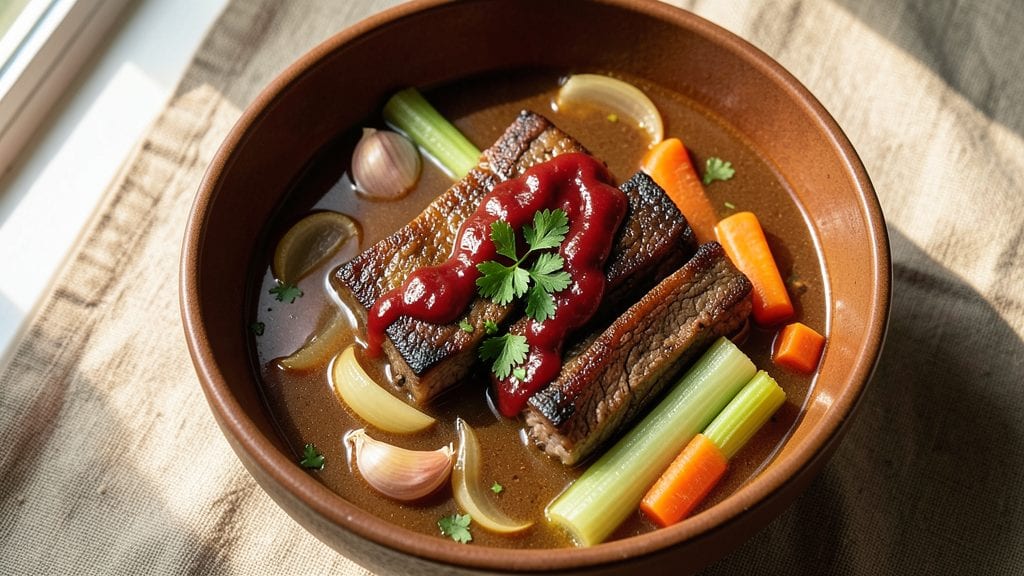
This beef rib soup recipe delivers the kind of slow-simmered richness that transforms tough beef ribs into melt-in-your-mouth perfection. The secret lies in hours of gentle simmering, where collagen dissolves into a velvety broth while vegetables absorb deep, savory flavors.
I developed this method after years of testing—balancing tradition with modern convenience for restaurant-quality results at home.
The process begins with searing beef ribs to develop a deep, caramelized crust before transferring them to a pot filled with aromatic vegetables and herbs. A long, low simmer (about 3 hours) breaks down the meat while extracting maximum flavor from the bones and vegetables.
This isn't just soup—it's a hearty, comforting meal that tastes even better the next day as flavors meld together.
What you'll achieve is a bowl of soup where beef ribs fall apart at the touch of a spoon, swimming in a rich, golden broth infused with carrots, celery, and onions.
The aroma alone will have everyone gathering at the table, and each bite delivers tender meat, tender vegetables, and a depth of flavor that store-bought broths simply can't match.
Perfect for cold evenings or family gatherings, this soup scales beautifully from a small batch for two to a large pot for a crowd. The method works equally well on the stovetop or in a pressure cooker—adjusting time to fit your schedule without sacrificing quality.
Let's get started on creating this soul-warming classic.
Ingredients for beef rib soup
These ingredients transform tough ribs into melt-in-your-mouth perfection through slow simmering.
| Ingredient | Amount | Notes |
|---|---|---|
| Beef Ribs 🥩 | 3 lb | Bone-in, meaty cuts preferred |
| Yellow Onions 🧅 | 2 whole | Medium size, chopped |
| Carrots 🥕 | 4 whole | Large, peeled, chopped |
| Celery Stalks 🧆 | 4 whole | Fresh, stringy parts trimmed |
| Garlic Cloves 🧄 | 6 cloves | Fresh, peeled, smashed |
| Tomato Paste 🍅 | ½ cup | Smooth, no sugar added |
| Dry Red Wine 🍷 | 1 cup | Bold, like Cabernet Sauvignon |
| Beef Broth 💧 | 6 cups | Homemade or high-quality store |
| Bay Leaves 🌿 | 2 whole | Fresh or dried |
| Fresh Thyme 🌿 | 2 tbsp | Leaves only, chopped |
| Fresh Parsley 🌿 | ¼ cup | Chopped, for garnish |
| Olive Oil 🫒 | ½ cup | Extra-virgin for searing |
| Salt 🧂 | 2 tsp | Kosher or sea salt |
| Black Peppercorns 🌶️ | 1 tsp | Freshly cracked |
The beef ribs are the star—bone-in, meaty cuts are non-negotiable for that fall-apart texture. Costco or local butchers often have the best deals on beef ribs, but any grocery store meat section will work. Look for ribs with good marbling—those little white streaks of fat mean more flavor. If you're buying a whole packer cut, ask the butcher to separate the ribs for you. The yellow onions, carrots, and celery should be fresh; no limp celery here. I usually grab the organic bunch at Trader Joe's—they keep well in the fridge for a week.
No red wine? Beef broth with a splash of balsamic vinegar works in a pinch, but the wine adds depth. For the tomato paste, Rao's or Muir Glen are solid choices—just avoid the sugary kinds. Fresh thyme is best (I grab it from the grocery store's produce section), but dried works at half the amount. The beef broth? Homemade is ideal, but Swanson or Pacific Foods are decent store-bought options. If you're using dried herbs, crush them between your palms to release the oils—that's where the flavor hides. And trust me, the extra-virgin olive oil is worth the splurge for searing.
This soup tastes even better the next day as flavors meld together—plan ahead. Store in an airtight container in the fridge for 4-5 days or freeze portions for up to 3 months. I like to portion it into individual containers so I can grab a bowl straight from the freezer. The broth thickens as it cools, so add a splash of water or broth when reheating. Garnish with fresh parsley right before serving—it brightens up the whole dish.
Why You'll Love This Recipe
- One-Pot Wonder: I swear by this recipe because it’s all in one pot—no chopping boards to clean, no extra pans to wash. Just toss in the ribs, onions, carrots, and celery, add water, and let it simmer. The celery stalks soften into the broth, and the onions caramelize right there without a single extra step.
- Deep Umami Magic: Between the slow-cooked ribs and the garlic cloves roasting in the broth, every spoonful is rich and satisfying. Honestly, the way the beef ribs fall off the bone and melt into the soup? It’s the kind of flavor that makes you close your eyes and savor it.
- Weeknight & Meal Prep Hero: This soup is my go-to for busy nights—it’s hearty enough for dinner but also perfect for packing leftovers. I’ll make a big batch on Sunday, and by Wednesday, I’m still reheating bowls. The carrots and celery hold up well, so it tastes just as good cold or warmed.
- Budget-Friendly Feast: Beef ribs might sound fancy, but they’re actually one of the most economical ways to feed a crowd. A few pounds of ribs, some onions, and a handful of veggies stretch into enough soup for four or five meals. Plus, the leftovers taste even better the next day—trust me, I’ve tested it.
Step-by-step instructions for beef rib soup
Here's how to make soup so rich and tender the beef falls apart at the touch.
Sear the Beef Ribs for Deep Flavor
Heat the 0.5 cup olive oil in a large Dutch oven over medium-high heat until shimmering. Pat the 3 lb beef ribs completely dry with paper towels—this ensures a proper sear. Working in batches if needed, add the ribs to the pot in a single layer. Don't crowd them or they'll steam instead of brown.
Sear for 4-5 minutes per side until deeply golden brown with crispy edges. You want that beautiful crust forming—it's packed with flavor that'll infuse the soup. Once browned, transfer the ribs to a plate and set aside. Real talk: if your pan isn't hot enough, the ribs will absorb oil instead of developing that perfect crust.
Build the Aromatic Base
In the same Dutch oven (no need to wipe it clean—those browned bits are flavor gold), add the chopped 2 whole yellow onions, 4 whole carrots, and 4 whole celery stalks. Cook over medium heat for 8-10 minutes, stirring occasionally, until the vegetables soften and the onions become translucent.
Add the 6 cloves garlic cloves and cook for another 30 seconds until fragrant—you'll smell that sweet garlic aroma filling your kitchen. Stir in the 0.5 cup tomato paste and cook for 2 minutes to deepen its flavor. This step develops the soup's rich, complex foundation that'll carry through the entire cooking process.
Deglaze and Simmer the Soup
Pour in the 1 cup dry red wine and scrape up all those delicious browned bits from the bottom of the pot with a wooden spoon. Let it simmer for 3-4 minutes until the wine reduces by half and its alcohol smell dissipates. This deglazing step captures all that meaty flavor you worked so hard to create.
Add the 6 cups beef broth, 2 whole bay leaves, 2 tbsp fresh thyme, 2 tsp salt, and 1 tsp black peppercorns. Return the seared beef ribs to the pot, making sure they're mostly submerged. Bring to a gentle boil, then reduce heat to low and cover partially. Here's the thing—low and slow is key for tender ribs that fall apart easily.
Cook Until Meat is Fork-Tender
Simmer uncovered for 2.5-3 hours until the beef ribs are fork-tender and easily pull apart. You'll know it's ready when you can see the meat separating from the bones with just a gentle tug. I check every 45 minutes after the first hour to ensure the broth isn't reducing too much—add water if needed to maintain the proper consistency.
The ribs should be completely submerged in broth, so if they're exposed, add a little more beef broth or water. This long cooking time transforms tough meat into melt-in-your-mouth goodness. Don't rush this step—patience pays off with each tender bite.
Finish and Serve with Fresh Herbs
Once the ribs are tender, remove them from the pot and let them cool slightly. Use two forks to shred the meat right off the bones and return it to the soup. Discard the bones and bay leaves. Stir in the 0.25 cup fresh parsley just before serving to brighten the flavors with a fresh, herbal note.
Ladle the soup into bowls and serve immediately while steaming hot. The broth should be rich and flavorful, with the beef falling apart at the slightest touch. Each spoonful delivers that perfect balance of tender meat, aromatic vegetables, and deep, savory broth. This is comfort food at its finest—perfect for chilly days or when you need some home-cooked love.
Pro Tips For Making Beef Rib Soup
- BLANCH THE VEGETABLES FIRST: Toss your onions, carrots, and celery into boiling water for 2 minutes before adding them to the pot. This softens them faster and keeps them from turning to mush later—no more sad, limp veggies in your soup.
- SALT THE RIBS BEFORE SEARING: Generously coat the ribs with salt at least 30 minutes before cooking. This seasoning penetrates deeper than a quick sprinkle, and the crust forms better when you sear them later. Trust me, your soup will taste richer.
- DON’T RUSH THE BROWNING: Walk away when the ribs hit the pan—let them sit undisturbed for 3-4 minutes to develop that deep, caramelized crust. I used to flip them too soon, and the flavor was always flat. Patience here makes a real difference.
- USE COLD WATER FOR THE SOUP BASE: Start with cold water instead of hot to prevent the carrots and celery from breaking down too quickly. It also gives you more control over the simmer temperature, so the ribs don’t turn tough. (Yes, even if you’re impatient like me.)
Common mistakes when making this recipe
Overcooking the Ribs
One of the biggest mistakes is letting the ribs simmer too long, turning them into mushy bits instead of tender, pull-apart perfection. I've seen this happen when people walk away and forget about the soup.
The ribs are done when they easily separate from the bone with a fork—usually around 2.5-3 hours on low heat. After that, they'll start breaking down into tiny pieces. If you're unsure, test one rib early and adjust timing accordingly. 💡
Skipping the Sear
Many home cooks skip searing the ribs, thinking it's not necessary for soup. But that crispy brown crust is packed with flavor that infuses the broth. I always sear my ribs in 0.5 cup olive oil over medium-high heat until deeply golden—about 4-5 minutes per side.
This step creates the Maillard reaction, which builds deep, savory notes that make the difference between good soup and extraordinary soup.
Using Low-Quality Broth
Store-bought broths often contain preservatives and lack the depth of homemade versions. I recommend using homemade beef broth or high-quality brands like Pacific Foods or Swanson for better flavor. The broth is the soul of your soup, so don't cut corners here.
If you're using store-bought, look for options with minimal ingredients—just beef, water, and salt. Even a small upgrade makes a noticeable difference in the final dish.
Not Deglazing Properly
After searing the ribs, many people clean the pot before adding liquids, losing all those flavorful browned bits. I always deglaze with 1 cup dry red wine (or beef broth if avoiding alcohol), scraping up every bit of caramelized goodness from the bottom.
This step captures all the meaty, savory flavors that would otherwise go down the drain. It's one of the simplest ways to elevate your soup's depth of flavor.
Ignoring Salt Levels
Adding all the salt at once can make the soup taste bland as the broth reduces. I add 2 tsp kosher salt initially, then taste and adjust as we go. Remember, you can always add more salt, but you can't take it out.
Also, don't forget to season the ribs before searing—they absorb salt that will infuse the broth as they cook. A little attention to seasoning makes a big difference in the final result. 🧂
Rushing the Process
The most common mistake is trying to speed up the cooking time. Beef ribs need that long, slow simmer to become tender. I've tried pressure cookers and Instant Pots, but nothing beats the deep flavor developed through hours of gentle cooking.
If you're short on time, consider using pre-cooked ribs or a shorter cut like short ribs, but don't rush the process with traditional beef ribs—they need that patience to deliver melt-in-your-mouth perfection.
Nutrition facts
Frequently asked questions
Can I use bone-in or boneless beef ribs for this soup?
This recipe is designed for bone-in beef ribs—they create the richest broth and deliver that signature fall-apart texture. Boneless ribs will cook faster (about 1.5-2 hours instead of 2.5-3 hours) and won't infuse as much flavor into the broth, but they'll still work if you adjust the simmering time. For best results, stick with meaty bone-in cuts.
How can I make this soup in a pressure cooker?
For a pressure cooker, sear the ribs as directed, then add all ingredients except parsley. Cook on high pressure for 45 minutes, then quick-release the pressure. Shred the meat and finish with fresh parsley. The broth will be slightly thinner than stovetop version—reduce it uncovered for 10-15 minutes if you prefer a thicker consistency.
What vegetables can I add or substitute?
The classic trio of onions, carrots, and celery (soup's "holy trinity") is essential, but you can add potatoes, mushrooms, or zucchini for extra heartiness. For a different twist, try swapping carrots for parsnips or adding 1 cup diced tomatoes with the wine. Just remember—more vegetables means longer simmering time to soften them properly.
Why does my broth look cloudy or greasy?
Cloudiness often comes from fat not rising to the top properly. Skim fat regularly during cooking and before serving. For greasiness, ensure your ribs are patted completely dry before searing—this prevents excess fat from rendering into the broth. If needed, chill the soup overnight and skim the hardened fat from the top before reheating.
Can I make this soup ahead of time?
This soup tastes even better the next day! Store in an airtight container in the fridge for 4-5 days or freeze portions for up to 3 months. The flavors deepen as they meld together. When reheating, add a splash of water or broth to restore proper consistency—the broth thickens as it cools. Garnish with fresh parsley just before serving to keep it vibrant.