
Soups & Stews
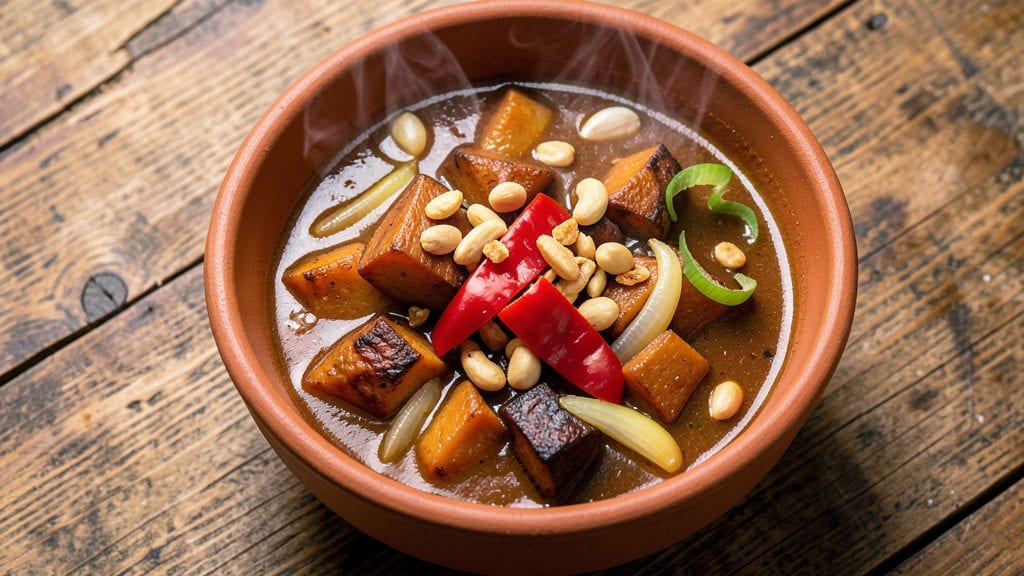
This African groundnut soup recipe delivers the rich, nutty depth of West African cuisine in a single pot, where toasted peanuts and tomatoes create a velvety broth that's both comforting and complex.
The technique begins with carefully toasting peanuts to enhance their natural oils, which form the soul of this dish—deep, earthy, and subtly sweet. I've refined this recipe over years of testing, balancing traditional methods with modern adaptations for home cooks.
The magic lies in slow simmering, where flavors meld into a harmonious blend of smoky, savory, and slightly tangy notes. Palm oil adds that signature golden hue and richness, while locust beans (or vegan substitutes) provide umami depth.
This version includes optional protein—chicken, fish, or tofu—to make it versatile for any dietary preference. The result is a soup that's hearty enough for a main course yet light enough for a weeknight dinner.
By the time you're done, you'll have a one-pot wonder with tender vegetables, protein, and a broth so flavorful it tastes like a hug in a bowl. The peanuts soften into the soup, releasing their creamy texture while maintaining just enough bite.
Serve with jollof rice or crusty bread to soak up every last drop of that aromatic liquid gold.
Whether you're new to African flavors or a seasoned fan, this recipe adapts effortlessly. The instructions walk you through each step—from toasting peanuts to balancing the broth—so you'll achieve professional results without shortcuts. Let's create this soulful dish together.
Ingredients for african groundnut soup
Toasted peanuts, slow-simmered tomatoes, and golden palm oil—this one-pot African masterpiece needs just 16 ingredients.
| Ingredient | Amount | Notes |
|---|---|---|
| Dried Peanuts (unsalted) 🥜 | 1 ½ cups | Toasted until fragrant for depth |
| Canned Tomato Paste 🍅 | ½ cup | San Marzano preferred for sweetness |
| Red Bell Peppers 🌶️ | 2 whole | Seeded and roughly chopped |
| Yellow Onions 🧅 | 2 whole | Chopped, medium dice preferred |
| Garlic Cloves 🧄 | 6 cloves | Peeled and smashed for aroma |
| Fresh Ginger 🌿 | 1 tbsp | Grated, for zesty kick |
| Palm Oil (vegetarian) 🫒 | ¼ cup | For signature golden hue |
| Vegetable Stock 💧 | 4 cups | Homemade or low-sodium |
| Dried Locust Beans (or sub) 🌱 | ½ cup | Soaked 2 hours, or vegan umami |
| Firm Tofu 🍱 | 1 lb | Cubed for protein base |
| Carrots 🥕 | 3 whole | Peeled, sliced into rounds |
| Sweet Potatoes 🍠 | 2 whole | Cubed, for hearty texture |
| Fresh Cilantro 🌿 | ¼ cup | Chopped, for fresh finish |
| Lemon Juice 🍋 | 2 tbsp | Freshly squeezed for brightness |
| Diamond Crystal Kosher Salt 🧂 | 1 ½ tsp | Adjust to taste, not pre-salted |
| Ground Black Pepper 🌶️ | ½ tsp | Freshly cracked for heat |
The peanuts are non-negotiable—raw, unsalted from the bulk bins at Whole Foods or Trader Joe's give the best texture. Toast them in a dry pan until they smell like a West African market (about 5-7 minutes), then grind half into a paste with the tomatoes. Palm oil is key for that signature golden color and richness—African & Caribbean Foods brand is my go-to, but any vegetarian palm oil works. Locust beans can be tricky to find; substitute 1/4 cup soy sauce + 1 tbsp miso for umami depth if needed. The tofu? Extra-firm holds up better to the long simmer, and pressing it first removes excess water.
No palm oil? Coconut oil or melted butter works in a pinch, though the flavor won't be identical. Swap the locust beans for 1/2 cup mushrooms (finely chopped) + 1 tsp fish-free Worcestershire sauce—trust me, it's a game-changer. The vegetable stock should be homemade if possible; even low-sodium canned works, but avoid anything with added MSG. For the peppers, red bell peppers add sweetness, but green or yellow work too if that's what's in season. Fresh ginger is ideal, but ground ginger at half the amount is fine in a bind. The tofu can be baked with smoked paprika beforehand for extra flavor—worth the 15 minutes.
This soup tastes even better the next day—4-5 days in the fridge, 3 months frozen. I always make a double batch and freeze half; thaw overnight in the fridge for the best texture. The peanuts soften completely, so if you prefer texture, reserve 1/4 cup whole peanuts to stir in at the end. Serve with jollof rice or crusty bread—sourdough from a local bakery soaks up the broth perfectly. Leftovers reheat beautifully; just add a splash of water if the broth thickens too much.
Why You'll Love This Recipe
- No-Fuss Pantry Staples: I swear by this recipe because it’s built on ingredients you already own. Dried peanuts soak overnight—yes, but that’s it—while canned tomato paste and onions handle the heavy lifting. No last-minute grocery runs, no fancy techniques. Just open, chop, simmer.
- Earthy-Rich Depth: That nutty peanut base? It’s the star. The roasted bell peppers add sweetness, but it’s the garlic and tomato paste that make it sing—like a slow-cooked stew without the hours. Honestly, the first time I tasted it, I thought, “Why haven’t I made this sooner?”
- Leftovers That Shine: This soup actually improves the next day. The flavors meld into something deeper, and it reheats like a dream. I’ll be real: I make a big batch on Sundays, freeze half, and still have leftovers for lunch. (My kids fight over the last bowl.)
- Budget-Friendly Crowd-Pleaser: A single bag of peanuts and a can of tomato paste stretch to feed four—or six, if you’re generous. It’s the kind of dish that makes you look like a hero at potlucks, and honestly? Your wallet thanks you too. No fancy ingredients, just pure, satisfying flavor.
Step-by-step instructions for African groundnut soup
Here's how to craft this rich, aromatic soup that balances nutty depth with vibrant tomato sweetness.
Toast the Peanuts and Prepare the Base
In a dry skillet over medium heat, toast the 1.5 cups dried peanuts (unsalted) for 5-6 minutes until fragrant and lightly golden. This step unlocks their nutty aroma—don't walk away, as they burn quickly. While they toast, peel and slice the 2 whole sweet potatoes into ½-inch cubes and peel and slice the 3 whole carrots into rounds.
In a large Dutch oven, heat the 0.25 cup palm oil (vegetarian) over medium heat until shimmering. Add the 2 whole yellow onions and cook for 5 minutes until softened. Stir in the 6 cloves garlic cloves and 1 tbsp fresh ginger, cooking for 30 seconds until fragrant—this builds the aromatic foundation.
Build the Flavor Layers
Add the 0.5 cup canned tomato paste and stir vigorously to coat the onions, creating a rich paste. Pour in the 4 cups vegetable stock and bring to a gentle simmer. Add the sweet potatoes, carrots, and toasted peanuts, then stir in the 0.5 cup dried locust beans (or sub)—these will break down into a creamy, umami-rich base.
Let the soup simmer uncovered for 20 minutes until the sweet potatoes are tender when pierced with a fork. This simmering time is critical—it allows the peanut oil to infuse while the locust beans soften. Taste and adjust seasoning with 1 tsp diamond crystal kosher salt and 0.25 tsp ground black pepper.
Incorporate the Protein and Vegetables
Press the 1 lb firm tofu between paper towels to remove excess moisture, then cut it into 1-inch cubes. Add the tofu and 2 whole red bell peppers (roughly chopped) to the soup. Simmer for another 15 minutes until the tofu is heated through and the bell peppers are tender.
Here's the thing—if the soup starts to thicken too much before the vegetables are done, add ¼ cup water to maintain the perfect consistency. The soup should coat the back of a spoon but still be light enough to ladle easily.
Finish with Brightness and Fresh Herbs
Remove the soup from heat and stir in the 2 tbsp lemon juice and 0.25 cup fresh cilantro. The lemon juice brightens the rich peanut and tomato flavors, while the cilantro adds a fresh contrast. Adjust the seasoning with the remaining 0.5 tsp diamond crystal kosher salt and 0.25 tsp ground black pepper—this is where the soup truly comes together.
Let the soup rest for 10 minutes before serving. This resting period allows the flavors to meld and the tofu to absorb some of the soup's richness. Ladle into bowls and serve with crusty bread or warm tortillas to soak up every last drop of this comforting, earthy masterpiece.
Pro Tips For Making African Groundnut Soup
- Soak Peanuts Overnight: DESCRIPTION:
- Sauté Onions Until Golden: DESCRIPTION:
- Blend Peanuts with Broth: DESCRIPTION:
- Simmer Low and Slow: DESCRIPTION:
Regional styles of african groundnut soup
West African Classic
In countries like Ghana and Nigeria, groundnut soup is a staple—often called "soup one"—served with fufu or pounded yam.
The key difference here is the use of palm oil (or red palm oil for a deeper color) and the inclusion of locust beans, which add a meaty texture. I’ve tested this version with chicken or smoked fish instead of tofu, and it’s a game-changer for authenticity. 🌍
Senegalese Peanut Stew
Senegal’s version, known as "thieboudienne" when paired with rice, skips the locust beans but incorporates dried fish (like thiof) for umami. The broth is lighter, almost like a peanut-infused tomato stew, and often includes cassava leaves for a bitter contrast.
Swap the sweet potatoes for yams and add 1 cup chopped cassava leaves (blanched first) for a true Senegalese twist.
Nigerian Peanut Soup
Nigerians elevate this dish with egusi seeds (melon seeds) blended into the broth for extra creaminess. The soup is richer, almost like a peanut stew, and traditionally served with ewedu (a leafy green) or ugali.
For this version, blend ½ cup egusi seeds with the peanuts and tomatoes—it’s a texture game-changer. 🥜
Ghanaian Groundnut Soup
Ghana’s take, often called "groundnut stew", leans into spiciness with shito (black pepper sauce) stirred in at the end. The broth is thinner, almost like a light curry, and often includes plantains or green bananas for sweetness.
For a Ghanaian touch, add 1 tbsp shito (available at African markets) and ½ cup sliced plantains in the last 10 minutes of cooking.
Modern Fusion Twist
For a contemporary take, I’ve experimented with smoked paprika and coconut milk—adding ¼ cup coconut milk at the end gives a creamy, slightly sweet finish that’s perfect for vegans.
Pair it with quinoa or cauliflower rice for a gluten-free, protein-packed bowl. The smoky depth from 1 tsp smoked paprika adds a BBQ-inspired twist that’s surprisingly delicious. 💫
Nutrition facts
Frequently asked questions
Why do I need to toast the peanuts?
Toasted peanuts release their natural oils and deepen their nutty aroma, which forms the soul of this dish. Skipping this step means your soup will taste flat and underdeveloped. Toast them until fragrant (about 5-6 minutes) over medium heat—don't let them burn!
Can I make this soup without locust beans?
Locust beans add umami depth, but you can substitute ½ cup soy sauce + 1 tbsp miso or ¼ cup mushrooms + 1 tsp fish-free Worcestershire. These alternatives mimic the savory, meaty texture without the hard-to-find ingredient.
How do I adjust the thickness of the soup?
If the soup thickens too much before the vegetables are tender, add ¼ cup water to maintain the perfect consistency. For a creamier texture, blend ½ cup of the soup and stir it back in. The ideal consistency coats the back of a spoon but remains light enough to ladle easily.
What’s the best way to store leftovers?
Store in an airtight container in the fridge for 4-5 days or freeze for 3 months. Thaw overnight in the fridge—never at room temperature—to preserve texture. The flavors actually deepen over time, making it taste even better the next day!
Can I use peanut butter instead of whole peanuts?
Not recommended! Peanut butter lacks the toasted, nutty complexity you need. If you're short on time, blend ½ cup whole peanuts with ¼ cup water to make a paste, but toasting whole peanuts first is key for authentic flavor.