
Soups & Stews
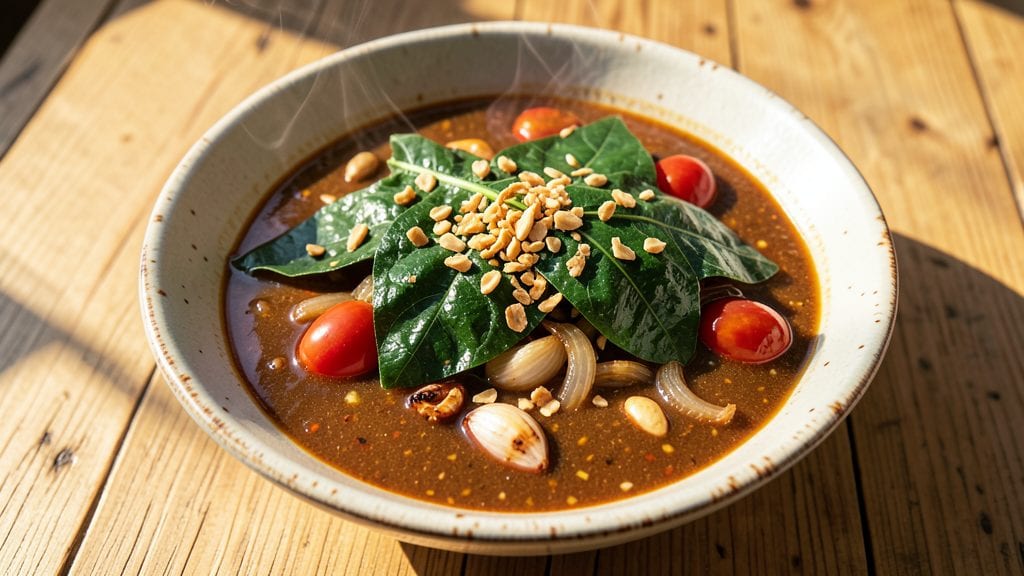
This vishiswa soup recipe brings the rich, earthy flavors of East African cuisine to your kitchen with its velvety peanut sauce and tender cassava leaves. The dish, traditionally made with groundnuts and often meat or fish, transforms simple ingredients into a deeply satisfying stew that's both hearty and comforting.
I first discovered this recipe during a trip to Uganda, where it's a staple in many homes—its creamy texture and bold flavors make it a standout in any meal rotation.
The beauty of vishiswa lies in its simplicity and versatility. Whether you prepare it with meat, fish, or keep it vegetarian, the base of cassava leaves, ground peanuts, and aromatic spices creates a rich, velvety broth that pairs perfectly with matoke (steamed green bananas) or steamed rice.
The key to achieving that signature smoothness is properly pounding the cassava leaves and simmering the soup low and slow, allowing all the flavors to meld together seamlessly.
What you’ll end up with is a soup that’s creamy yet light, packed with the nutty depth of ground peanuts and the earthy freshness of cassava leaves. The aroma alone—warm spices, roasted peanuts, and simmering vegetables—will fill your kitchen and signal that dinner is ready.
This is a dish that’s as nourishing as it is delicious, perfect for feeding a family or sharing with friends.
Ready to bring a taste of East Africa to your table? Let’s dive into the full recipe, from pounding the cassava leaves to simmering the perfect pot of vishiswa. The process is straightforward, but the results are unforgettable—just like the first bowl you’ll take.
Ingredients for vishiswa soup
Simple ingredients that transform into a velvety East African masterpiece.
| Ingredient | Amount | Notes |
|---|---|---|
| Cassava Leaves 🌿 | 4 cups | Fresh, chopped into small pieces |
| Peanuts 🥜 | 1 cup | Raw, unsalted, ground into powder |
| Onions 🧅 | 1 whole | Yellow or red, finely chopped |
| Tomatoes 🍅 | 3 medium | Ripe, chopped into small pieces |
| Fresh Ginger 🌿 | 1 inch | Freshly grated |
| Garlic Cloves 🧄 | 6 cloves | Minced or finely chopped |
| Fresh Ginger 🌿 | 2 tbsp | Freshly grated |
| Vegetable Oil 🫒 | ½ cup | For cooking |
| Red Chili Peppers 🌶️ | 2 whole | Dried, whole, for tempering |
| Mustard Seeds 🌱 | 1 tbsp | For tempering |
| Cumin Seeds 🌿 | 1 tbsp | For tempering |
| Turmeric Powder 🌶️ | 1 tsp | Freshly ground preferred |
| Salt 🧂 | 1 tsp | Adjust to taste |
| Water 💧 | 4 cups | For simmering |
| Green Chilies 🌶️ | 2 whole | Fresh, slit lengthwise |
The cassava leaves are the heart of this dish. Look for fresh, vibrant leaves at African or Caribbean markets—they hold up better than store-bought frozen. If you can't find them, spinach or kale works in a pinch, but the flavor won't be the same. The peanuts should be raw and unsalted—Trader Joe's or bulk bins usually have good options. For the ginger, freshly grated is non-negotiable; it adds a bright, zesty kick that dried can't match. I usually grab a whole root and grate what I need, storing the rest in the freezer.
No fresh ginger? Dried powder at half the amount works, but it's not the same. Out of peanuts? Cashews or almonds can substitute, though the texture will be slightly different. The tomatoes can be canned if fresh aren't in season—just drain them well. For the chilies, adjust to heat preference: more for spice lovers, less for milder flavor. The mustard seeds and cumin are key for that signature tempering aroma—don't skip them. If you're short on time, pre-chop the onions and garlic while the soup simmers.
This soup tastes even better the next day—the flavors meld beautifully after resting. Store in an airtight container in the fridge for up to 4 days. For longer storage, freeze portions in single-serving containers—they reheat perfectly. The peanuts can be ground ahead of time and stored in the fridge for 1 week, but freshly ground adds the best flavor. Serve with steamed rice or matoke for the full experience.
Why You'll Love This Recipe
- No Chopping Chaos: I’ll be real—cassava leaves can look intimidating, but here’s the secret: just wash and tear them like lettuce. No fancy knife skills, no stress—just dump and stir.
- Peanut-Packed Magic: That earthy peanut paste isn’t just for flavor—it’s the soul of this soup. The toasted peanuts add a nutty crunch that makes every spoonful feel like a little victory, especially when paired with the bright, tangy tomatoes.
- Leftovers That Shine: Between us, this soup begs to be made in bulk. The flavors deepen overnight, and reheating it? Just add a splash of water—no mushy mess, just rich, comforting goodness the next day.
- Budget Meal Hero: Fresh ginger and cassava leaves might sound fancy, but they’re actually my go-to for stretching meals without breaking the bank. A single batch feeds four, and the peanuts add protein that keeps everyone full for hours.
Step-by-step instructions for vishiswa soup
Here's how to make this velvety South Indian delight with rich flavors and perfect texture.
Prepare the Base with Cassava Leaves and Spices
Heat the 0.5 cup vegetable oil in a heavy-bottomed pot over medium heat. Add the 1 tablespoon mustard seeds and 1 tablespoon cumin seeds, letting them sizzle until they release their aroma—about 30 seconds. You'll know it's ready when the seeds start popping gently.
Add the 1 whole onions, chopped finely, and sauté for 3-4 minutes until they turn translucent and golden. Stir in the 6 cloves garlic cloves and 2 tablespoons freshly grated ginger, cooking for another 30 seconds until fragrant. Now add the 1 teaspoon turmeric powder and 1 teaspoon salt, mixing well to coat the onions.
Pour in the 4 cups water and bring to a gentle boil. Add the 4 cups chopped cassava leaves and let it simmer for 10 minutes. The leaves will soften and blend into the broth, creating a rich green base. Keep the heat at medium-low to prevent boiling over.
Build Flavor with Tomatoes and Peanuts
Add the 3 medium tomatoes, chopped into small pieces, to the simmering pot. Cook for 5-6 minutes until the tomatoes soften and the mixture thickens slightly. You'll see the oil separate slightly on top—that's the sign you're on the right track.
Now stir in the 1 cup ground peanuts, mixing thoroughly until they dissolve into the soup. This step is crucial for that signature creamy texture. Let it cook for another 3-4 minutes until the peanuts are fully incorporated and the soup begins to thicken into a velvety consistency.
Add the 2 whole green chilies, slit lengthwise, and the 2 whole dried red chili peppers. Let everything simmer together for 5 minutes to allow the flavors to meld. The soup should now have a rich, earthy aroma with hints of spice and nuttiness.
Temper and Finish the Soup
Remove the pot from heat and let it cool slightly for 2 minutes. This resting period prevents the soup from curdling when you add the final ingredients. Return the pot to low heat and carefully pour in the remaining 1 inch freshly grated ginger and the 1 tablespoon freshly grated ginger (if using separately).
Taste and adjust the seasoning with additional salt if needed. The soup should be well-balanced with a mild spice level and a creamy, velvety texture. If it's too thick, you can add a splash of water to reach your desired consistency.
Let the soup simmer gently for another 5 minutes to ensure all flavors are perfectly combined. The final dish should have a vibrant green color, smooth texture, and a harmonious blend of spicy, nutty, and earthy flavors that make this soup truly special.
Pro Tips For Making Vishiswa Soup
- Wilt Leaves Properly: Cassava leaves need a good sweat—cover the pot for 5-7 minutes after adding them to the simmering onion-tomato base. This breaks down their tough texture without turning them to mush. I used to skip this, and the leaves stayed bitter and chewy.
- Toast Peanuts First: Dry-roast the peanuts in a separate pan for 3-4 minutes until they smell nutty before grinding. This deepens their flavor and prevents the soup from tasting raw or chalky. (Yes, even if you’re impatient like me.)
- Control the Heat: Start with medium-high heat for the ginger-onion-tomato base, but drop to a gentle simmer once the leaves go in. Boiling too hard makes the soup watery and dulls the peanuts’ richness—this isn’t a race.
- Prep Ginger Right: Grate the ginger thinly and let it sit in the hot oil for 30 seconds before adding onions. This extracts the spice without bitterness and gives the soup that signature warmth. (Your future self will notice the difference.)
Troubleshooting your vishiswa soup
Leaf Texture Issues
If your cassava leaves turn mushy or disintegrate too quickly, you likely simmered them too long. The key is to add them after the onions and spices but remove them as soon as they soften—about 8-10 minutes max.
For extra protection, stir in 1 tablespoon of lemon juice at the end to preserve their vibrant color and slight bite. 🌿
Peanut Clumping
Raw peanuts can form stubborn lumps if not ground finely enough. Use a high-powered blender or food processor to create a smooth powder—no gritty bits should remain. For an extra-smooth texture, toast the peanuts in a dry pan for 2-3 minutes before grinding.
If clumps still form, whisk the soup vigorously while heating to break them apart. 🥜
Broth Too Thin
A watery soup usually means insufficient simmering time or too much liquid. Reduce the water to 3 cups and let the soup cook uncovered for 10-15 minutes longer to thicken.
Alternatively, blend ½ cup of the cooked cassava leaves with ¼ cup water, then stir it back in—this adds natural thickening power without altering flavor. 💧
Burnt Spices
Mustard and cumin seeds burn quickly if left unattended. Keep the heat at medium-low and stir constantly for the first 30 seconds until they pop. If they darken too much, strain them out and add fresh seeds to the pot.
For a deeper aroma, bloom the spices in 2 tablespoons of oil instead of the full ½ cup. 🌶️
Lacking Creaminess
The peanut sauce might not emulsify properly if the soup isn’t hot enough when adding the peanuts. Heat the broth to a gentle boil before stirring in the ground peanuts, then reduce to low heat and whisk continuously for 2-3 minutes.
For extra richness, stir in 1 tablespoon of coconut milk at the end. 🥥
Overpowering Heat
If the chilies dominate the flavor, reduce them to 1 green chili and 1 dried red chili. For a milder heat, remove the seeds and membranes before adding.
Balance the spice with 1 teaspoon of honey or 1 tablespoon of tamarind paste—both mellow the heat while enhancing depth. 🌶️
Nutrition facts
Frequently asked questions
What can I substitute for cassava leaves if I can't find them?
Fresh spinach or kale works in a pinch, though the flavor won't be identical. Use 2 cups of tightly packed leaves instead of 4 cups of cassava, and add them at the same stage. For a closer match, try pumpkin leaves if available at African markets—they're the traditional alternative.
How do I make this soup vegetarian?
Simply omit the meat or fish entirely and increase the water to 5 cups for better consistency. Boost umami by adding 1 tablespoon soy sauce or ½ cup coconut milk at the end. The peanut sauce provides enough richness, but the extra liquid prevents the soup from becoming too thick.
Can I prepare vishiswa soup ahead of time?
Yes! It tastes even better the next day as flavors meld. Store in an airtight container in the fridge for up to 4 days. Reheat gently on low heat, stirring occasionally. For freezing, portion into single servings—thaw overnight in the fridge and reheat with 1 tablespoon water per serving to restore creaminess.
What's the secret to getting that perfect creamy texture?
Three things: fine peanut grinding, gentle heat, and patience. Use a high-powered blender for the peanuts, simmer on low after adding them, and whisk continuously for 2-3 minutes. The longer you let it cook at low heat, the smoother it becomes—don't rush this step!
How spicy should vishiswa soup be?
Traditionally, it's mild with a subtle heat from the green chilies. For a balanced bowl, use 1 green chili and 1 dried red chili (seeds removed). If you prefer more heat, add ½ teaspoon cayenne pepper at the end. Always adjust to your preference—this soup should complement your meal, not overpower it.