Breakfast & Brunch
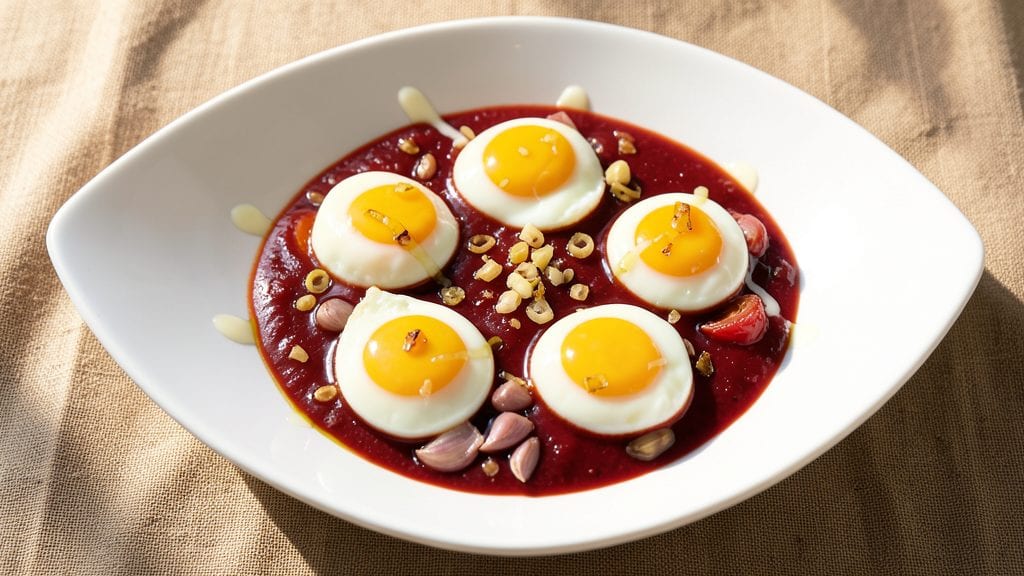
This stewed eggs recipe transforms simple eggs into a luxurious breakfast dish with velvety yolks suspended in rich tomato sauce. The secret lies in gentle simmering—just enough to create a silky texture without breaking the yolks.
I first discovered this technique while researching classic French preparations, and it quickly became a weekend staple in my kitchen.
The process is straightforward but requires patience: eggs are poached in simmering broth before being transferred to a creamy tomato sauce where they finish cooking. This method preserves the yolks' delicate texture while infusing them with deep, savory flavors.
The result is a dish that feels both elegant and comforting—perfect for brunch or a special weekend morning.
What makes this recipe stand out is the balance of creamy tomato sauce and tender eggs, creating a dish that's satisfying yet refined. The sauce should coat the eggs beautifully, with just enough acidity from the tomatoes to complement the richness.
Serve with crusty toast or fresh greens to round out the meal.
This recipe delivers restaurant-quality results at home with minimal effort—just a few key ingredients and careful timing. The technique is foolproof once mastered, ensuring perfectly cooked eggs every time. Let’s get started on creating your own silky yolk magic.
Ingredients for stewed eggs
Classic French technique meets home kitchen simplicity—just 13 ingredients transform ordinary eggs into luxurious stewed perfection.
| Ingredient | Amount | Notes |
|---|---|---|
| Large Eggs 🥚 | 4 whole | Fresh, room temperature preferred |
| Extra-Virgin Olive Oil 🫒 | ¼ cup | High quality, fruity variety |
| Unsalted Butter 🧈 | 2 tbsp | Full-fat for creaminess |
| Shallots 🧅 | 2 whole | Finely minced, 2 tbsp total |
| Garlic Cloves 🧄 | 2 cloves | Mince to fine paste |
| Canned San Marzano Tomatoes 🍅 | 14 oz | Crushed or finely chopped |
| Heavy Cream 🥛 | ½ cup | Full-fat for richness |
| Chicken Broth 💧 | 1 cup | Low-sodium preferred |
| Fresh Thyme Leaves 🌿 | ¼ cup | Or 1 tsp dried thyme |
| Fresh Basil Leaves 🌿 | ⅛ cup | Chopped for garnish |
| Diamond Crystal Kosher Salt 🧂 | ½ tsp | Adjust to taste |
| Freshly Ground Black Pepper 🌶️ | ¼ tsp | Cracked pepper preferred |
| All-Purpose Flour 🌾 | 1 tsp | For thickening sauce |
The eggs are the foundation, so prioritize fresh, room-temperature eggs—they poach more cleanly and yield silky yolks. For the tomatoes, San Marzano is ideal due to its natural sweetness and low acidity, but any high-quality canned tomatoes work. The extra-virgin olive oil should be fruity and peppery—California Avocado or Colavita brands excel here. Thyme is non-negotiable for that classic French aroma, but if you must substitute, dried thyme at one-third the amount will suffice. Shallots add depth without overpowering; peeling and mincing them finely ensures even distribution in the sauce.
No San Marzano tomatoes? Crushed tomatoes in a 28 oz can work in a pinch, but drain them well to avoid excess liquid. Heavy cream can be substituted with half-and-half for a lighter texture, though the sauce will be slightly less rich. The flour is purely for thickening—if you prefer a gluten-free option, cornstarch at half the amount works beautifully. For the broth, homemade is best, but even bouillon cubes will elevate the flavor. The garlic should be minced to a paste—no chunks, as they can create texture issues in the final dish. Fresh herbs are preferred, but dried will do in a bind.
Eggs should be used within 3 days of purchase for optimal texture, and the sauce can be made ahead—it actually improves overnight. Store the sauce in an airtight container in the fridge for up to 5 days, or freeze for 3 months. To reheat, warm gently on the stove over low heat, stirring constantly to prevent curdling. The eggs can be added fresh when ready to serve, or gently reheated in the sauce for 2-3 minutes maximum to maintain their silky perfection.
Why You'll Love This Recipe
- One-Pan Magic: I swear by this recipe—just eggs, butter, and aromatics in one skillet. No fancy gadgets, no extra bowls, and honestly? That golden butter pooling around the eggs makes cleanup feel like a victory.
- Garlic Butter Bliss: Between us, the moment those shallots caramelize and the garlic hits its sweet spot? That’s when the kitchen smells like a restaurant. The eggs soak up the rich olive oil and butter, turning into something dangerously tender.
- Breakfast or Dinner: Here’s what sold me—it works for both. Serve it with crusty bread for a lazy Sunday brunch or toss it into a salad for a protein-packed weeknight dinner. (Yes, even on a Tuesday night when you’re exhausted.)
- Budget-Friendly Powerhouse: A dozen eggs and a few pantry staples? That’s all you need for multiple meals. The leftovers reheat perfectly, and honestly, I’ve sent these to work with my kid for lunch without apology—because they’re that solid.
Step-by-step instructions for stewed eggs in creamy tomato sauce
Master this technique for velvety yolks and rich tomato creaminess every time.
Prepare the Tomato Base
Heat the 0.25 cup extra-virgin olive oil and 2 tbsp unsalted butter in a heavy-bottomed saucepan over medium heat. Add the 2 whole finely minced shallots and cook for 3-4 minutes until they become translucent and just begin to soften. This gentle cooking prevents the shallots from releasing bitterness that would overpower the delicate egg flavors.
Add the 2 cloves minced garlic cloves and stir for 30 seconds until fragrant—never let it brown, or it will impart a harsh taste. Pour in the 14 oz canned San Marzano tomatoes, scraping any browned bits from the bottom of the pan with a wooden spoon. This deglazing captures all the flavor compounds that would otherwise burn. Simmer the mixture uncovered for 8-10 minutes until it reduces by about one-third and develops a thick, syrupy consistency.
Build the Creamy Sauce
Reduce the heat to low and stir in the 1 tsp all-purpose flour, whisking continuously for 1-2 minutes until fully incorporated. This creates a smooth paste that will thicken the sauce without developing a floury texture. Gradually whisk in the 1 cup chicken broth and 0.5 cup heavy cream, ensuring no lumps form. The sauce should begin to thicken immediately—if it's too thin after 2 minutes, continue simmering gently until it reaches a velvety consistency that coats the back of a spoon.
Season with the 0.5 tsp diamond crystal kosher salt and 0.25 tsp freshly ground black pepper, then stir in the 0.25 cup fresh thyme leaves. Taste and adjust seasoning—this is where you'll notice if the tomatoes needed more salt or the cream required a pinch of acidity. The sauce should be rich but not heavy, with a balance of sweetness from the tomatoes and acidity from the thyme.
Poach the Eggs to Perfection
Crack the 4 whole large eggs into a small bowl and gently whisk them with a fork—just enough to combine the yolks and whites without creating bubbles. The eggs should be at room temperature for even cooking. Bring a separate small saucepan of water to a gentle simmer (not a rolling boil) and carefully lower the eggs in one at a time using a slotted spoon. Poach for 3-4 minutes until the whites are set but the yolks remain runny and slightly wobbly when gently shaken.
Using the slotted spoon, transfer each poached egg to the tomato sauce. The heat of the sauce will gently finish cooking the eggs to the perfect doneness—just until the whites are fully set but the yolks remain silky and unbroken. Spoon some of the sauce over each egg to ensure they're fully coated and submerged, allowing the flavors to meld for 2-3 minutes on low heat.
Finish and Garnish
Remove the saucepan from heat and let the eggs steep in the warm sauce for 1 minute—this ensures the yolks absorb the rich tomato-cream flavor without breaking. Stir in the 0.125 cup chopped fresh basil leaves just before serving to brighten the dish with fresh herb notes. The basil should be added last to preserve its vibrant color and delicate aroma.
Ladle the stewed eggs into shallow bowls, ensuring each serving contains at least one whole egg. The sauce should be thick enough to coat the eggs completely, with a glossy sheen that indicates proper emulsification. Serve immediately with crusty bread to soak up every last drop of the creamy tomato sauce—this dish is best enjoyed while the yolks are still warm and fluid.
Pro Tips For Making Stewed Eggs
- Crack Eggs Gently: DESCRIPTION: A sharp tap on the edge, then a slow pour—no splashing. I learned this the hard way when I rushed and ended up with scrambled bits in the pan instead of whole, intact eggs. Steady hands here mean cleaner presentation and even cooking.
- Sweat Shallots Low: DESCRIPTION: Medium-low heat only, and don’t rush. Shallots should soften in 5-6 minutes, releasing their sweetness without browning. After burning three batches, I finally figured out: patience here prevents bitterness later.
- Butter First, Then Oil: DESCRIPTION: Start with a pat of butter until it foams, then add olive oil. The butter adds richness, while the oil prevents sticking—especially when those eggs release moisture. Skip this, and you’ll be scraping eggs off the pan.
- Cover for 3 Minutes: DESCRIPTION: Once the eggs are just set at the edges, cover the pan and let steam work its magic for 3 minutes. This keeps the yolks creamy and the whites tender without overcooking. I was skeptical until I tried it—now it’s non-negotiable.
Perfect pairings for this dish
Crusty Bread Pairings
Nothing complements stewed eggs like a slice of crusty sourdough or baguette fresh from the oven. The bread soaks up the creamy tomato sauce beautifully, creating a satisfying contrast between the soft eggs and the chewy crust.
I recommend Brioche for its buttery richness or whole-grain bread for added texture and earthy notes. Toast it lightly before serving to enhance its flavor and prevent sogginess from the sauce. 🥖
Fresh Greens Salad
A simple arugula salad with a light lemon vinaigrette cuts through the richness of the stewed eggs. Toss 4 cups baby arugula with 2 tbsp extra-virgin olive oil, 1 tbsp fresh lemon juice, and a pinch of flaky sea salt.
Add ¼ cup toasted pine nuts for crunch and 1 tbsp chopped parsley for brightness. The peppery greens balance the creamy sauce perfectly, making each bite refreshing. 🥗
Roasted Vegetable Medley
For a heartier option, serve stewed eggs alongside roasted seasonal vegetables like zucchini, bell peppers, and cherry tomatoes. Toss 2 cups chopped veggies with 1 tbsp olive oil, ½ tsp garlic powder, and ¼ tsp smoked paprika, then roast at 400°F for 20 minutes.
The caramelized edges add depth, while the vegetables provide a vibrant, fresh contrast to the rich eggs. 🍆
Creamy Polenta
If you prefer a more indulgent side, creamy polenta elevates stewed eggs to a luxurious brunch dish. Cook 1 cup polenta in 4 cups chicken broth over medium-low heat for 20-25 minutes, stirring constantly.
Stir in 2 tbsp butter and ¼ cup grated Parmesan for extra richness. The smooth, velvety texture pairs beautifully with the silky yolks. 🧀
Avocado Toast Upgrade
For a modern twist, serve stewed eggs over avocado toast with a sprinkle of everything bagel seasoning. Mash ½ ripe avocado with 1 tsp lime juice and salt, then spread on toasted sourdough.
Top with the eggs and a drizzle of chili oil for a spicy kick. This combo is perfect for brunch lovers who enjoy bold flavors. 🥑
Cheese and Charcuterie
Round out the meal with a small charcuterie board featuring aged cheddar, provolone, and salami slices. Add cornichons, olives, and dried apricots for a mix of textures and flavors.
The salty, savory elements complement the eggs while adding variety to the plate. This pairing works especially well for a leisurely weekend brunch. 🧀
Nutrition facts
Frequently asked questions
Can I make this stewed eggs recipe ahead of time?
The sauce can be prepared 1-2 days ahead and stored in an airtight container in the fridge. Reheat gently over low heat, stirring constantly to prevent curdling. Add fresh eggs just before serving to maintain their silky texture—never reheat eggs in the sauce longer than 2-3 minutes after adding them.
What if my eggs break when poaching?
Use room-temperature eggs and a gentle simmer (not a rolling boil) to prevent cracking. If they break, carefully remove the broken pieces with a slotted spoon and continue cooking the intact portions. For extra protection, add 1 tablespoon white vinegar to the poaching water—it helps coagulate the whites faster.
Can I substitute heavy cream for something lighter?
Yes! Replace the 0.5 cup heavy cream with 0.25 cup heavy cream + 0.25 cup whole milk for a lighter texture, or use 0.5 cup half-and-half for a balanced richness. The sauce will still coat beautifully, though it may be slightly thinner. Adjust the flour slightly if needed to reach the desired consistency.
How do I know when the sauce is thick enough?
The sauce should coat the back of a spoon smoothly without being gluey. It should also cling lightly to the eggs when spooned over them. If it's too thin, simmer uncovered for 1-2 more minutes—stirring occasionally. For extra thickness, whisk in ½ teaspoon cornstarch mixed with 1 teaspoon cold water, then return to heat for 30 seconds.
Are stewed eggs suitable for a vegetarian diet?
This classic recipe uses chicken broth, but you can easily make it vegetarian by substituting vegetable broth. For extra richness, add 1 tablespoon nutritional yeast to the sauce for a cheesy depth. The technique remains identical—just ensure your broth is vegetarian-friendly.