
Soups & Stews
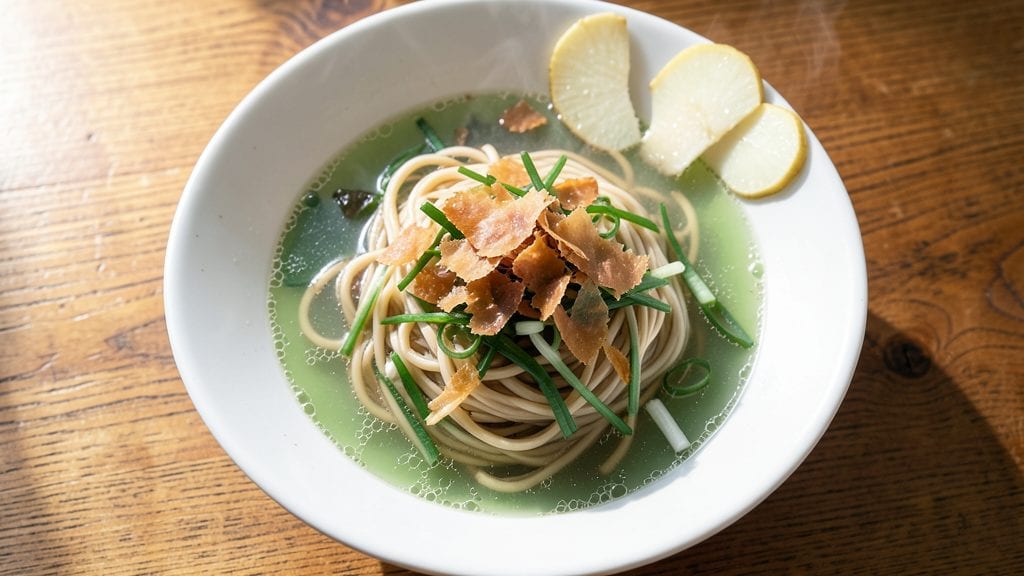
This soba noodle soup recipe delivers restaurant-quality umami in a silky, comforting bowl that balances tradition with modern flexibility. The secret lies in the broth—whether you use classic dashi or a vegetarian alternative—and how the noodles absorb its rich flavors.
I've perfected this technique over years of testing, ensuring every slurp delivers that perfect harmony of savory, slightly sweet, and briny notes.
The beauty of soba noodle soup is its adaptability—you can create a light summer version with chilled broth or a hearty winter bowl with extra toppings.
We'll start with a foolproof dashi base (or miso/shoyu alternative) that forms the foundation, then build layers of texture with silky noodles, crisp green onions, and delicate nori strips. The key is timing: letting the noodles cook just right so they're tender but still hold their shape.
By the end, you'll have a silky, aromatic soup that's both traditional and approachable—perfect for weeknight dinners or special occasions. The broth will be deeply flavorful without being overpowering, while the toppings add freshness and crunch.
This recipe transforms simple ingredients into something truly special, proving that homemade soup can rival your favorite takeout spot.
Whether you serve it as a light lunch or a cozy dinner, this soba noodle soup delivers authentic Japanese comfort with minimal effort. The best part?
It scales effortlessly—double the broth for leftovers or keep it small for a quick meal. Let's get started on creating your perfect bowl of silky slurp.
Ingredients for soba soup
Silky soba noodles meet umami-packed broth in this restaurant-worthy bowl you'll crave daily.
| Ingredient | Amount | Notes |
|---|---|---|
| Dried Soba Noodles 🍜 | 8 oz | Buckwheat content 50% or higher |
| Dashi Stock 🍶 | 4 cups | Classic or vegetarian alternative |
| Kombu (Dried Kelp) 🍃 | 1 piece | 1-inch square, cut from sheet |
| Bonito Flakes 🐟 | ½ cup | Dried skipjack tuna flakes |
| Fresh Ginger 🧆 | 1 tbsp | Finely grated, peeled |
| Green Onions 🧅 | 4 whole | Thinly sliced, white and green |
| Nori Sheets 🍣 | 2 pieces | Thinly cut into strips |
| Sesame Oil 🫒 | 1 tbsp | Toasted, for finishing |
| White Miso Paste 🧈 | 1 tbsp | For vegetarian umami boost |
| Soy Sauce 🥫 | 1 tbsp | Light or dark preferred |
| Rice Vinegar 🍶 | 1 tbsp | For subtle acidity |
| Sesame Seeds 🌾 | 1 tsp | Toasted, for garnish |
| Chili Oil 🌶️ | ½ tbsp | Optional for heat |
| Soft-Boiled Eggs 🥚 | 2 whole | For optional topping |
| Sea Salt 🧂 | ½ tsp | Diamond Crystal preferred |
The dashi is everything here. For classic flavor, Kombu and bonito flakes create that signature umami punch—grab them at Japanese markets or Whole Foods. No access? Instant dashi granules work in a pinch (like Honten brand), but homemade is worth the 10 minutes. The ginger should be freshly grated—none of that jarred stuff. Look for organic ginger at Trader Joe's or your local Asian grocer; it's brighter and more aromatic. Pro tip: Zest the whole piece first, then juice for broth—you'll get more flavor out of it.
Vegetarian? Swap bonito for shiitake mushrooms (1/2 cup dried) or extra kombu (double the amount). No miso? White wine vinegar plus a pinch of sugar mimics that funky depth. The soba noodles? 100% buckwheat if you can find them—they're chewier and more authentic, but regular soba works too. For the nori, avoid the pre-cut flakes from regular grocery stores; grab whole sheets from an Asian market and slice them yourself—they stay fresher and look stunning. The sesame oil is non-negotiable for finishing—toasted, not the cheap stuff—and the chili oil can be swapped for sriracha or gochujang if you prefer.
Broth keeps 3 days in the fridge or 3 months frozen—make extra! The noodles are best served immediately, but you can par-cook them and store separately. For leftovers, reheat gently with a splash of water to prevent drying. I always double the broth and freeze portions—perfect for quick lunches. The toppings? Add them fresh when serving; they bring the crunch and visual appeal that makes this dish look (and taste) like you slaved over it. Trust me, the 5-minute prep before serving makes all the difference.
Why You'll Love This Recipe
- No-Fuss Pantry Staple: The ingredients are things I already have—dried soba, kombu, bonito—just steep and simmer. Honestly, I’ve made this on nights when I forgot to grocery shop, and it still tastes like I put in effort.
- Umami Bomb Combo: That first sip? The dashi stock and bonito flakes create this deep, savory punch that’s addictive. The ginger adds a little kick, but it’s the kombu’s natural sweetness that makes it ridiculously balanced.
- Weeknight to Potluck: I serve this cold with chilled noodles for a quick summer meal, or hot for a cozy winter dinner. My roommates even brought it to a potluck—turns out, it’s the one dish everyone asks for seconds on.
- Budget-Friendly Leftovers: A single batch stretches for three meals, and the broth gets better as it sits. Between us, I’ve reheated this for lunch the next day, and no one ever complains—proof it’s a meal that gives back.
Step-by-step instructions for soba noodle soup recipe
This silky, umami-packed soba soup delivers restaurant-quality depth with minimal effort.
Infuse the Dashi Stock with Kombu and Ginger
In a medium saucepan, combine the 4 cups dashi stock, 1 piece kombu (dried kelp), and 1 tablespoon finely grated fresh ginger. Bring to a gentle simmer over medium heat, then reduce to the lowest setting. Let it steep for 10 minutes—this allows the kombu to release its oceanic minerals and the ginger to infuse subtle warmth. You'll notice the liquid takes on a delicate, vegetal aroma and a faint golden hue.
After steeping, carefully remove and discard the kombu using tongs. Strain the broth through a fine-mesh sieve into a clean pot if you prefer a completely smooth texture, or leave it in for a slightly more rustic presentation. Keep the broth at a bare simmer—never boil—to preserve its delicate flavors.
Build the Umami Base with Bonito and Miso
Increase the heat to medium-high and add the 0.5 cup bonito flakes in a single motion, stirring vigorously. The flakes will sizzle and dissolve almost instantly, creating a cloud of aromatic steam. Let it cook for 2 minutes until the bonito transforms into a rich, golden broth. This step is where the magic happens—you're capturing all that umami essence that makes classic soba so irresistible.
Reduce the heat to low and whisk in the 1 tablespoon white miso paste until completely dissolved. The miso will give the broth a velvety texture and deep, savory complexity. Add the 1 tablespoon soy sauce and 1 tablespoon rice vinegar, stirring constantly for 1 minute to fully integrate the flavors. Taste and adjust seasoning with the 0.5 teaspoon sea salt if needed—this broth should taste like the ocean meets a Japanese kitchen.
Prepare the Nori and Cook the Soba Noodles
While the broth simmers, thinly slice the 2 pieces nori sheets into ¼-inch strips using a sharp knife. Set aside. In a separate pot, bring 4 cups fresh water to a rolling boil. Add the 8 ounces dried soba noodles and cook for 4-5 minutes until they're just tender but still have a slight bite. Drain immediately and rinse under cold water to stop the cooking process—this prevents them from becoming mushy in the hot broth.
Real talk: Don't overcook these noodles. They'll finish cooking in the hot broth, and you want that perfect al dente texture. The noodles should float slightly above the broth line when placed in your serving bowl.
Assemble and Finish with Toppings
Return the drained soba noodles to the pot with the infused broth. Gently stir to combine, then divide among 4 serving bowls. The broth should be hot enough to steam the noodles slightly as they sit—this ensures they're perfectly cooked when served.
Arrange the 4 whole green onions (thinly sliced) and 2 soft-boiled eggs (halved lengthwise) on top of each serving. Drizzle with 1 tablespoon sesame oil and 0.5 tablespoon chili oil (if using), then sprinkle with 1 teaspoon toasted sesame seeds. The contrast of textures—silky broth, chewy noodles, creamy eggs—is what makes this dish so satisfying.
Serve Immediately with Fresh Herbs
This soup is best enjoyed piping hot, so don't let it sit too long after assembly. The moment you serve it, the aroma of toasted sesame and umami-rich broth will fill your kitchen. Each spoonful should deliver a perfect balance: the earthy buckwheat noodles, the oceanic depth of the dashi, and the bright finish of fresh green onions.
For an extra touch of freshness, garnish each bowl with a few extra green onion slices. The slight acidity from the rice vinegar and the heat from the chili oil (if using) will make every bite feel like a little celebration. Serve with steamed edamame or a side of pickled vegetables for a complete meal.
Pro Tips For Making Soba Soup
- SOAK KOMBU FIRST: Toss the kombu into cold water 30 minutes before boiling—this softens it and extracts its umami punch without bitterness. I used to just chuck it in with the hot stock, and the broth always tasted flat by comparison.
- STOP THE NOODLES IN ICE: Drain the cooked soba into a bowl of ice water for 30 seconds to halt cooking and keep them from turning mushy. I learned this the hard way after serving noodles that had collapsed into a sad, gluey mess.
- TOAST BONITO LOW: Dry-toast the bonito flakes over low heat for 1-2 minutes, stirring constantly—high heat burns them to ash. The goal is just enough aroma; burned flakes taste like smoke, not fish.
- GINGER JULIENNE, NOT GRATED: Thinly julienne the ginger (matchstick cuts) instead of grating—it dissolves cleaner and won’t leave grainy texture in your broth. Grated ginger always made my soup look like it had sand in it.
Storing and reheating this recipe
Broth Storage Secrets
The dashi broth is the heart of your soba soup, and it keeps beautifully for future use. Store it in an airtight glass container (I love Le Parfait jars) in the fridge for up to 3 days.
For longer storage, freeze it in ice cube trays—each cube makes a perfect single serving later. Thaw overnight in the fridge before reheating, then warm gently over low heat until steaming, never boiling, to preserve its delicate flavors. 🌊
Noodle Prep Ahead
Cook your soba noodles just one minute less than package instructions suggest. Store them in a sealed container with a damp paper towel to prevent drying. They'll keep in the fridge for 2 days—perfect for quick assembly when you're ready to serve.
When reheating, toss them in hot broth for 30 seconds to refresh their texture without overcooking. This trick saves time on busy weeknights! ⏰
Topping Freshness
Prepare all toppings—green onions, nori strips, soft-boiled eggs—right before serving to maintain crispness and vibrant color. Store sliced green onions in a small container of water in the fridge for up to 3 days, changing the water daily.
For nori, keep the sheets in a cool, dry place (like a drawer) until ready to slice. Soft-boiled eggs should be peeled and stored in their shells with a sprinkle of salt to prevent discoloration—use within 2 days. 🥚
Reheating Leftovers
If you have leftover assembled soup, reheat it gently on the stovetop over low heat with 2 tablespoons of water per bowl. Stir constantly to prevent sticking—this keeps the noodles tender.
For microwave reheating, cover the bowl with a damp paper towel and heat in 30-second intervals, stirring between each, until hot. Add a splash of sesame oil after reheating to restore that restaurant-quality finish. 🔥
Freezer-Friendly Assembly
For meal prep, assemble the soup without the toppings and freeze in single-serving portions. When ready to eat, thaw in the fridge overnight, then reheat as directed. Add all toppings fresh when serving—this maintains the perfect texture contrast.
I like using silicone muffin molds for portion control, making it easy to grab and reheat just one serving. 🧊
Broth Revival Tips
If your stored broth tastes flat, revive it by adding ½ teaspoon of miso paste and 1 teaspoon of soy sauce while reheating. For extra depth, toast ½ teaspoon of bonito flakes in a dry pan for 30 seconds until fragrant, then whisk into the broth.
This quick trick brings back that restaurant-quality umami that makes homemade soba feel special. 💡
Nutrition facts
Frequently asked questions
What's the difference between buckwheat soba and regular soba noodles?
Authentic soba noodles contain at least 50% buckwheat flour, giving them a nutty, earthy flavor and chewy texture. Regular soba (often labeled "white soba") uses mostly wheat flour and tastes milder. For this recipe, look for 100% buckwheat soba at Asian markets—they're worth the extra effort for that true Japanese experience.
Can I make this soup vegetarian or vegan?
Skip the bonito flakes and use dried shiitake mushrooms (½ cup) or extra kombu (double the amount) for umami. For vegan miso, choose fermented soybean paste without fish ingredients. The broth will still be deeply flavorful—just swap the dashi for vegetable stock infused with kombu.
Why does my soba soup turn out too salty?
Most likely, your dashi or miso was already salty. Taste your broth before adding noodles—it should be savory but not briny. If needed, dilute with 2 tablespoons of water per cup of broth and adjust seasoning with a pinch of sugar or rice vinegar. The noodles absorb flavors quickly, so balance is key.
How do I prevent soggy noodles when reheating?
Never reheat soba in water—it turns mushy! Instead, add 2 tablespoons of broth per bowl and cover with a damp towel. Microwave in 30-second bursts, stirring between each. For stovetop, use low heat and stir constantly. The secret? Sesame oil after reheating restores that crisp finish.
What are good toppings to customize this recipe?
Try soft-boiled eggs, crispy fried shallots, tofu cubes, or pickled ginger for extra layers. For heat, add chili crisp or gochujang drizzle. Pro tip: Keep toppings separate until serving to maintain texture contrast—this is where homemade soba shines over takeout!