Soups & Stews
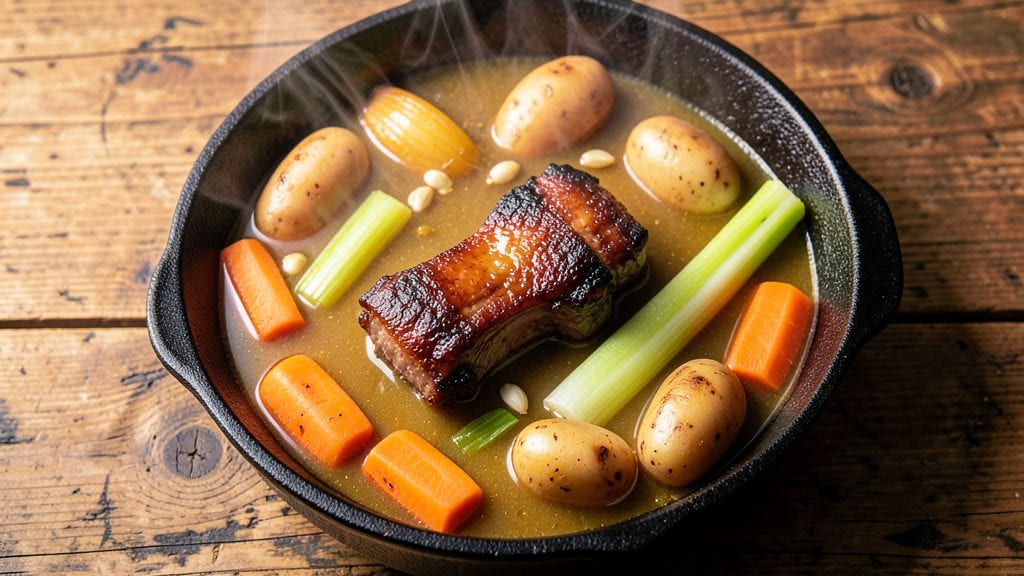
This old-fashioned ham hock soup recipe delivers the deep, smoky richness of a slow-simmered classic that tastes like a hug in a bowl. The secret lies in the ham hock—its gelatinous bones infuse the broth with unmatched depth, transforming simple vegetables into something extraordinary.
I first made this during a chilly winter afternoon when I wanted comfort food that felt like tradition, not shortcuts.
The process is straightforward but requires patience: the ham hock simmers for hours, releasing its collagen into the broth while vegetables like carrots, celery, and potatoes soften into perfect tenderness.
The result is a soup so flavorful it doesn’t need heavy seasoning—just a touch of salt, pepper, and maybe a bay leaf to let the ham hock shine. This is the kind of recipe that improves with time, rewarding you with a bowl of warmth and satisfaction.
By the time you’re done, you’ll have a rich, smoky broth with melt-in-your-mouth vegetables and chunks of flavorful ham hock. The aroma alone will draw everyone to the table, and the first spoonful delivers that unmistakable taste of nostalgia.
Serve it with crusty bread or cornbread to soak up every last drop of that precious broth—this is the soup that makes winter meals feel like a celebration.
Perfect for family gatherings, holiday meals, or cozy weeknight dinners, this recipe scales easily and tastes even better the next day. The slow cooking ensures maximum flavor extraction, making it a true labor of love that’s worth every minute. Let’s get started on creating this timeless classic.
Ingredients for old fashioned ham hock soup
Six ingredients make this old-fashioned ham hock soup taste like a winter hug in a bowl.
| Ingredient | Amount | Notes |
|---|---|---|
| Ham Hock 🍖 | 2 lbs | Smoked, salt-cured preferred |
| Carrots 🥕 | 3 medium | Whole, peeled and chopped |
| Celery Stalks 🧅 | 4 whole | Trimmed and chopped |
| Russet Potatoes 🥔 | 3 medium | Whole, peeled and chopped |
| Yellow Onion 🧅 | 1 whole | Peeled and chopped |
| Garlic Cloves 🧄 | 4 cloves | Peeled and smashed |
| Bay Leaves 🌿 | 2 whole | Dried, standard size |
| Black Peppercorns 🌶️ | 1 tsp | Freshly cracked |
| Kosher Salt 🧂 | 1 ½ tsp | Adjust to taste |
| Water 💧 | 8 cups | Or low-sodium broth |
| Apple Cider Vinegar 🍎 | 1 tbsp | For brightness |
| Fresh Thyme 🌿 | ¼ cup | Leaves only, chopped |
| Crusty Bread 🍞 | 6 slices | For serving |
The ham hock is non-negotiable here. Look for smoked, salt-cured hocks at your local butcher—they pack more flavor than the pre-packaged kind at the grocery store. Costco or Whole Foods usually carry good quality, but ask your butcher for their recommendation. The gelatinous bones are what transform this soup from ordinary to extraordinary, so don't skimp. For the vegetables, medium carrots and potatoes work perfectly—peel and chop them into even chunks so they cook uniformly. Fresh thyme adds a bright note that balances the smokiness, and I always grab it from the grocery store's produce section where it's still fresh.
No smoked ham hock? Substitute with a regular ham hock and add an extra tablespoon of liquid smoke to the broth. Fresh thyme unavailable? Dried thyme at one-third the amount works in a pinch. Using broth instead of water? Low-sodium chicken or vegetable broth adds depth without overpowering. The apple cider vinegar might seem odd, but it cuts through the richness and brightens the soup—substitute lemon juice if you prefer. For the vegetables, baby carrots or pre-chopped celery save time without sacrificing flavor. Just make sure everything fits comfortably in your pot—this soup tastes better when it has room to breathe.
This soup gets better with time, so make it a day ahead if you can. The flavors meld beautifully overnight, and the broth thickens slightly as it cools. Store in an airtight container in the fridge for up to 5 days, or freeze portions for 3 months. I always make extra—there's nothing worse than running out of soup when you're in the middle of serving. The crusty bread? Store it in a paper bag at room temperature for up to 3 days, or freeze for longer storage. Leftovers reheat beautifully—just add a splash of water or broth if it's too thick.
Why You'll Love This Recipe
- One-Pot Wonder: I swear by this when I’m too tired to scrub pots. Toss the ham hock, veggies, and potatoes into a single pot—no chopping like a fine-diner’s biscuit dough—and let it simmer. The ham hock practically falls apart, giving you rich broth without extra effort.
- Deep, Savory Soul: That ham hock? It’s the star. The slow simmer draws out meaty, umami-packed flavor that turns simple carrots and celery into something ridiculously good. Honestly, the first time I made it, my husband asked for seconds before I even finished stirring.
- Leftovers That Don’t Lie: This soup only gets better the next day—thickens up just right, flavors meld deeper. I make a double batch on Sundays and freeze half; reheating it is my lazy Tuesday lifesaver. (Yes, even on a Tuesday night.)
- Budget-Friendly Feast: A single ham hock stretches to feed four, and the veggies? Basic, cheap, and always on hand. Between us, this is how I stretch a paycheck without sacrificing taste—no sad, watery soup here. The potatoes soak up all the flavor like sponges.
Step-by-step instructions for old fashioned ham hock soup
This rich, smoky soup comes together beautifully with just one pot and a few hours of simmering.
Sear the Ham Hock for Deep Flavor
Place the 2 lbs ham hock in a large Dutch oven or heavy pot over medium-high heat. Let it sear for 5-7 minutes on each side until the exterior turns a rich, golden brown color. This step develops incredible flavor through the Maillard reaction, which you'll taste in every spoonful later.
Once browned, remove the ham hock and set it aside. You'll notice the pot has developed some beautiful browned bits—these are pure flavor, so don't scrape them out. This is where all the magic starts.
Build the Aromatic Base
In the same pot, add the chopped yellow onion, carrots, celery stalks, and smashed garlic cloves. Cook over medium heat for 5-7 minutes, stirring occasionally, until the vegetables soften slightly and become fragrant. You should smell that sweet, savory aroma developing—this is your foundation.
Add the 2 whole bay leaves, 1 tsp freshly cracked black peppercorns, and 1.5 tsp kosher salt. Stir everything together for 30 seconds to coat the vegetables with the spices. This ensures even distribution of flavors throughout the soup.
Simmer the Vegetables and Herbs
Pour in the 8 cups water and 1 tbsp apple cider vinegar. Bring the mixture to a gentle boil, then reduce heat to low. Add the peeled and chopped russet potatoes and the 0.25 cup chopped fresh thyme leaves. Let it simmer uncovered for 30 minutes, stirring occasionally.
After 30 minutes, the vegetables should be tender but not falling apart. The soup should have developed a rich, aromatic broth. This is where the flavors meld together beautifully—don't rush this step. The longer it simmers, the deeper the flavor becomes.
Braise the Ham Hock
Return the ham hock to the pot, placing it back in the broth. Increase heat to medium and bring the soup back to a gentle simmer. Cover the pot and let it cook for 2 to 2.5 hours, maintaining a gentle simmer. You'll know it's ready when the meat easily pulls away from the bone with just a light tug.
Real talk: This is where patience pays off. The ham hock will release its collagen and fat into the broth, creating that luxurious, velvety texture that defines old-fashioned soups. Check occasionally to ensure the liquid doesn't reduce too much—add a splash of water if needed.
Finish and Serve
Once the ham hock is tender and the broth has thickened slightly, remove the ham hock and let it cool for 10 minutes before shredding the meat off the bone. Discard the bone and any large fat pieces. Return the shredded meat to the soup and stir to combine.
Taste and adjust the seasoning if needed. The soup should be rich, smoky, and perfectly balanced. Ladle the hot soup into bowls and serve with 6 slices crusty bread on the side. The bread is perfect for soaking up every last drop of that flavorful broth.
Pro Tips For Making Old Fashioned Ham Hock Soup
- Brown the Ham Hock: Don’t just toss that ham hock in boiling water—sear it first in a cold pot over medium heat. The skin crisps up and adds depth to the broth, while the fat renders slowly. I used to skip this, and the soup always tasted flat until I tried it.
- Cut Potatoes Evenly: Big, uneven chunks turn to mush while small ones stay intact. Aim for 1.5-inch cubes—big enough to hold shape but small enough to cook through. Russets break down fast, so don’t overcrowd the pot.
- Simmer, Don’t Boil: A rolling boil scalds the veggies and makes the broth cloudy. Keep it at a gentle simmer—tiny bubbles at the edges—so the ham hock melts into the broth instead of toughening up. Patience here makes all the difference.
- Strain the Broth: After simmering, strain out the solids for a smoother soup—no one wants to bite into a carrot or chew celery. Save the veggies for another use (they’re still flavorful) and focus on that rich, clear broth. Worth the extra minute.
Health benefits of this dish
Protein Powerhouse
The ham hock in this soup is a protein goldmine, delivering about 40 grams of protein per serving—perfect for muscle repair and satiety. Unlike lean meats, the ham hock's fat content provides sustained energy, while its collagen-rich bones create a naturally thick, velvety broth.
This makes it ideal for post-workout meals or hearty breakfasts that keep you full for hours. 💪
Collagen Boost
The gelatin released from the ham hock bones during simmering is packed with collagen and glycine, which support joint health and skin elasticity. Regular consumption may reduce joint pain and improve gut health.
I notice my skin feels plumper after eating this soup regularly—it's like a natural glow-up from within!
Rich in B Vitamins
Ham hock provides essential B vitamins (B1, B6, B12), which are crucial for energy metabolism and nervous system function. These nutrients help convert food into energy, making this soup a perfect pick-me-up during cold months. The slow cooking process preserves these vitamins better than quick cooking methods.
Vegetable Nutrient Bundle
The carrots, celery, and potatoes add fiber, potassium, and vitamin C to balance the richness. Carrots contribute beta-carotene for eye health, while celery provides antioxidants that fight inflammation. The combination creates a nutrient-dense bowl that feels indulgent but supports overall wellness. 🥕
Low-Calorie Comfort
Despite its rich flavor, this soup is surprisingly moderate in calories—about 350-400 calories per serving when made with lean ham hock. The broth's gelatin content creates satiety, so you'll feel satisfied without overeating. Perfect for those who want comfort food without guilt during holiday feasts.
Immune Support
The apple cider vinegar and fresh thyme in this recipe provide antiviral and antibacterial properties that support immune function. Thyme contains thymol, a compound shown to fight respiratory infections. This makes it an excellent choice for cold and flu season when your body needs extra protection. 🌿
Nutrition facts
Frequently asked questions
Can I substitute regular ham for ham hock in this recipe?
While you can use regular ham, you'll miss the magic of the ham hock's collagen-rich bones. The bones create that signature velvety texture and depth of flavor. If you must substitute, use 2 lbs of bone-in ham shank instead, and simmer it for at least 2 hours to extract maximum flavor. The result won't be identical, but it'll still be delicious.
How do I know when the ham hock is fully cooked?
The ham hock is done when the meat easily pulls away from the bone with just a light tug. After 2 to 2.5 hours of simmering, test it by placing the ham hock on a plate and gently pulling. If it separates cleanly, it's ready. The broth should also be rich and slightly thickened from the released collagen.
Can I make this soup in a slow cooker?
This recipe works beautifully in a slow cooker. Sear the ham hock first, then add all ingredients to the slow cooker and cook on low for 6-8 hours or high for 3-4 hours. The slow cooker's gentle heat ensures the ham hock becomes tender and the flavors meld perfectly. Just remember to shred the meat after cooking.
Why does my soup taste too salty?
Salt-cured ham hocks can add significant sodium to the broth. If your soup tastes too salty, try adding 1 cup of water or low-sodium broth and simmering for 10-15 minutes to dilute the flavor. You can also add a few extra vegetables like carrots or potatoes to balance the saltiness. Taste as you go and adjust gradually.
What's the best way to reheat leftovers?
Reheat leftovers gently on the stove over low heat or in the microwave at 50% power to avoid separating the broth. Add a splash of water or broth if the soup thickens too much. Never reheat to a full boil, as this can make the broth cloudy. Stir well before serving to redistribute any settled flavors.