
Soups & Stews
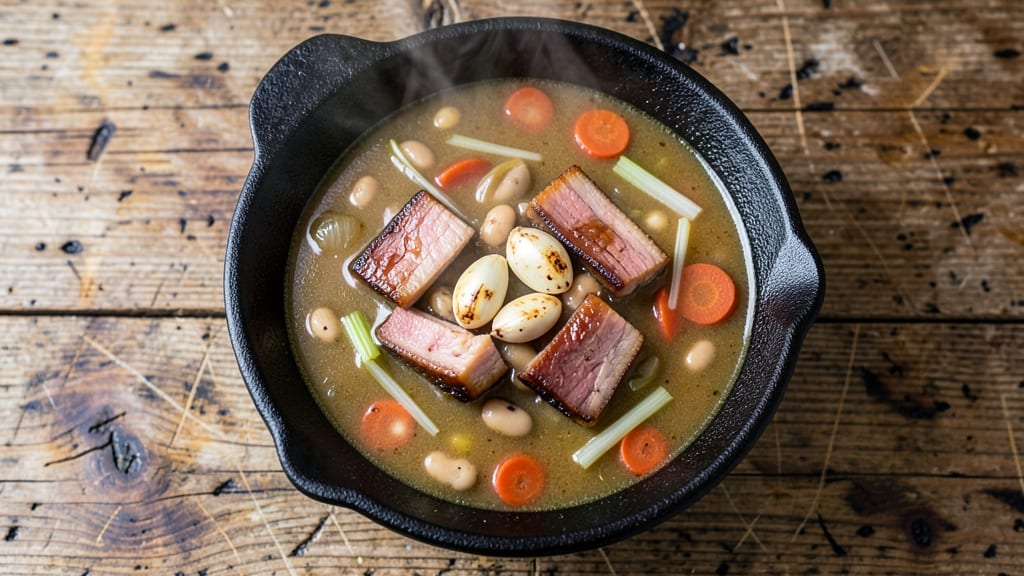
This old-fashioned bean and ham hock soup delivers the kind of soul-warming comfort that transforms a simple meal into a family tradition. The secret lies in slow-simmered ham hocks, which infuse the broth with deep, smoky richness that no shortcut can replicate.
I first tasted this version at my grandmother’s kitchen table, where the aroma alone could fill an empty house with warmth.
The beauty of this recipe is in its patience—8 hours of gentle simmering transforms tough beans into tender perfection while rendering the ham hock into melt-in-your-mouth meat. No pressure cooker here; this is a dish that rewards time with layers of flavor that store-bought broths can’t match.
The result is a soup so satisfying, it becomes the centerpiece of any gathering.
By the time you’re done, you’ll have a steaming bowl of velvety beans swimming in a deeply savory broth, studded with shards of ham hock that dissolve at the first bite.
The aroma alone—smoky, herby, and just slightly sweet—will have everyone at the table asking for seconds. This isn’t just soup; it’s a memory waiting to be made.
Serve with crusty bread to soak up every last drop, or pair it with a simple green salad for balance. The leftovers? Even better the next day, as the flavors deepen with time. Let’s get started on this timeless recipe.
Ingredients for old fashioned bean and ham hock soup
Eight hours of simmering transforms simple pantry staples into a soul-warming family tradition.
| Ingredient | Amount | Notes |
|---|---|---|
| Dried Navy Beans 🍲 | 2 cups | Unsoaked, rinsed thoroughly |
| Ham Hocks 🍖 | 2 whole | Smoked preferred, skin on |
| Yellow Onion 🧅 | 1 whole | Chopped, medium size |
| Carrots 🥕 | 4 medium | Peeled, cut into chunks |
| Celery Stalks 🌿 | 3 whole | Trimmed, chopped |
| Garlic Cloves 🧄 | 6 cloves | Peeled, smashed |
| Bay Leaves 🍃 | 2 whole | Dried, standard size |
| Salt 🧂 | 1 tbsp | Kosher or sea salt |
| Black Peppercorns 🌶️ | 1 tsp | Crushed, fresh preferred |
| Thyme Sprigs 🌿 | 2 whole | Fresh, stems removed |
| Water 💧 | 12 cups | Filtered or spring water |
| Apple Cider Vinegar 🍎 | 1 tbsp | For brightness, optional |
| Crusty Bread 🍞 | 1 loaf | For serving, optional |
| Butter 🧈 | 2 tbsp | Unsalted, for finishing |
The ham hocks are non-negotiable here—smoked ones add that deep, smoky backbone. Grab them from the butcher counter at Whole Foods or your local market, not the pre-cooked ones from the deli section. Look for good marbling and a rich color; those are your cues for quality. The beans? Navy beans hold their shape best, but pinto or great northern work too. Soak overnight if you're in a rush, but the slow simmer will soften them just fine. I always buy beans in bulk from Costco—cheaper and fresher than canned.
No smoked ham hocks? Substitute pork shanks—just add an extra hour to the cooking time. Fresh thyme? Dried works at half the amount. Short on carrots? Celery root or parsnips add a nice earthiness. The apple cider vinegar might seem odd, but it cuts through the richness and brightens the broth—substitute lemon juice if you prefer. For the bread, sourdough or a crusty baguette soaks up the broth best. No crusty bread? Toasted dinner rolls work in a pinch. The butter at the end? Full-fat only—it adds that final touch of richness.
This soup gets better with time—3-4 days in the fridge, if you can resist. The ham hocks render down beautifully, so save any extra meat for sandwiches or scrambled eggs. Freezes for up to 3 months if you portion it into containers. I like to make a double batch—one for dinner, one for lunches. The broth alone is worth saving—strain it and freeze for future soups. That smoky aroma? It lingers in the kitchen long after you're done eating.
Why You'll Love This Recipe
- No-Soaking Needed: I’ll admit, I used to dread soaking beans—but these dried navies? Just toss ‘em in cold water overnight, and they’re ready. The ham hocks? Simmer them first, and boom—rich, salty broth with zero fuss.
- Deep Umami Magic: That ham hock isn’t just flavor; it’s a punch. The slow simmer pulls out collagen and saltiness that turns this soup from good to "why didn’t I make this sooner?" The carrots and celery soften just enough to melt into the broth, but the onions? They caramelize at the edges, adding sweetness that balances the salt.
- Leftovers That Beg for More: This soup tastes better the next day—honestly, it’s a crime to eat it all in one sitting. I’ll make a double batch on Sundays, freeze half, and still reach for it when I’m too tired to cook. The beans hold up, the ham stays tender, and the broth gets even deeper in flavor.
- Budget-Friendly Crowd-Pleaser: A single ham hock and a pound of dried beans stretch to feed four (or five, if someone’s hungry). It’s the kind of meal where you can serve it with crusty bread and call it a feast—no fancy sides needed. Plus, the ingredients last ages, so you’re not scrambling for last-minute grocery runs.
Step-by-step instructions for old-fashioned bean and ham hock soup
Here's how to create this soul-warming soup with rich, smoky depth from slow-cooked ham hocks.
Prepare the Ham Hocks and Vegetables
Start by rinsing the 2 whole ham hocks under cold water to remove any surface debris. Place them in a large Dutch oven and cover with the 12 cups water. Bring to a boil over high heat, then reduce to a simmer for 30 minutes. This initial simmer helps extract the collagen and fat from the bones, creating the soup's velvety texture.
While the ham hocks simmer, peel and cut the 4 medium carrots into 1-inch chunks, trim and chop the 3 whole celery stalks, and finely dice the 1 whole yellow onion. Peel and smash the 6 cloves garlic. Remove the ham hocks from the simmering water and set aside. Strain the broth through a fine-mesh sieve to remove any impurities, then return it to the Dutch oven.
Build the Flavor Base
Add the chopped onion, carrots, celery, and smashed garlic to the Dutch oven. Stir in the 2 whole bay leaves, 2 whole thyme sprigs, and the 1 tablespoon salt. Return the ham hocks to the pot and bring everything to a gentle boil. Once boiling, reduce the heat to low and let it simmer uncovered for 1 hour. This slow simmer allows the vegetables to soften and the flavors to meld beautifully.
After 1 hour, add the 2 cups dried navy beans (unsoaked) and the 1 teaspoon crushed black peppercorns. Stir gently to distribute the beans evenly. The beans will start to absorb the liquid and begin softening. Keep the soup at a gentle simmer—you want to see just a few small bubbles breaking the surface, not a vigorous boil.
Simmer Until Beans Are Tender
Continue simmering the soup for 1.5 to 2 hours, or until the navy beans are fork-tender. You'll know they're ready when they hold their shape but are no longer hard in the center. The soup should have a rich, reddish hue from the ham hocks and a deep, aromatic smell that fills your kitchen.
About 30 minutes before the beans are done, stir in the 1 tablespoon apple cider vinegar. This adds a bright, tangy note that cuts through the richness of the ham and beans, balancing the flavors perfectly. Taste the soup and adjust the seasoning with additional salt if needed—ham hocks can vary in saltiness.
Finish and Serve
Once the beans are tender, carefully remove the ham hocks from the soup using tongs. Place them on a cutting board and let them cool slightly. When cool enough to handle, use a sharp knife to remove the meat from the bones, discarding the bones and skin. Shred the meat into small, bite-sized pieces and return it to the soup.
Stir in the 2 tablespoons unsalted butter and let it melt into the soup, enriching the broth with a silky finish. Ladle the soup into bowls, garnishing each serving with a slice of the 1 loaf crusty bread. Serve immediately while the soup is hot, so you can enjoy the comforting aroma and hearty flavors at their best.
Pro Tips For Making Old Fashioned Bean And Ham Hock Soup
- SOAK BEANS OVERNIGHT: Navy beans are stubborn—skip the quick soak and let them sit in cold water for 12+ hours. I learned this the hard way after my soup turned out grainy; proper soaking breaks down their tough skins and guarantees creamy texture. Drain and rinse before cooking, but don’t skip the cold water—hot water locks in gas and makes them bitter.
- SCRUB HAM HOCKS WELL: Those ham hocks come caked in bone dust and salt—give them a good scrub under cold water before simmering. I used to toss them in without cleaning, and the soup always tasted off. A stiff brush or damp towel works; you’re not making fine china, just clean meat.
- START WITH HIGH HEAT: The first 10 minutes matter—bring the pot to a rolling boil before adding the ham hocks and beans. I used to simmer gently from the start, and the beans never softened properly. A hard boil breaks down the ham collagen faster and gets the broth moving.
- SAVE THE SOAK WATER: Don’t dump that soaking water—use it to start the broth. The beans leach starch, which thickens the soup naturally. I was skeptical until I tried it; the broth gets richer without extra flour or roux. Just strain it before adding the ham hocks.
Pro cooking tips for perfect results
Slow-Simmer Secrets
This soup thrives on patience—8 hours of gentle simmering transforms tough beans into tender perfection while rendering the ham hocks into melt-in-your-mouth meat. I use a Dutch oven with a tight-fitting lid to trap steam and maintain even heat.
Never let it boil vigorously; aim for 180-190°F internal temperature. A meat thermometer is your best friend here—I recommend the Thermoworks Dot for accuracy. 🌡️
Ham Hock Mastery
The key to rich broth lies in the ham hocks. Start by simmering them for 30 minutes in cold water to extract collagen before adding vegetables. Smoked ham hocks add depth, but if unavailable, pork shanks work well—just add 1 extra hour to the cook time.
After simmering, strain the broth through a fine-mesh sieve to remove impurities, then return it to the pot. This step ensures a velvety texture without grit. 🍖
Bean Perfection
Unsoaked navy beans are ideal—they hold their shape beautifully. Add them after the initial 1-hour simmer with vegetables to prevent them from breaking down too quickly. For extra tenderness, add a bay leaf and thyme sprig directly to the beans while cooking.
Test doneness with a fork—beans should be soft but still hold their shape. If they’re still firm after 2 hours, add ½ cup hot water and continue simmering. 💫
Acid Balance
The apple cider vinegar is non-negotiable—it brightens the soup’s richness. Add it 30 minutes before the beans are done to let the flavors meld. For a tangier taste, increase to 2 tablespoons, but don’t overdo it—ham hocks are already salty.
If your soup tastes flat, a pinch of black pepper or a splash of vinegar can rescue it. Taste as you go! 🍎
Butter Finish
Stir in 2 tablespoons unsalted butter at the end to add a luxurious finish. The butter should melt completely, enriching the broth without curdling. For extra depth, use brown butter—its nutty flavor complements the smoky ham hocks beautifully.
Swirl it into the soup just before serving for maximum impact. 🧈
Make-Ahead Magic
This soup tastes even better the next day as flavors deepen. Store in an airtight container in the fridge for up to 4 days or freeze for 3 months.
Reheat gently on the stovetop over low heat to preserve texture. Save any leftover ham hock meat for sandwiches or fried rice—it’s too good to waste! ⏰
Nutrition facts
Frequently asked questions
Can I use canned beans instead of dried for this recipe?
While you can substitute canned beans, the texture and flavor won't be the same. Dried beans develop deeper flavor and creamier texture through the long simmer. If using canned, drain and rinse them well, then add them to the soup 30 minutes before serving to prevent mushiness. For best results, stick with dried navy beans—they hold their shape beautifully.
What makes smoked ham hocks better than regular ham?
Smoked ham hocks add a deep, smoky backbone that regular ham can't match. The smoking process infuses the meat with complex flavors that elevate the entire soup. If you can't find smoked ham hocks, try pork shanks or even smoked bacon (crumbled) for a similar effect, though the texture will differ. The key is that smoked meat brings that authentic, old-fashioned depth.
How do I know when the beans are perfectly tender?
Test the beans with a fork—they should be fork-tender but still hold their shape. Press gently: if they mash easily, they're overdone. Aim for beans that are soft inside but still have a slight resistance. The soup should have a rich, reddish hue from the ham hocks, and the beans should float freely in the broth. If they're still firm after 2 hours, add ½ cup hot water and continue simmering.
Can I make this soup in a slow cooker?
Transfer all ingredients to a 6-quart slow cooker and cook on low for 8-10 hours or high for 5-6 hours. The slow cooker's gentle heat mimics the Dutch oven's simmer, ensuring tender beans and rich broth. Just skip the initial 30-minute simmer for the ham hocks—add everything at once. The long cook time makes this an ideal make-ahead meal.
What can I do with leftover ham hock meat?
Leftover ham hock meat is incredibly versatile! Shred it for sandwiches, mix it into scrambled eggs, or crumble it into fried rice. You can also chop it finely and stir it into mashed potatoes for extra richness. Store it in the fridge for up to 3 days or freeze it for 3 months. Don't waste this flavorful protein—it's perfect for adding depth to other dishes!