
Soups & Stews
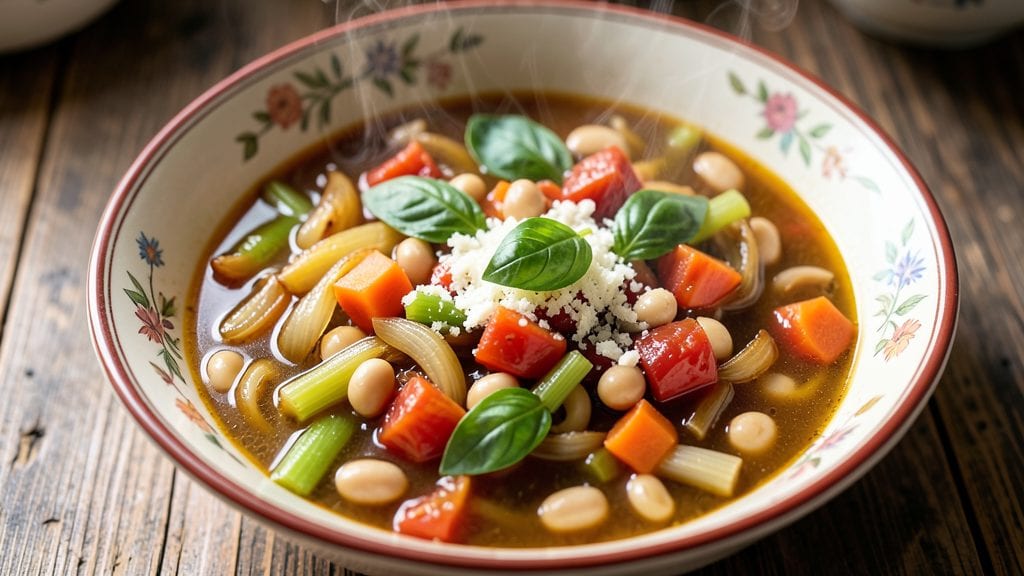
Nonna's minestrone soup recipe carries the warmth of an Italian grandmother's kitchen, where simmering pots create memories as rich as the flavors. This hearty soup balances rustic tradition with modern flexibility—think tender beans, vibrant vegetables, and aromatic herbs all melded into a broth that's both comforting and nourishing.
The secret lies in slow simmering, which transforms simple ingredients into something deeply satisfying, with each spoonful telling a story of home.
What sets this minestrone apart is its adaptability—whether you're using traditional beef broth or a vegetable-based alternative, the technique remains the same. The vegetables cook in stages, ensuring each retains its texture while absorbing the savory broth.
Fresh basil and parsley finish the dish, adding bright, herbal notes that cut through the richness. It's the kind of soup that tastes even better the next day, as flavors deepen with time.
This recipe delivers a bowl of soup that's hearty enough for a cold evening but light enough for a summer lunch. The combination of pasta, beans, and seasonal vegetables creates a dish that's both filling and balanced, perfect for feeding a family or sharing with neighbors.
Every ingredient plays a role, from the caramelized onions to the tender carrots, all working together to create a taste of Italy in your own kitchen.
Whether you're making it for a weeknight dinner or a holiday gathering, this minestrone adapts to your needs—add mushrooms for extra umami, swap in whole-wheat pasta for a nuttier bite, or keep it classic with traditional ingredients.
The beauty of Nonna's method is its simplicity: a few hours of simmering transforms humble ingredients into something extraordinary. Let's bring that Italian kitchen to your stove.
Ingredients for nonna's minestrone soup
Sixteen ingredients transform into Nonna's legendary minestrone—a symphony of rustic Italian flavors.
| Ingredient | Amount | Notes |
|---|---|---|
| Extra-Virgin Olive Oil 🫒 | ½ cup | High-quality, fruity variety for sautéing |
| Yellow Onions 🧅 | 2 whole | Medium-sized, thinly sliced for caramelization |
| Celery Stalks 🥬 | 4 whole | Fresh, stringy, chopped into small pieces |
| Carrots 🥕 | 3 whole | Medium-sized, peeled and sliced into rounds |
| Garlic Cloves 🧄 | 4 cloves | Fresh, peeled and minced for aromatic depth |
| Canned Diced Tomatoes 🍅 | 2 cans | San Marzano preferred for sweetness |
| Vegetable Broth 💧 | 6 cups | Homemade or low-sodium store-bought |
| Canned Cannellini Beans 🌱 | 1 can | Drained and rinsed, for hearty texture |
| Canned Kidney Beans 🌱 | 1 can | Drained and rinsed, for earthy flavor |
| Ditalini Pasta 🍝 | 1 cup | Uncooked, traditional Italian short pasta |
| Fresh Basil Leaves 🌿 | ½ cup | Packed, torn for vibrant finishing touch |
| Fresh Parsley Leaves 🌿 | ¼ cup | Chopped, for bright herbal notes |
| Vegetable Oil 🫒 | 2 tbsp | For extra richness in finishing |
| Diamond Crystal Kosher Salt 🧂 | 1 ½ tsp | Fine grain for balanced seasoning |
| Freshly Ground Black Pepper 🌶️ | ½ tsp | Coarsely cracked for texture |
The foundation begins with San Marzano canned tomatoes and vegetable broth, which provide the soup's rich, savory base. For the best quality, seek out San Marzano tomatoes at specialty Italian markets or well-stocked grocery stores like Whole Foods—their sweet, meaty texture elevates the dish. The cannellini and kidney beans should be high-quality, low-sodium brands like Bertolli or Mutti, available at most supermarkets. Fresh herbs are non-negotiable; farmers' markets offer the most vibrant basil and parsley, but even grocery store selections work if the leaves are bright and firm. The ditalini pasta should be uncooked and traditional—De Cecco or Barilla brands are widely available and ideal for this rustic preparation.
No San Marzano tomatoes? Crushed tomatoes in a heavy-duty can work in a pinch, though the flavor won't be as refined. Substitute white beans for kidney beans if needed, but the cannellini are essential for that creamy texture. Fresh herbs unavailable? Dried basil and parsley at one-third the amount will suffice, though the flavor won't be as bright. For extra umami depth, add mushrooms or sun-dried tomatoes if you're feeling adventurous. The olive oil should be extra-virgin—California or Italian varieties work best, and you can find high-quality options at Trader Joe's or Costco. If you're using a pre-made broth, opt for a low-sodium version to control seasoning better.
This soup tastes even better the next day, as flavors meld and deepen. Store in an airtight container in the refrigerator for up to 5 days, or freeze portions for 3 months by portioning into individual containers. The pasta and beans can be pre-cooked and stored separately for 3 days before assembling the soup. For a quicker meal, keep all ingredients prepped in the fridge and simmer directly from the freezer—just add extra broth to thin as needed. The fresh herbs should be added just before serving to preserve their vibrant flavor.
Why You'll Love This Recipe
- Sofa-Worthy Simplicity: I swear by this recipe because it’s the kind of soup that lets you almost pretend you’re not cooking. Sauté onions, celery, and carrots in olive oil until they’re soft—no fancy techniques, just the kind of slow simmer that happens while you’re folding laundry or scrolling through your phone. The garlic? Oh, that’s the magic—just a few cloves, crushed and blooming in the oil until the whole kitchen smells like Sunday dinner.
- Umami Bomb: That first spoonful? Chef’s kiss. The slow caramelization of onions and celery builds into something deep and savory, while the garlic—when you let it sit just long enough—adds a warmth that lingers. Honestly, I’ve tried store-bought broth, but nothing beats the way these simple veggies, simmered low and slow, turn into a flavor so rich it feels like a hug in a bowl.
- Leftovers That Beg for More: This soup tastes better the next day, which is basically a miracle. I make a big pot on Sundays, and by Wednesday, it’s the only thing anyone in my house wants—even my picky teenager. The veggies soften just enough to melt in your mouth, and the broth gets more concentrated, like a secret upgrade. Freeze half if you’re feeling ambitious; thaw it straight into a new batch when you’re tired of takeout.
- Pantry Staple Power: Between us, this recipe is my go-to for when I’ve got nothing but a few basics. Olive oil, onions, celery, carrots, garlic—if you’ve got those, you’ve got a meal. No fancy ingredients, no last-minute grocery runs. I’ll be real: it’s saved me more than once when I was too tired to order in or too broke to eat out. Plus, it stretches across multiple meals without breaking the bank. That’s the kind of recipe that makes you feel like a genius.
Step-by-step instructions for Nonna's minestrone soup
Here's the method that delivers Nonna's signature rustic flavor and hearty texture every time.
Sauté the Vegetable Base
Heat the 0.5 cup extra-virgin olive oil in a large Dutch oven over medium heat. Add the 2 whole yellow onions, 4 whole celery stalks, and 3 whole carrots, all chopped into ¼-inch pieces. Cook for 8-10 minutes, stirring occasionally, until the vegetables soften and begin to caramelize. You'll notice the onions turn translucent and the carrots develop a slight golden hue—this builds the soup's foundational flavor.
Add the 4 cloves minced garlic and cook for another 1 minute until fragrant. This quick sauté prevents the garlic from burning, which would impart a bitter taste. The vegetables should form a thick, flavorful paste at the bottom of the pot—this is called a soffritto, the secret to authentic Italian soups. If the vegetables release too much liquid, reduce heat slightly to allow proper browning.
Build the Broth and Tomato Base
Pour in the 2 cans diced tomatoes (with juices) and stir to combine with the sautéed vegetables. Cook for 3 minutes to meld the flavors. Then add 6 cups vegetable broth and bring the mixture to a gentle boil. Once boiling, reduce heat to medium-low and let it simmer uncovered for 15 minutes, allowing the flavors to develop and the broth to infuse with the vegetables.
After 15 minutes, stir in the 1 can drained cannellini beans and 1 can drained kidney beans. These beans add hearty texture and protein while absorbing the rich broth. The soup should have a vibrant, rustic appearance with visible bean pieces floating throughout. Taste and adjust seasoning with 1.5 teaspoons diamond crystal kosher salt and 0.5 teaspoon freshly ground black pepper, remembering that canned beans and broth already contain some salt.
Finish with Pasta and Fresh Herbs
Add the 1 cup uncooked ditalini pasta to the simmering soup. Cook for 8-10 minutes, stirring occasionally, until the pasta is al dente—it should have a slight bite to it. The pasta will absorb the broth as it cooks, so don't add extra water. If the soup seems too thick, you can add ½ cup hot vegetable broth to reach your preferred consistency.
Remove the pot from heat and stir in the 0.5 cup torn fresh basil leaves and 0.25 cup chopped fresh parsley leaves. These herbs add brightness and freshness, balancing the earthy flavors of the beans and vegetables. Let the soup sit off heat for 5 minutes to allow the herbs to infuse fully. Taste again and adjust seasoning if needed—this is when you can truly appreciate the balance of flavors.
Finish with Richness and Serve
Return the soup to low heat and stir in the 2 tablespoons vegetable oil. This final touch adds a luxurious mouthfeel and helps distribute the flavors evenly throughout the soup. The oil should be incorporated smoothly, creating a silky texture without breaking the soup's rustic character.
Ladle the minestrone into warm bowls and serve immediately. The soup should be hearty yet light, with a perfect balance of vegetables, beans, and pasta. Each spoonful should deliver layers of flavor—sweet carrots, earthy beans, aromatic herbs, and the rich depth of the broth. For an authentic Nonna touch, serve with a sprinkle of grated Parmesan cheese on the side, though it's not part of this traditional recipe.
Pro Tips For Making Nonna'S Minestrone Soup
- SWEEAT THE AROMATICS: Start by cooking onions, celery, and carrots in olive oil over medium-low heat—don’t rush this. I learned the hard way that blistering them turns them bitter, and you’ll taste it in every spoonful. Let them soften slowly, stirring occasionally, until the onions release their sweetness and the oil smells like a Sunday market.
- CHOP GARLIC THIN: Slice those garlic cloves paper-thin instead of mincing them. They’ll cook faster and infuse the soup without burning. I used to crush them, and half the time they’d turn acrid—now they just melt into the broth like they’re supposed to.
- SALT THE WATER LATE: Wait until the soup is simmering with all the veggies before adding salt. Adding it early dilutes the flavor as the broth absorbs the water. Trust me, your nonna would scold you for this—she knew timing was everything.
- USE STALE PASTA: Toss in your pasta when the soup is nearly done, but here’s the trick: use dried pasta that’s been sitting in your pantry for a few weeks. Fresh pasta will turn mushy, but old dried pasta holds up and soaks up the broth like a sponge. (Yes, even if it’s past its "best by" date.)
Best sauces and condiments for this dish
Classic Tomato Sauce
Start with a simple San Marzano tomato sauce—simmer 2 cans diced tomatoes with 2 cloves minced garlic, 1 tsp dried oregano, and ½ tsp red pepper flakes for 10 minutes on low heat.
Blend half the sauce for a smoother texture or leave it chunky for rustic appeal. This sauce adds depth to your minestrone without overpowering the vegetables. 🍅
Umami-Boosting Mushroom Broth
For extra richness, sauté 1 lb sliced cremini mushrooms with 1 tbsp olive oil until golden, then deglaze with ½ cup white wine and add to your broth.
The mushrooms release deep, savory flavors that pair beautifully with the beans and pasta. Use this enhanced broth instead of plain vegetable broth for a restaurant-quality upgrade.
Garlic-Herb Oil
Infuse ½ cup olive oil with 4 cloves roasted garlic, 1 tbsp fresh rosemary, and 1 tbsp fresh thyme for 1 hour at room temperature. Drizzle 1 tbsp over each bowl before serving—this adds a fragrant, aromatic layer that complements the earthy minestrone.
Store the remaining oil in the fridge for up to 1 week.
Lemon-Caper Vinaigrette
Brighten the soup with a tangy vinaigrette made from 3 tbsp olive oil, 1 tbsp lemon juice, 1 tsp capers, and ½ tsp Dijon mustard. Whisk together and drizzle over the finished soup for a refreshing contrast to the hearty flavors.
This works especially well if your minestrone leans too heavy—it cuts through the richness beautifully.
Spicy Arrabbiata Finish
For heat lovers, stir in 1 tbsp arrabbiata sauce (store-bought or homemade) at the end. This fiery tomato-chili sauce adds a bold kick without altering the soup’s texture.
I recommend Rao's Homemade Arrabbiata for its balanced heat and tang. Add it just before serving to preserve its vibrant color and intensity. 🌶️
Creamy White Bean Purée
Blend 1 cup cooked cannellini beans with ¼ cup vegetable broth and 1 tbsp olive oil until smooth. Stir this purée into the finished soup for a velvety texture and extra protein.
The creamy element balances the soup’s heartiness, making it feel even more indulgent. This works particularly well if you’re serving a crowd—it adds a luxurious touch without extra effort.
Nutrition facts
Frequently asked questions
Can I make this minestrone soup vegan?
Replace the vegetable broth with a high-quality vegetable-based broth (like Imagine Foods or Pacific Foods), and use olive oil instead of butter. For extra richness, add 1 tablespoon nutritional yeast when serving to mimic the umami depth of Parmesan. The recipe already aligns perfectly with plant-based diets, as it's naturally free of meat and dairy.
Why does Nonna's version use ditalini pasta instead of other shapes?
Ditalini's tiny tubes hold onto the broth beautifully while maintaining their shape, creating a satisfying texture in every bite. The small size also makes it easier to eat with a spoon, which is perfect for hearty soups. While other pasta shapes like rigatoni or penne work, ditalini is traditional for Italian minestrone because it absorbs flavor without becoming mushy.
My soup turned out too thick—how can I fix it?
Add ½ to ¾ cup hot vegetable broth gradually while stirring until you reach your preferred consistency. If the soup is already served, thin it with a splash of broth or water at the table. For future batches, simmer uncovered to prevent reduction, or add the pasta earlier to absorb some of the liquid before serving.
Can I prepare this minestrone ahead of time?
This soup tastes even better the next day! Store it in an airtight container in the fridge for up to 5 days, or freeze portions for 3 months. When reheating, add ¼ cup broth per serving to restore texture. Pro tip: Cook the beans and pasta separately, then assemble when ready to serve for the freshest flavor.
What vegetables can I substitute if I don't have carrots or celery?
Swap carrots for zucchini or sweet potatoes (add them later in cooking), and celery for leeks or fennel for similar texture. For a Mediterranean twist, use eggplant or artichoke hearts. The key is balancing flavors—if you remove one vegetable, add another with complementary sweetness or earthiness to maintain the soup's depth.