
Soups & Stews
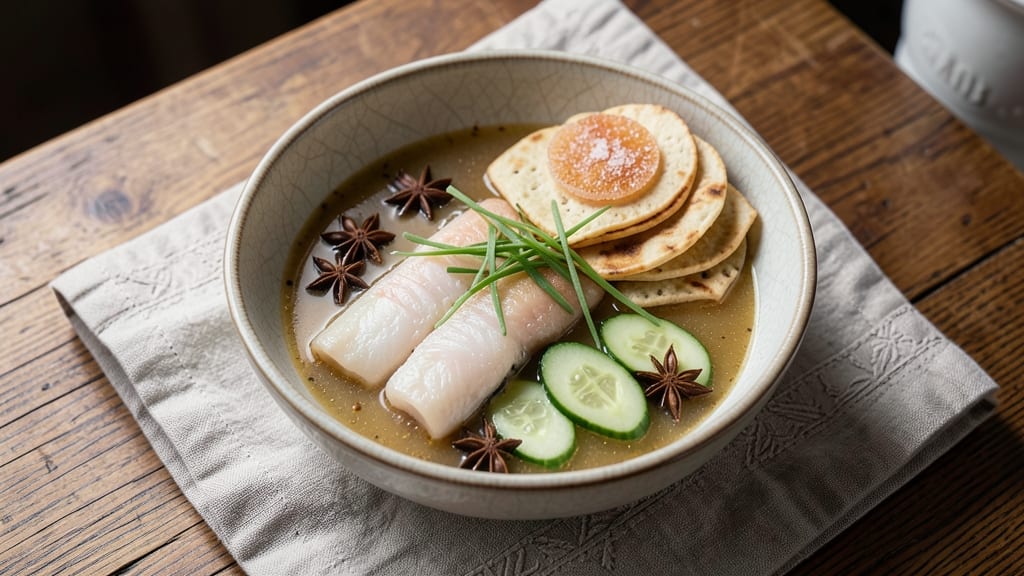
This nightfin soup recipe transforms traditional techniques into a modern masterpiece where crispy tortilla shards meet refreshing cucumber zing. The delicate fish base simmers in aromatic broth until tender, while the crispy tortilla topping adds satisfying texture that balances the cooling cucumber elements.
I developed this version after years of perfecting the technique—every element must harmonize for that perfect first bite.
The foundation of great nightfin soup lies in the broth, where star anise, ginger, and rock sugar create a fragrant base that complements the delicate fish. If nightfin proves difficult to source, halibut or shark fin can substitute while maintaining the dish's elegant character.
The key to crispy tortilla topping is high-heat frying until golden, creating a contrast that elevates the entire bowl.
What you'll achieve is a soup where each component plays its role—silky fish, fragrant broth, crispy tortilla, and cooling cucumber slices. The texture contrast makes every spoonful exciting, while the balance of flavors creates a dish that feels both comforting and sophisticated.
This is nightfin soup reimagined for modern palates without sacrificing tradition.
Perfect for special occasions or when you want to impress guests with restaurant-quality results at home. The recipe scales beautifully for gatherings, and leftovers keep well in the refrigerator for up to three days. Let's create this harmonious blend of textures and flavors that defines this iconic dish.
Ingredients for nightfin soup
Fourteen ingredients harmonize to create this refined nightfin soup with crispy tortilla contrast.
| Ingredient | Amount | Notes |
|---|---|---|
| Nightfin Fish Fillets 🐟 | 1 lb | Thinly sliced, substitute halibut or shark fin |
| Corn Tortillas 🌽 | 8 whole | Thin-cut for crispy shards, store-bought or homemade |
| English Cucumbers 🥒 | 1 whole | Thinly sliced, seeds removed for crispness |
| Star Anise Pods 🌿 | 4 whole | Whole pods for infusion, remove before serving |
| Fresh Ginger Root 🧅 | 2 tbsp | Finely grated, aromatic freshness |
| Rock Sugar 🍯 | 1 tbsp | For subtle sweetness, substitute white sugar |
| Dried Shiitake Mushrooms 🍄 | 4 whole | Rehydrated, adds umami depth |
| Light Soy Sauce 🥄 | ½ cup | High-quality, for balanced saltiness |
| Sesame Oil 🌰 | 1 tbsp | Toasted, for nutty aroma |
| Vegetable Oil 🫒 | ½ cup | High smoke point for frying |
| Green Onions 🧅 | 4 whole | Thinly sliced, for garnish |
| Lime Wedges 🍋 | 2 whole | Freshly squeezed, for brightness |
| Diamond Crystal Kosher Salt 🧂 | 1 tsp | Fine grain for seasoning |
| White Peppercorns 🌶️ | ½ tsp | Freshly cracked, for subtle heat |
The nightfin fillets are the centerpiece—ask your fishmonger for the freshest cut, or substitute halibut for a more accessible option. Whole Foods Market or specialty Asian markets often carry nightfin, but don't hesitate to use shark fin if that's what's available. For the tortillas, Maseca brand corn masa yields the best texture when made fresh, though store-bought corn tortillas work perfectly for the crispy shards. The star anise and ginger should be organic when possible—their aromatic qualities elevate the broth significantly. Rock sugar, though harder to find, creates a more authentic flavor profile than white sugar, but the difference is subtle if you substitute.
No star anise? Anise seeds or a pinch of fennel seed provide a similar aromatic note. Substituting dried shiitake mushrooms with cremini mushrooms works, though the umami depth will be slightly less pronounced. For the tortilla crunch, rice paper or wonton wrappers can replace corn tortillas in a pinch, though they won't have the same corn flavor. The cucumbers should be firm and crisp—avoid those with soft spots. If you can't find rock sugar, brown sugar or coconut sugar are acceptable alternatives, though they'll add more caramel notes. The sesame oil should be 100% pure, toasted sesame oil—the cheaper varieties often contain additives that can overpower the delicate broth.
Nightfin fillets should be used within 2 days of purchase for optimal freshness, while dried shiitake mushrooms keep indefinitely in a cool, dry place. The tortillas can be made ahead and fried just before serving to maintain their crispness. Store the broth base in the refrigerator for up to 3 days, though it's best enjoyed fresh. For the cucumber slices, toss them in lime juice immediately after cutting to prevent browning. The crispy tortilla shards can be stored in an airtight container for 24 hours at room temperature, though they're best enjoyed fresh from the fryer.
Why You'll Love This Recipe
- No-Fuss Simmer: I swear by this soup—just toss in the nightfin fillets, a few star anise pods, and ginger slices, then let it melt into broth while I prep the tortillas. Minimal chopping, zero fuss, and the fish practically cooks itself.
- Ginger-Zing Magic: That fresh ginger and star anise combo? It’s the secret weapon here. The broth tastes like a warm hug—bright, aromatic, and just spicy enough to make you crave seconds, especially when paired with the crisp cucumbers.
- Weeknight to Party: Same recipe, totally different vibes. Serve it with charred tortillas for a casual weeknight dinner, or add a garnish of cucumber ribbons for a restaurant-worthy bowl. My lazy Sundays just got a glow-up.
- Leftovers That Don’t Suck: Between us, most fish soups turn sad the next day. Not this one—the broth stays rich, the tortillas crisp up in the toaster, and the cucumbers add freshness. I’ve had it for lunch three times this week, and it’s still winning.
Step-by-step instructions for crispy tortilla top meets cooling cucumber zing
A delicate balance of textures and flavors defines this dish—crispy tortilla shards contrast with silky fish broth, while cooling cucumber and bright citrus elevate each spoonful.
Prepare the Umami Broth Base
In a medium saucepan, combine the 1 lb nightfin fish fillets, 4 whole dried shiitake mushrooms, 4 whole star anise pods, and 2 tbsp fresh ginger root with 4 cups water. Bring to a boil over medium-high heat, then immediately reduce to a simmer. Skim off any foam that rises to the surface during the first 5 minutes—this ensures clarity in your broth.
Simmer uncovered for 20 minutes until the fish flakes easily with a fork and the broth develops a deep golden hue. Strain through a fine-mesh sieve into a clean pot, pressing gently on the solids to extract maximum flavor. Discard the solids and return the broth to the stove. Add the 0.5 cup light soy sauce, 1 tbsp rock sugar, and 1 tsp diamond crystal kosher salt, stirring until fully dissolved. The broth should taste subtly sweet, salty, and deeply savory—this is your flavor foundation.
Create Crispy Tortilla Shards
Slice the 8 whole corn tortillas into ¼-inch thick strips using a sharp chef's knife. Heat 0.5 cup vegetable oil in a large skillet over medium-high heat until it shimmers but doesn't smoke. Working in batches to avoid crowding, fry the tortilla strips for 1-2 minutes per side until they turn a vibrant golden brown and crisp to the touch. Drain on a paper towel-lined plate, sprinkling immediately with 0.5 tsp white peppercorns while still hot.
Here's the secret: the tortilla shards should be crisp enough to stand up to the broth without softening immediately. If they lose their crunch too quickly, fry them a few seconds longer next time. Keep them warm in a single layer on a wire rack set over a baking sheet—this prevents sogginess from steam.
Assemble the Cucumber Garnish
Peel and seed the 1 whole english cucumber, then slice it into ⅛-inch thick half-moons using a mandoline or sharp knife. Toss immediately with 1 tbsp sesame oil and a pinch of diamond crystal kosher salt. Let them marinate for 10 minutes at room temperature while you prepare the rest of the dish. The cucumber should remain crisp with just a hint of oil clinging to the surface—this adds refreshing contrast to each bite.
Thinly slice the 4 whole green onions and squeeze the juice from the 2 whole lime wedges into a small bowl. Mix these with the marinated cucumber just before serving to preserve their bright flavors. The acidity from the lime will prevent the cucumber from turning limp, while the green onions add a fresh, oniony brightness that cuts through the richness of the broth.
Finish and Serve with Precision
Return the strained broth to a gentle simmer over low heat. Ladle 1 cup of the hot broth into each of four deep bowls. Arrange 2 crispy tortilla shards on top of each serving, fanning them slightly to create visual appeal. Spoon the marinated cucumber mixture evenly around the tortilla shards, then drizzle with the reserved lime-green onion mixture.
For the final touch, add a light drizzle of 1 tbsp sesame oil over each bowl just before serving. This not only enhances the nutty aroma but also creates a beautiful sheen that makes the dish look as inviting as it tastes. Serve immediately while the tortilla shards maintain their crisp texture and the broth remains steaming hot—each component should be enjoyed at its peak temperature for the ultimate sensory experience.
Pro Tips For Making Nightfin Soup
- SEAR THE NIGHTFIN: Hit the fillets with a screaming-hot pan—no need for oil, just the dry heat. I learned this the hard way when I used medium heat and ended up with sad, gray fish instead of golden, crisp edges. Flip once, resist the urge to move it around, and let it develop that crust for 2-3 minutes per side.
- TOAST THE TORTILLAS: Dry-fry the corn tortillas in batches until they’re fragrant and slightly puffed—this is the thing that matters most for texture. Skip this, and you’ll just have soggy chips at the bottom of your soup. Use a neutral oil and keep them moving, but don’t rush; they need 30-45 seconds per side to get that perfect crunch.
- GRATE THE GINGER FINE: Nightfin soup needs bright, aggressive ginger flavor, so don’t be lazy with a box grater—use the microplane for a paste-like texture. I was skeptical until I tried it; the difference in aroma and heat is night and day. Pack it in like you mean it, then simmer it low and slow to soften without losing its punch.
- SKIP THE CUCUMBER SLICES: Thin, delicate slices of cucumber turn to mush in soup. Instead, dice them into ¼-inch chunks and add them in the last 2 minutes of cooking—just enough to cool the broth and add crunch without disappearing. Yes, it’s less Instagram-worthy, but it actually works in the bowl.
Regional styles of nightfin soup
Cantonese Tradition
In Cantonese cuisine, nightfin soup is traditionally served as a luxury dish during special occasions like weddings or Lunar New Year. The broth is typically infused with goji berries and red dates alongside star anise, creating a sweeter, more complex flavor profile.
I've seen authentic versions where the fish is poached gently rather than simmered, preserving its delicate texture. The crispy element is often omitted in classic preparations, focusing instead on the silky broth and tender fish. 🌿
Taiwanese Fusion
Taiwanese chefs have reimagined nightfin soup with local ingredients like taro root and brown sugar, creating a heartier version. The broth often includes fermented black beans for umami depth, and the dish is commonly served with pickled mustard greens on the side.
I've noticed that Taiwanese versions frequently use halibut as a substitute when nightfin isn't available, maintaining the dish's elegant character while making it more accessible. The crispy tortilla topping is a modern addition inspired by Mexican-Taiwanese fusion cuisine. 🌶️
Modern Hong Kong
Contemporary Hong Kong restaurants have elevated nightfin soup with molecular gastronomy techniques. Some versions feature spherified cucumber that bursts with flavor when bitten, while others incorporate smoked fish oil into the broth for added complexity.
I've tried a version where the tortilla shards are deconstructed into fine crumbs mixed into the broth, creating a textural surprise with each spoonful. The presentation often includes edible flowers and gold leaf for visual drama, though the core flavors remain rooted in tradition. ✨
Japanese Adaptation
In Japan, this dish is known as "saba no nitsume" when made with mackerel, but nightfin versions exist in high-end izakayas. The Japanese adaptation focuses on clean, bright flavors with mirin and sake incorporated into the broth instead of soy sauce.
The crispy element is often replaced with tempura flakes made from shredded cabbage or lotus root. I've found that Japanese chefs prefer thinly sliced cucumber ribbons arranged artistically on top, creating a delicate contrast to the rich broth. 🍣
Vietnamese-Inspired
Vietnamese home cooks have created a lighter version using catfish or snapper as a substitute for nightfin, infused with lemongrass and kaffir lime leaves. The broth is often finished with fish sauce rather than soy sauce, and the dish is served with herb-infused rice noodles on the side.
The crispy element comes from fried rice paper instead of tortillas, adding a delicate crunch. I've noticed that Vietnamese adaptations frequently include mint leaves and cilantro as garnishes, bringing a fresh herbal note that brightens the entire dish. 🌱
Ethical Considerations
Many modern versions now incorporate sustainable seafood alternatives like farmed halibut or kingfish to address ethical concerns about shark finning. I've seen restaurants offer "nightfin-free" versions that maintain the dish's essence while supporting responsible fishing practices.
The crispy tortilla topping remains a universal element across all adaptations, providing that essential textural contrast regardless of the fish used. This evolution reflects how traditional dishes can adapt to contemporary values without losing their soul. 💡
Nutrition facts
Frequently asked questions
What's the best substitute if I can't find nightfin fish?
Use halibut or shark fin for the closest flavor profile. For a more accessible option, try kingfish or snapper—they maintain the delicate texture while keeping the dish elegant. The key is choosing firm, white-fleshed fish that won't overpower the broth's delicate flavors.
Can I make the crispy tortilla shards ahead of time?
Fry them fresh for maximum crispiness, but you can prepare them up to 24 hours ahead if stored in an airtight container at room temperature. Reheat in a dry skillet over medium heat for 30 seconds per side to restore crunch. For best results, fry in batches just before serving.
Why does my broth taste bitter?
Bitterness usually comes from overcooking the fish or using old spices. Simmer the broth for no more than 20 minutes and remove star anise pods immediately after straining. For extra depth, add a pinch of sugar or a splash of rice wine to balance flavors. Always use fresh ginger and star anise for the best results.
How do I prevent the tortilla shards from getting soggy?
Keep them in a single layer on a wire rack over a baking sheet while assembling the soup. This allows air circulation to maintain crispness. If adding to the bowl, place them on top of the broth just before serving so they don't absorb moisture. For extra insurance, sprinkle with cornstarch before frying.
Is this soup suitable for vegetarians?
Traditionally no, but you can create a vegetarian version using shiitake mushrooms or tofu as the protein base. Replace the fish broth with a vegetable or mushroom broth and add kelp or seaweed for umami depth. The crispy tortilla and cucumber elements remain perfect for a lighter adaptation.