
Soups & Stews
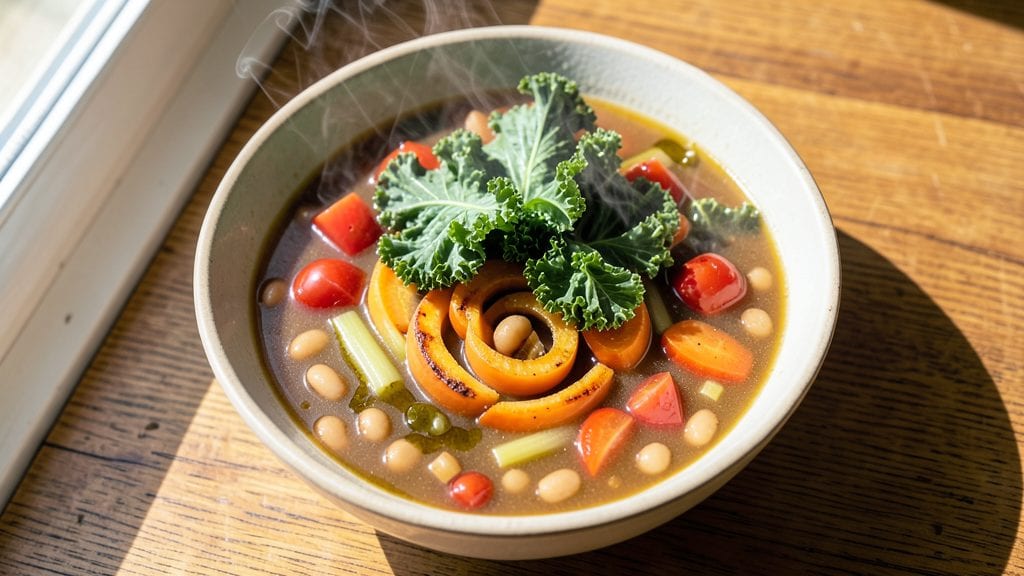
Lidia Bastianich’s minestrone soup brings the heart of Italian home cooking to your pot—rustic, vegetable-forward, and packed with the kind of depth that comes from slow simmering and balanced flavors.
This isn’t just soup; it’s a celebration of seasonal produce, al dente pasta, and the kind of savory harmony that makes every spoonful satisfying.
I’ve recreated her signature method, where cannellini beans and kale meld with tomatoes and herbs to create a broth so rich it feels like a hug in a bowl.
The secret lies in the technique: slow simmering allows the vegetables to soften without losing their integrity, while the pasta cooks just until al dente—never mushy.
Lidia’s approach balances acidity (a splash of vinegar or lemon) with umami (Parmesan rind or a splash of pasta water), ensuring the soup is never one-dimensional.
What makes this recipe stand out is its adaptability—swap in seasonal vegetables, use homemade broth, or add a handful of fresh basil at the end for that final touch of brightness.
By the time you’re done, you’ll have a hearty, restaurant-quality minestrone that’s as nourishing as it is flavorful. The aroma alone—tomatoes caramelizing, herbs releasing their fragrance, beans thickening the broth—will have everyone gathering around the table.
Serve it with crusty bread to soak up every last drop, or pair it with a simple green salad for a complete meal that feels both rustic and refined.
This is the kind of soup that improves with time, as flavors deepen and textures soften just right. Whether you’re feeding a family or meal prepping for the week, Lidia’s minestrone delivers comfort in every bowl. Let’s get cooking—your kitchen will thank you.
Ingredients for lidia's minestrone soup
Seasonal vegetables, hearty beans, and al dente pasta—this is Lidia’s rustic Italian minestrone, simplified.
| Ingredient | Amount | Notes |
|---|---|---|
| Cannellini Beans (Dried) 🌱 | 1 ½ cups | Soaked overnight, drained |
| Vegetable Broth 💧 | 6 cups | Homemade or low-sodium store-bought |
| Diced Tomatoes (Canned) 🍅 | 2 cups | San Marzano preferred |
| Kale (Curly) 🥬 | 4 cups | Chopped, stems removed |
| Carrots (Medium) 🥕 | 2 whole | Peeled, diced small |
| Celery (Stalks) 🧅 | 2 whole | Diced, leaves reserved |
| Onion (Yellow) 🧅 | 1 whole | Diced, medium |
| Garlic Cloves 🧄 | 4 cloves | Minced, fresh |
| Pasta (Small Shape) 🍝 | 1 lb | Ditalini or orzo preferred |
| Parmesan Cheese (Parmigiano-Reggiano) 🧀 | ½ cup | Freshly grated, block |
| Fresh Basil Leaves 🌿 | ¼ cup | Chopped, for finishing |
| Extra-Virgin Olive Oil 🫒 | ¼ cup | For sautéing |
| White Wine (Dry) 🍷 | ½ cup | Sauvignon Blanc preferred |
| Lemon Juice 🍋 | 1 tbsp | Freshly squeezed |
| Salt 🧂 | 1 ½ tsp | Kosher or sea salt |
| Black Pepper 🌶️ | ½ tsp | Freshly ground |
| Dried Oregano 🍃 | 1 tsp | Italian preferred |
The cannellini beans are the soul of this soup. Dried beans give the best texture—soak them overnight for tender yet firm bites. Trader Joe’s or Whole Foods carry high-quality dried beans, but any organic brand works. Kale is non-negotiable for that earthy depth, but if you’re using frozen, thaw and drain it well. The carrots and celery should be diced uniformly—small pieces cook faster and blend into the broth without losing their shape. I always grab the San Marzano canned tomatoes for their sweet, rich flavor—it’s worth the splurge for this dish.
No white wine? Extra vegetable broth with a splash of apple cider vinegar works in a pinch. Fresh basil is ideal, but dried oregano at half the amount keeps the dish authentic. Swapping in zucchini or spinach? Add them later—they cook faster. The Parmesan needs to be real Parmigiano-Reggiano, freshly grated from a block. Pre-grated tastes like sawdust and won’t melt right. For the pasta, ditalini or orzo are classic, but any small shape works. Cook it separately and add it at the end to keep it al dente.
This soup tastes even better the next day—flavors meld beautifully. Keeps for 4-5 days in the fridge, or freeze portions for up to 3 months. I double the batch and portion it into containers for easy lunches. The broth reduces as it sits, so add a splash of water or broth when reheating. Serve with crusty bread to soak up every last drop—trust me, it disappears fast.
Why You'll Love This Recipe
- Throw-It-Together Dinner: I swear by this when I’m staring at a half-empty pantry—just dried cannellinis (soaked overnight), a can of tomatoes, and whatever veggies are lurking in the crisper. No fancy prep, no stress, just chop, simmer, and boom—dinner’s ready.
- Kale’s Crispy Secret: That curly kale? It’s the star. When it wilts just right in the broth, the edges get this magical crisp-tender bite—like a hug for your taste buds. Honestly, I’ll add it to anything now, but here? It’s perfection.
- Leftover Goldmine: This soup only gets better the next day. The flavors meld, the beans soften just enough, and suddenly you’ve got a freezer-friendly meal that tastes like you slaved over it. (Between us, I’ve reheated mine three times and still crave it.)
- Budget-Friendly Crowd-Pleaser: A pound of dried beans and a few carrots stretch to feed four—or more, if you’re generous. My college roommates and I lived on this; now my in-laws request it at holidays. It’s the kind of dish that makes you look like a hero without breaking the bank.
Step-by-step instructions for Lidia's minestrone soup recipe
This rustic Italian vegetable stew comes together beautifully with simple techniques and hearty ingredients.
Sauté the Vegetable Base
Heat the 0.25 cup extra-virgin olive oil in a large pot over medium heat. Add the 1 whole diced onion, 2 whole diced carrots, and 2 whole diced celery stalks. Cook for 8-10 minutes until the vegetables soften and the onion becomes translucent. You'll notice the aromas filling your kitchen—that's when you know they're ready for the next step.
Add the 4 minced garlic cloves and 1 tsp dried oregano, stirring for 30 seconds until fragrant. Here's where the magic begins—these aromatics form the flavor foundation of your soup. If you smell the garlic burning, reduce the heat slightly and keep stirring to prevent that bitter taste.
Build the Flavorful Broth
Pour in the 0.5 cup dry white wine and let it simmer for 2-3 minutes until mostly evaporated. This step deepens the flavor profile by concentrating the alcohol's essence. Next, add the 2 cups diced tomatoes and 6 cups vegetable broth, bringing everything to a gentle boil.
Stir in the 1.5 cups soaked and drained cannellini beans, 1.5 tsp salt, and 0.5 tsp black pepper. Reduce heat to medium-low and let the soup simmer for 20 minutes. You'll see the beans begin to soften and the flavors meld together beautifully. This is where patience pays off—rushing this step results in bland soup.
Incorporate the Leafy Greens
After 20 minutes, add the 4 cups chopped curly kale and stir gently to distribute evenly. The kale will wilt down beautifully as it cooks, adding vibrant color and essential nutrients. Let the soup simmer for another 10 minutes—just until the kale becomes tender but still retains some texture. Overcooking turns kale into mush, so keep an eye on it.
Taste the soup and adjust seasoning if needed. I often add a splash of 1 tbsp lemon juice at this point for brightness. The acidity cuts through the richness of the beans and tomatoes, balancing all the flavors perfectly. This is the moment to make final adjustments before adding the pasta.
Cook the Pasta Al Dente
In a separate pot, bring 4 cups water to a rolling boil and salt generously. Add the 1 lb small shape pasta and cook for 8-10 minutes until 1 minute shy of package directions for al dente. Reserve 1 cup pasta water before draining—this starchy liquid is crucial for binding the soup.
Add the drained pasta to the soup pot and stir gently to combine. The pasta should absorb just enough of the broth to become tender but still hold its shape. If the soup seems too thick, add 2-3 tablespoons of reserved pasta water to reach your desired consistency. Remember, you can always add more liquid, but you can't take it out.
Finish and Serve
Remove the pot from heat and let the soup rest for 5 minutes. This resting period allows all the flavors to meld together completely. Stir in the 0.5 cup freshly grated parmesan cheese and 0.25 cup chopped fresh basil leaves just before serving. The cheese adds richness while the basil brings freshness to each spoonful.
Ladle the minestrone into bowls and serve immediately while steaming hot. Each spoonful should deliver a perfect balance of hearty beans, tender vegetables, and al dente pasta in a flavorful broth. This soup tastes even better the next day as the flavors continue to develop, so consider making extra for leftovers!
Pro Tips For Making Lidia'S Minestrone Soup
- SOAK BEANS 8 HOURS: Skipping this step means your cannellini beans will stay stubbornly tough—no matter how long you simmer. I learned this the hard way after serving mushy, undercooked beans for years. Use a big bowl, cover with cold water, and let them sit overnight. (Yes, even if you’re impatient like me.)
- CUT KALE SMALL: Big kale leaves turn to slimy mush while carrots stay rock-hard. Chop the stems into ¼-inch pieces—no need to remove the ribs—and slice leaves into thin ribbons. The smaller the pieces, the faster they soften without falling apart.
- SIMMER LOW AND LONG: Lidia’s recipe isn’t wrong, but rushing the broth ruins the texture. Keep the heat at a gentle simmer—you should barely see bubbles—so the beans and veggies absorb flavor instead of turning to glue. Patience here makes the difference between good and great.
- USE TOMATO PASTE FIRST: Dumping canned tomatoes in early makes the soup watery. Instead, sauté 1–2 tablespoons of tomato paste in the pot for 2 minutes before adding broth. It thickens the base and deepens the flavor—no extra ingredients needed. (I skip this shortcut, and the soup tastes noticeably thinner.)
Storing and reheating this dish
Refrigerator Storage
After your minestrone cools to room temperature, transfer it to airtight glass containers—I love using Pyrex with snap-on lids—and store in the refrigerator for up to 4-5 days. The flavors actually deepen overnight as the vegetables continue to meld with the broth.
Always leave 1 inch of headspace to prevent spills, and press plastic wrap directly onto the surface to minimize oxidation. 🥫
Freezer Prep Tips
For long-term storage, portion minestrone into freezer-safe glass jars or quart-sized silicone bags, leaving 1 inch of headspace for expansion. Label with the date and freeze for up to 3 months.
I recommend freezing without the pasta—cook it fresh when reheating to maintain its al dente texture. Thaw overnight in the fridge for best results. ❄️
Stovetop Reheating
My preferred method is reheating on the stovetop over medium-low heat for 10-15 minutes, stirring occasionally. Add ¼ cup water or broth if the soup thickens too much during storage.
For extra richness, stir in 1 tablespoon of reserved pasta water or a splash of lemon juice to brighten flavors. Keep the lid slightly ajar to prevent a skin from forming. 🔥
Microwave Method
For quick reheating, transfer a portion to a microwave-safe bowl and cover loosely with a damp paper towel. Heat on medium power (50-70%) for 3-4 minutes, stirring halfway.
Add 1-2 tablespoons of water if needed to restore consistency. Avoid high power—it can turn the kale mushy and make the broth unevenly hot. ✨
Reviving Leftovers
If your minestrone tastes flat after storage, boost flavors by adding ½ teaspoon of red pepper flakes or 1 tablespoon of fresh basil while reheating. A sprinkle of freshly grated Parmesan at serving time also elevates the dish.
The key is balancing acidity—lemon juice or balsamic vinegar can work wonders for revitalizing stale broth. 💡
Pasta Handling
If you froze the soup with pasta, reheat it separately in boiling water for 1-2 minutes until warmed through. For best texture, cook fresh pasta in the reheated broth for 2-3 minutes to ensure it’s al dente.
Never reheat pasta directly in the soup—it’ll turn to mush. This is a non-negotiable rule for maintaining texture! 🍝
Nutrition facts
Frequently asked questions
Can I make this minestrone without white wine?
Replace the 0.5 cup white wine with 0.5 cup extra vegetable broth plus 1 tablespoon apple cider vinegar for acidity. The vinegar mimics the wine's brightness while keeping the dish authentic. For even more depth, add 1 teaspoon tomato paste when sautéing the vegetables.
What if I don't have cannellini beans?
Great substitutes include great northern beans or kidney beans, both of which hold their shape well. For a different texture, try white beans or lentils. Just adjust cooking time—lentils soften faster (10-12 minutes instead of 20 minutes) and may require adding them later in the process.
How do I prevent the minestrone from getting watery?
Thickness comes from simmering time and starch. Cook the pasta separately and add it just before serving to avoid overcooking. If the broth seems thin, stir in 1 tablespoon of cornstarch mixed with 2 tablespoons cold water and simmer for 2-3 minutes. For extra richness, add 1/4 cup mashed beans from the pot to thicken naturally.
Can I make this minestrone in an Instant Pot?
Yes! Sauté the onions, carrots, celery, and garlic first. Add all remaining ingredients except pasta, then cook on High Pressure for 10 minutes. Quick-release the pressure, stir in the pasta (cooked separately), and finish with cheese and basil. The high-pressure method reduces cooking time but may require adjusting seasoning—taste before serving.
What's the best way to serve Lidia's minestrone?
Pair it with crusty Italian bread for dipping or a simple green salad with lemon vinaigrette. For extra flair, sprinkle with toasted pine nuts or crispy prosciutto (if you're not keeping it vegetarian). Serve with a glass of Chianti or Sangiovese to complement the tomato and bean flavors.