
Soups & Stews
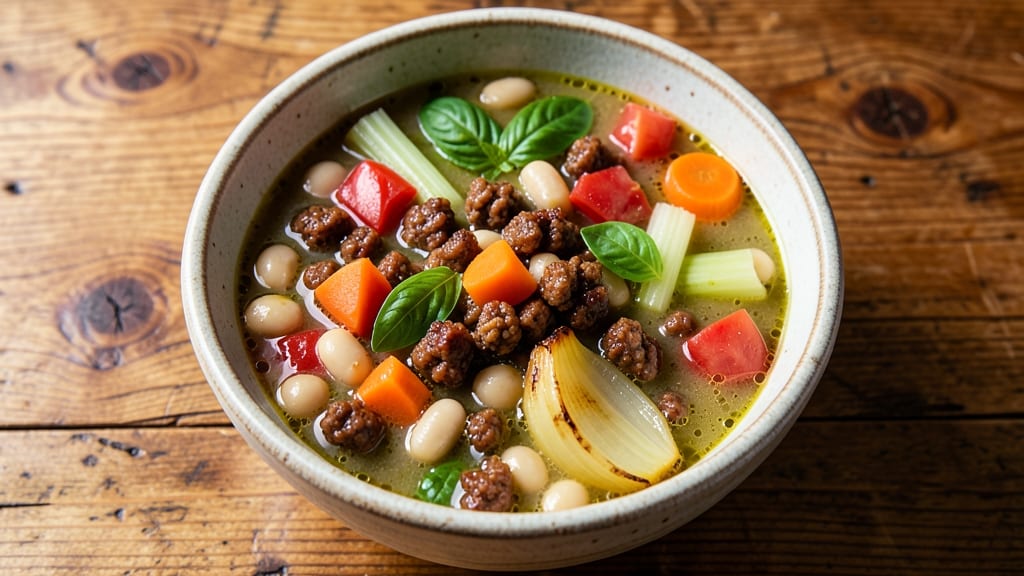
This Carrabba's minestrone soup copycat recipe brings the restaurant's signature herb-infused flavors straight to your kitchen, where rich tomato broth meets tender beans and fresh vegetables in perfect harmony. The secret lies in slow-simmered aromatics and a balance of textures that make every spoonful satisfying.
After years of perfecting restaurant-style soups, I've cracked the code for achieving that same hearty, comforting depth at home—without the shortcuts that compromise quality.
What sets this version apart is the layered approach: a deep, caramelized tomato base infused with Italian herbs, hearty white beans that hold their shape, and a medley of seasonal vegetables that stay vibrant.
The addition of Italian sausage adds savory depth, while a sprinkle of fresh basil at the end brings that signature Carrabba's touch. Unlike many copycat recipes, this version delivers restaurant-quality flavor without requiring specialty ingredients—just simple pantry staples and precise timing.
By the time you ladle this soup into bowls, you'll notice the difference immediately: a broth so flavorful it needs no garnish, beans that are tender but still hold their shape, and vegetables that retain their natural sweetness.
The aroma alone will have everyone gathering around the table, and the first bite delivers that perfect balance of savory, herby, and slightly smoky notes. This is the kind of soup that feels like a warm hug on a chilly evening, and it's exactly what Carrabba's customers crave.
Perfect for meal prep or serving a crowd, this recipe scales beautifully while maintaining its rich, authentic flavor. The instructions walk you through each step—from building the base to assembling the final bowl—so you can recreate that restaurant experience in your own kitchen.
Let's get started on making this soup that tastes like home.
Ingredients for carrabba's minestrone soup copycat
Sixteen ingredients, one unforgettable soup. The secret's in the layers: smoky sausage, caramelized tomatoes, and fresh herbs that sing.
| Ingredient | Amount | Notes |
|---|---|---|
| Italian Sausage 🍖 | ½ lb | Sweet or spicy, casings removed |
| Canned White Beans 🥄 | 1 ½ cups | Northern beans preferred, drained |
| Canned Diced Tomatoes 🍅 | 2 cups | San Marzano if available |
| Carrots 🥕 | 1 cup | Medium, peeled, sliced into rounds |
| Celery Stalks 🧅 | 2 whole | Trimmed, chopped into 1/2-inch pieces |
| Yellow Onion 🧅 | 1 whole | Medium, diced small |
| Garlic Cloves 🧄 | 4 cloves | Fresh, minced finely |
| Vegetable Broth 💧 | 4 cups | Low-sodium preferred |
| Extra-Virgin Olive Oil 🫒 | 2 tbsp | For sauteing aromatics |
| Dried Oregano 🌿 | 1 tsp | Italian preferred |
| Dried Thyme 🌿 | 1 tsp | Fresh if available |
| Bay Leaves 🌿 | 2 whole | Fresh if possible |
| Canned Tomato Paste 🍅 | 2 tbsp | Squeeze tube preferred |
| Fresh Basil Leaves 🌿 | ¼ cup | Chopped, for finishing |
| Diamond Crystal Kosher Salt 🧂 | 1 ½ tsp | Adjust to taste |
The Italian sausage is where the magic starts—Trader Joe's or Costco have the best quality at reasonable prices. Look for casings that say 'sweet' or 'spicy' but avoid anything with fillers. The white beans? Northern beans hold their shape beautifully, but cannellini works too. For the tomatoes, San Marzano cans make a world of difference—they're sweeter and less acidic. If you can't find them, Muir Glen is a solid backup. Fresh herbs are non-negotiable here; dried just won't cut it for that Carrabba's freshness. Whole Foods or your local farmers market are best for basil and thyme—pick leaves that are bright and fragrant, not wilted.
No Italian sausage? Mild chorizo or even smoked turkey sausage works in a pinch, but you'll lose some of that signature smokiness. Swapping the white beans for chickpeas? Drain them extra well—they hold more water. The celery and carrots can be baby versions if that's what's in your fridge, but whole stalks and carrots give you more control over the texture. For the tomato paste, Trader Joe's squeeze tubes are perfect—they're convenient and keep for months. The vegetable broth? Homemade is ideal, but even the low-sodium store-bought versions work if you rinse the cans first. And if you're short on fresh basil, dried basil at half the amount gets you close, though it won't have that same bright punch.
This soup tastes even better the next day—3-4 days in the fridge, no problem. For meal prep, I portion it into glass containers with a little extra broth on top to keep everything moist. Freezes beautifully for up to 3 months, though the texture of the vegetables changes slightly after thawing. To reheat, just warm on the stove with a splash of water or broth. And that fresh basil? Add it right before serving—it wilts fast in heat, but it's worth the extra minute for that restaurant-quality finish.
Why You'll Love This Recipe
- One-Pot Magic: I swear by this recipe—just brown the sausage, toss in the rest, and let it simmer. No fancy techniques, no last-minute grocery runs. The canned beans and tomatoes do half the work while the celery and carrots caramelize into sweet perfection.
- Sausage Love: That crispy, herby Italian sausage is the star—crumbled right into the broth, so every spoonful has a burst of savory, garlicky goodness. Honestly, I’ll eat this soup just for the sausage alone.
- Weeknight Workhorse: Make a double batch on Sunday, and you’ve got lunch for days. The flavors actually get better the next day, which is rare. My kids beg for leftovers—no complaints here.
- Budget-Friendly Feast: Canned beans, affordable veggies, and a single sausage link stretch this into a full meal for four. I’ll be real: it’s my go-to when groceries are tight, but no one ever guesses it’s cheap.
Step-by-step instructions for Carrabba's minestrone soup copycat recipe
This hearty soup delivers restaurant-quality depth and texture with every spoonful.
Sauté the Italian Sausage and Aromatics
Heat the 2 tablespoons extra-virgin olive oil in a large Dutch oven over medium-high heat. Add the 0.5 lb Italian sausage, breaking it into small pieces as it cooks. Let it brown for 4-5 minutes, stirring occasionally, until the sausage releases its oils and develops a rich, caramelized crust. This step builds incredible flavor that forms the soup's foundation.
Once the sausage is browned, push it to the side of the pot. Add the 1 whole yellow onion, 2 whole celery stalks (chopped into ½-inch pieces), and 1 cup carrots (sliced into rounds). Cook for 5-6 minutes, stirring occasionally, until the vegetables begin to soften and the onion becomes translucent. The vegetables should release their natural juices and develop a golden hue at the edges.
Add the 4 cloves garlic cloves (minced finely) and cook for 30 seconds until fragrant. Be careful not to let the garlic burn—it should perfume the pot without turning bitter. This aromatic base creates the soup's signature depth that makes it taste like you're dining at Carrabba's.
Build the Flavor Base with Tomatoes and Herbs
Stir in the 2 tablespoons canned tomato paste and cook for 1 minute, allowing it to deepen in color and blend with the sausage and vegetables. This step intensifies the tomato flavor, creating a rich foundation for the soup. Add the 2 cups canned diced tomatoes, 1 teaspoon dried oregano, 1 teaspoon dried thyme, and 2 whole bay leaves. Stir well to combine.
Pour in the 4 cups vegetable broth and bring the mixture to a gentle simmer. Let it cook uncovered for 10 minutes, stirring occasionally. This allows the flavors to meld together and the initial seasoning to develop. You'll notice the soup taking on a deeper, more complex aroma—this is where the magic happens. The broth should reduce slightly, concentrating the flavors even more.
Add the 1.5 cups canned white beans (drained) and bring the soup back to a simmer. Let it cook for another 5 minutes, stirring gently to ensure everything is evenly heated. The beans should be warm throughout, but we'll let them soak up more flavor in the next step.
Simmer to Perfection and Finish with Fresh Basil
Taste the soup and adjust the seasoning with the 1.5 teaspoons diamond crystal kosher salt if needed. The soup should be well-seasoned but not overly salty—you can always add more salt later if necessary. Let the soup simmer gently for 20-25 minutes, uncovered, until the vegetables are tender and the flavors have fully developed.
You'll know it's ready when the carrots are fork-tender, the celery is soft but still holds its shape, and the entire soup has a rich, aromatic depth. The liquid should coat the back of a spoon with a velvety texture. This simmering time is crucial—it allows all the flavors to harmonize into a cohesive, satisfying broth.
Remove the 2 whole bay leaves and stir in the 0.25 cup fresh basil leaves (chopped). Let the soup simmer for 1-2 minutes more to infuse the basil's bright, fresh flavor. The basil should brighten the soup without overpowering the other ingredients, adding a final touch that makes it taste like a true Italian restaurant creation. Serve immediately with crusty bread to soak up every last drop of this incredible soup.
Pro Tips For Making Carrabba'S Minestrone Soup Copycat
- CRACK THE SAUSAGE FIRST: Remove the casings from the Italian sausage before browning—it renders faster and blends better into the soup. I used to skip this, and the sausage stayed in clumps, no matter how long I stirred.
- CHOP VEGETABLES UNIFORM: Dice carrots and celery into ¼-inch pieces so they cook evenly. Larger chunks stay crunchy while smaller ones turn to mush—this recipe needs balance, not a texture warzone.
- SAVE THE BEAN LIQUID: Drain the white beans but reserve ½ cup of their liquid—it adds depth to the broth without thinning the soup. I learned this after my first batch tasted flat and needed a splash of extra salt.
- SIMMER LOW AND LONG: Keep the soup at a gentle boil (tiny bubbles) for 20 minutes after adding tomatoes and beans—this lets flavors meld instead of racing to the finish line. Rushing turns it into a sad, watery mess.
Make-ahead tips for this dish
Broth Prep Ahead
Start your flavor foundation the night before by simmering a vegetable broth base with 1 cup diced tomatoes, 1 onion, 2 celery stalks, and 2 garlic cloves for 30 minutes.
Strain and refrigerate—this concentrated base cuts prep time by 20 minutes the next day. I use a fine-mesh sieve to remove all solids for a silky texture. 💧
Bean Prep Shortcut
Drain and rinse your white beans the night before, then store them in a sealed container in the fridge. This removes excess sodium and speeds up cooking time by 5 minutes.
For extra flavor, toss them with 1 tsp olive oil and ½ tsp Italian seasoning before storing. Trust me, this small step makes a big difference in texture and taste.
Vegetable Prep Organization
Chop all vegetables—carrots, celery, and onion—and store them in separate airtight containers labeled by type. This keeps them crisp and ready to go. I use glass containers because they’re microwave-safe for quick reheating. Keep the garlic separate until you’re ready to cook to prevent browning. 🥕
Sausage Browning Hack
Brown your Italian sausage ahead of time and store it in the fridge for up to 3 days. This step is flavor gold—it develops that deep, caramelized crust that’s essential for authentic taste.
Just reheat it in a pan for 2 minutes before adding it back to the soup. I like to portion it into single-serving bags for easy reheating later.
Final Assembly Timeline
Assemble the soup 2 hours before serving—this allows all flavors to meld together perfectly. Keep it warm on low heat or transfer to a slow cooker on warm setting.
The longer it sits, the deeper the flavors become. For serving, I like to reheat it on the stovetop for 10 minutes to bring out those aromatic notes. 🍲
Freezer-Friendly Packaging
For long-term storage, portion the soup into quart-sized freezer bags, leaving 1 inch of headspace for expansion. Lay them flat to freeze quickly, which prevents ice crystals. Label with the date—this soup stays delicious for up to 3 months.
To reheat, thaw overnight in the fridge, then warm on the stove with ¼ cup broth to restore texture. The fresh basil should be added after reheating to keep it vibrant. ✨
Nutrition facts
Frequently asked questions
Can I make this minestrone soup vegetarian?
Swap the Italian sausage for 2 cups of crumbled tempeh or 1 cup of smoked tofu for a meaty texture. For extra depth, add 1 tablespoon soy sauce or 1 teaspoon smoked paprika to mimic the sausage's flavor. The soup will still be hearty and flavorful without meat.
How do I keep the vegetables from getting mushy?
Cook the vegetables in batches if needed, or remove them from the broth 2-3 minutes before serving to maintain their texture. For carrots and celery, aim for fork-tender rather than fully soft—this ensures they hold their shape while still being tender. Adding beans later in the cooking process also helps preserve their texture.
What’s the best way to reheat leftover minestrone?
Reheat gently on the stove over medium-low heat with a splash of water or broth to prevent drying out. Stir frequently and add fresh basil at the end—it wilts quickly in heat. For microwave reheating, cover with a damp paper towel and heat in 1-minute intervals, stirring between each. The soup tastes even better the next day!
Can I use fresh tomatoes instead of canned?
Fresh tomatoes work, but they won’t have the same depth of flavor as canned San Marzano. If using fresh, roast 4-5 large tomatoes at 400°F for 20 minutes first to concentrate their sweetness. Peel and chop them before adding to the soup. For best results, stick with canned tomatoes—they’re specifically bred for cooking and provide consistent flavor.
Why does my minestrone taste bland compared to Carrabba’s?
Restaurant soups often use a slow-cooked broth base and high-quality ingredients. Boost flavor by simmering the broth longer (30+ minutes before adding beans), using fresh herbs (not dried), and toasting the spices in olive oil for 30 seconds before adding liquid. A pinch of red pepper flakes or balsamic vinegar can also add depth. Patience is key—restaurant soups simmer for hours!