
Soups & Stews
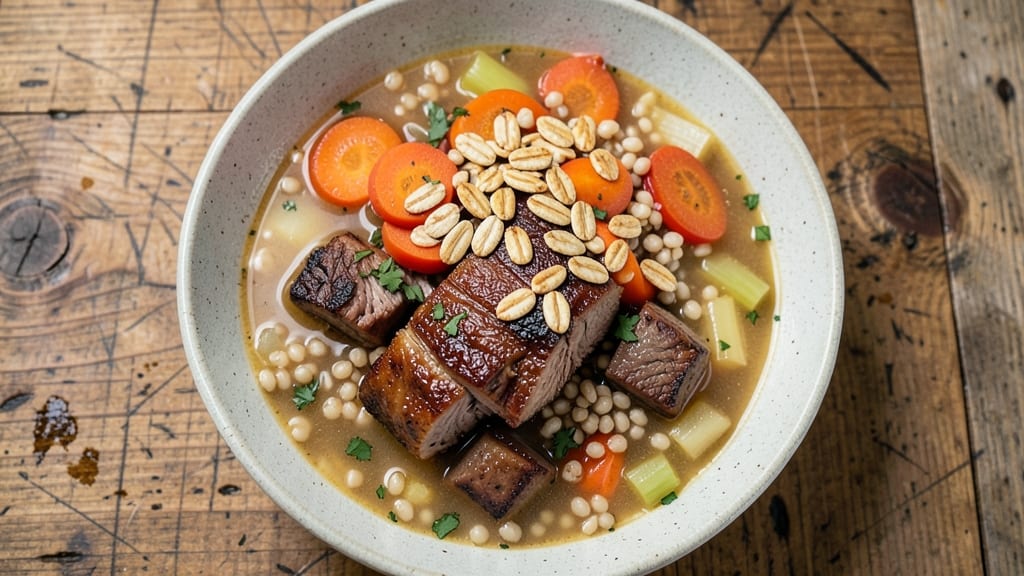
This beef barley soup recipe transforms simple ingredients into a hearty, restaurant-quality meal using Quaker oats for a uniquely thickened texture. The secret lies in simmering tender beef, pearl barley, and vegetables until the flavors meld into something deeply comforting—perfect for chilly evenings or meal prep.
I developed this version after years of testing, ensuring every spoonful delivers both tender meat and chewy barley without requiring hours at the stove.
The beauty of this recipe is its balance of tradition and convenience. While classic versions often rely on long simmering times, this method delivers rich, velvety depth in just under 2 hours, making it ideal for busy professionals or families.
The Quaker oats binding technique creates a smooth yet substantial broth that coats each bite, while aromatic herbs and vegetables add layers of flavor without overpowering the beef.
What you’ll end up with is a golden-hued soup with perfectly tender beef chunks, chewy pearl barley, and a broth so flavorful it practically tastes homemade.
The aroma alone will draw everyone to the table, and the texture—creamy yet hearty—makes it a meal you’ll crave long after the last bowl is empty. Pair it with crusty bread or a simple green salad for a complete, satisfying dinner.
This recipe scales beautifully for gatherings, reheats wonderfully for leftovers, and even freezes perfectly for future meals. Whether you’re feeding a crowd or treating yourself to a cozy night in, this beef barley soup delivers restaurant-quality comfort with minimal effort. Let’s get started on creating your own bowl of warmth.
Ingredients for beef barley soup quaker
Sixteen ingredients for a restaurant-quality beef barley soup with Quaker oats binding.
| Ingredient | Amount | Notes |
|---|---|---|
| Beef Chuck Roast 🥩 | 2 lb | Cut into 1-inch cubes, trimmed of fat |
| Pearl Barley 🌾 | 1 cup | Uncooked, rinsed thoroughly |
| Quaker Old Fashioned Oats 🍚 | ¼ cup | Uncooked, quick cooking preferred |
| Carrots 🥕 | 2 medium | Peeled, cut into 1-inch chunks |
| Yellow Onion 🧅 | 1 whole | Peeled, cut into 1-inch pieces |
| Celery Stalks 🥬 | 3 whole | Trimmed, cut into 1-inch pieces |
| Garlic Cloves 🧄 | 4 cloves | Peeled, smashed |
| Beef Broth 💧 | 6 cups | Low-sodium preferred |
| Tomato Paste 🍅 | 2 tbsp | Squeeze tube or canned |
| Dried Thyme 🌿 | 1 tsp | Or 1 tbsp fresh thyme leaves |
| Bay Leaves 🍃 | 2 whole | Fresh preferred |
| Salt 🧂 | 1 ½ tsp | Diamond Crystal kosher salt |
| Black Peppercorns 🌶️ | ½ tsp | Freshly cracked |
| Worcestershire Sauce 🍯 | 1 tbsp | High-quality preferred |
The beef chuck roast is non-negotiable for texture—look for well-marbled cuts at Whole Foods or your local butcher. Pre-cut cubes save time, but if buying whole, trim excess fat and cut into 1-inch pieces for even cooking. Pearl barley needs thorough rinsing to remove bitterness, while Quaker Old Fashioned Oats create the signature velvety texture. For the vegetables, organic carrots from Trader Joe's stay crisp longer, but conventional works fine. The celery should be firm with no brown spots—avoid wilted stalks that add bitterness to the broth.
No beef broth? Substitute 4 cups water plus 2 beef bouillon cubes, but reduce the salt in the recipe. Fresh thyme is ideal, but dried works at one-third the amount—just crush it between your palms to release flavor. Worcestershire sauce adds depth; if unavailable, 1 tsp soy sauce plus 1 tsp balsamic vinegar mimics the umami. The tomato paste can be from a squeeze tube (Trader Joe's brand) for convenience, but canned works too. For a vegetarian version, swap beef for mushrooms and lentils, but the texture will differ significantly.
This soup reheats beautifully—simmer gently on the stove for 5-7 minutes to restore thickness. Store in the fridge for 4-5 days in airtight containers, or freeze for up to 3 months. For meal prep, portion into individual containers before freezing. The barley continues cooking slightly when reheated, so undercook by 5 minutes if freezing. Garnish with fresh parsley or a drizzle of high-quality olive oil before serving to elevate presentation.
Why You'll Love This Recipe
- One-Pot Magic: I swear by this recipe—just toss everything in one pot and let it do the work. The beef chuck roast practically melts into tender perfection while the barley and oats thicken the broth without extra stirring.
- Deep Umami Bomb: That slow-cooked beef chuck? It turns into melt-in-your-mouth strips, and the Quaker oats add a subtle chewiness that rounds out the broth. Honestly, the first spoonful makes me pause—it’s that good.
- Leftovers That Shine: This soup only gets better the next day. I make a double batch on Sundays, and by Wednesday, it’s still hearty enough to serve with crusty bread. The barley holds its shape, and the oats keep it satisfying.
- Budget Meal for Crowds: A chuck roast and a bag of barley stretch across multiple meals without breaking the bank. Between us, this is my go-to when I’m feeding a houseful of people—minimal cost, maximum comfort.
Step-by-step instructions for beef barley soup with Quaker oats thickening
A rich, hearty soup where Quaker oats create a velvety texture while pearl barley delivers satisfying bite.
Sear the Beef Chuck Roast for Deep Flavor
Pat the 2 lb beef chuck roast dry with paper towels and cut it into 1-inch cubes, trimming any excess fat. Heat a large Dutch oven over medium-high heat and add the beef in batches, working in batches to avoid crowding. Sear each piece for 2-3 minutes per side until they develop a deep brown crust. This caramelization builds the foundation of flavor.
Remove the beef from the pot and set it aside. Don't drain the browned bits—they'll form the roux for your soup. If needed, wipe the pot clean with a paper towel to prevent burning when adding the aromatics. The beef should be well-browned but not fully cooked through at this stage.
Build the Aromatic Base with Vegetables and Herbs
In the same Dutch oven, add 2 tablespoons tomato paste and cook for 1 minute until it darkens slightly. Add 1 whole yellow onion cut into 1-inch pieces, 2 medium carrots cut into 1-inch chunks, and 3 whole celery stalks cut into 1-inch pieces. Cook for 5-6 minutes, stirring occasionally, until the vegetables begin to soften and release their juices.
Add the 4 peeled and smashed garlic cloves, 1 teaspoon dried thyme, 2 whole bay leaves, 1.5 teaspoons salt, and 0.5 teaspoon freshly cracked black peppercorns. Stir well to combine and cook for an additional 2 minutes until the garlic is fragrant. This aromatic base forms the flavor backbone of your soup.
Simmer the Soup with Barley and Broth
Return the seared beef to the pot and pour in 6 cups beef broth. Bring the mixture to a gentle boil, then reduce heat to medium-low. Add 1 cup rinsed pearl barley and stir to combine. The barley should be fully submerged in the liquid. Cover the pot and let it simmer for 30 minutes, stirring occasionally to prevent sticking to the bottom.
After 30 minutes, check the tenderness of the beef and barley. The beef should be fork-tender, and the barley should have softened but still retain a slight bite. If the barley needs more time, continue simmering uncovered for another 10-15 minutes, adding a splash of water if necessary to maintain the liquid level.
Thicken with Quaker Oats for Creamy Texture
Once the beef and barley are tender, stir in 0.25 cup Quaker Old Fashioned Oats and 1 tablespoon Worcestershire sauce. The oats will begin to absorb liquid and create a naturally thickened, creamy texture. Simmer the soup uncovered for an additional 10 minutes, stirring occasionally. This step transforms your soup from a simple broth to a rich, velvety masterpiece.
Taste and adjust seasoning if needed. The Worcestershire sauce adds depth, while the oats create a subtle sweetness that balances the savory flavors. The soup should have a thick, spoonable consistency but still be easy to ladle. If it's too thick, add a bit more beef broth to reach your desired texture.
Rest and Serve for Maximum Flavor
Remove the pot from heat and let the soup rest for 10 minutes. This resting period allows the flavors to meld together and the barley to fully absorb the liquid. Before serving, skim off any excess fat that has risen to the surface. Ladle the soup into bowls, ensuring each serving contains a generous portion of beef, barley, and vegetables.
Garnish each serving with a sprinkle of freshly cracked black pepper and a bay leaf for presentation. Serve immediately with crusty bread to soak up every last drop of this comforting, hearty soup. The combination of tender beef, chewy barley, and creamy oats creates a perfect balance of textures and flavors in every spoonful.
Pro Tips For Making Beef Barley Soup Quaker
- CRUST THE BARLEY FIRST: I learned this the hard way—skipping the quick toast in a dry pan before adding liquid makes the barley turn mushy instead of chewy. Just 2 minutes over medium heat with a pinch of salt does the trick.
- SALT THE MEAT LIKE IT’S SALTY: The beef chuck roast won’t fall apart if you season it heavily before browning—think 1.5 teaspoons of kosher salt per pound, plus pepper. This isn’t just flavor; it keeps the meat tender by breaking down proteins early.
- DON’T DROWN THE OATS: The Quaker Old Fashioned oats need space to absorb liquid, not suffocate. Add them last, when the soup’s nearly done, and stir gently—overcrowding turns them into glue. A handful at a time, 5 minutes before serving, is ideal.
- LOW AND SLOW AFTER BOIL: Once the broth reaches a simmer, drop the heat to the lowest setting that maintains gentle bubbles. I used to rush it, and the barley would split into mush. Patience here means creamy texture without gummy bits.
Best sauces and condiments for this beef barley soup quaker
Creamy Oat Finish
The Quaker oats used in this recipe aren’t just a thickener—they create a subtle, velvety texture that elevates the soup. For extra richness, stir in 1 tablespoon butter or 2 tablespoons heavy cream during the final 5 minutes of simmering.
This adds a luxurious mouthfeel while keeping the dish balanced. If you prefer a dairy-free option, use ½ cup coconut milk instead. 💛
Umami Boosters
Worcestershire sauce is the secret weapon here, but you can amplify the depth with additional umami elements. A splash of soy sauce (1 tsp) or a dash of fish sauce (½ tsp) enhances the savory notes without overpowering.
For a vegetarian twist, add 1 tbsp miso paste during the final simmer. These additions work especially well if your broth lacks natural depth.
Herb Infusions
Fresh herbs brighten the soup and cut through the richness. Just before serving, stir in 2 tbsp chopped fresh parsley or 1 tbsp chopped chives for a fresh finish. For a more aromatic touch, add ½ tsp dried rosemary during the initial sautéing of vegetables.
A sprig of fresh thyme tied with kitchen twine and removed before serving also infuses subtle floral notes.
Spicy Kick
For heat lovers, add ½ tsp smoked paprika or ¼ tsp cayenne pepper during the final simmer. If you prefer a smoky depth without spice, try 1 tsp liquid smoke (just ½ tsp is enough—it’s potent!).
For a balanced heat, stir in 1 tsp honey or maple syrup to temper the spice with sweetness.
Acid Balance
A touch of acidity brightens the flavors and balances the richness. A squeeze of lemon juice (1 tsp) or a splash of apple cider vinegar (½ tsp) at the end adds freshness.
For a tangier profile, add 1 tbsp red wine vinegar during the final simmer. These additions also help cut through any excess fat that rises to the surface.
Garnish Game-Changers
Presentation matters! Top each bowl with crispy fried shallots for crunch, toasted breadcrumbs for texture, or a dollop of sour cream for creaminess. A drizzle of high-quality olive oil (like California Avocado Oil) adds a luxurious finish.
For a pop of color, scatter edible flowers or microgreens on top. These garnishes elevate the soup from comforting to restaurant-worthy. ✨
Nutrition facts
Frequently asked questions
Why does this recipe use Quaker oats instead of flour to thicken the soup?
Quaker oats create a naturally creamy, velvety texture without altering the soup's flavor profile. Unlike flour, they dissolve completely while adding subtle sweetness and body, making each spoonful richer. The oats also help bind the barley and beef for a more cohesive mouthfeel.
Can I substitute pearl barley with another grain?
Yes, but texture will change. Try farro or wild rice for a nuttier flavor, or bulgur wheat for quicker cooking. Pearl barley's chewy bite is key to this recipe, though—other grains may make the soup less hearty. Adjust cooking time by 10-15 minutes if needed.
How do I prevent the barley from becoming mushy?
Rinse the barley thoroughly before adding it to the pot, and never skip the 10-minute rest after simmering. The oats help stabilize the texture, but overcooking will always make barley soft. For extra insurance, reduce the simmering time by 5 minutes and check tenderness early.
What's the best way to reheat leftovers without drying it out?
Reheat gently on the stove over medium-low heat for 5-7 minutes, stirring occasionally. Add 1-2 tablespoons of beef broth if the soup thickens too much. Avoid microwaving—it breaks down the oats' creamy texture. For meal prep, store in airtight containers with a splash of broth to maintain moisture.
Can I make this soup in an Instant Pot?
Sauté the beef and vegetables as directed, then add broth, barley, and oats. Cook on high pressure for 15 minutes, followed by a 5-minute natural release. The Instant Pot version cooks 40% faster but may need an extra 5 minutes of simmering after pressure cooking to thicken properly.