
Soups & Stews
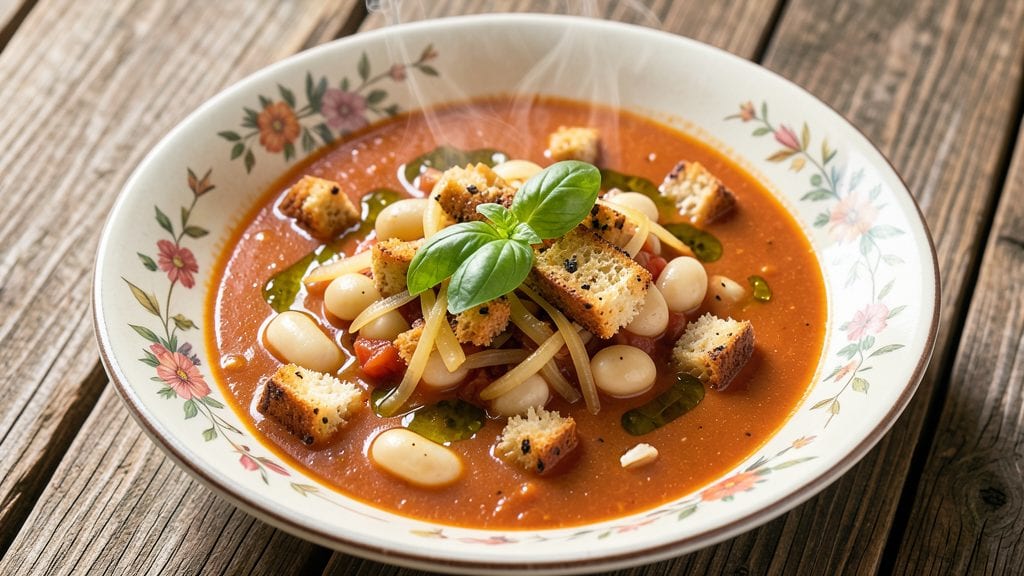
This Tuscana soup recipe brings the rustic heart of Tuscany to your kitchen with its simple yet deeply satisfying combination of tomatoes, white beans, and stale bread. The dish transforms humble ingredients into something rich and comforting, a tradition that's been perfected over generations in Italian farmhouses.
What makes it special is how the flavors develop as it simmers—garlic and herbs infuse the broth, while the bread softens into a thick, velvety base that clings to every spoonful.
The beauty of this soup lies in its simplicity and flexibility—no fancy techniques required, just time to let the flavors meld. You'll start with a base of tomatoes, garlic, and onions, then add white beans for hearty texture and protein.
The stale bread absorbs the broth beautifully, creating that signature rustic thickness that defines Tuscan soups. It's the kind of dish that tastes even better the next day as the flavors deepen.
By the time you finish simmering, you'll have a bowl of soup that's warm, hearty, and full of authentic Italian charm. The aroma alone will transport you to a Tuscan countryside table, where this simple but deeply satisfying meal has been a staple for centuries.
Perfect for chilly evenings or as a comforting lunch, this soup proves that sometimes the most traditional recipes are the best.
The best part? It's incredibly versatile—add fresh basil or a sprinkle of Parmesan for extra brightness, or serve it alongside crusty bread for dipping. This is the kind of recipe that gets better with each bowl, and once you try it, you'll want to make it again and again.
Let's get cooking!
Ingredients for tuscana soup
Tomatoes, beans, and bread—this soup’s magic comes from letting flavors meld slowly.
| Ingredient | Amount | Notes |
|---|---|---|
| Stale Bread 🍞 | 1 cup | Day-old crusty bread, cubed |
| Canned San Marzano Tomatoes 🍅 | 2 cups | Crushed by hand, seeds removed |
| Canned Cannellini Beans 🥜 | 1 ½ cups | Drained, rinsed, or cooked fresh |
| Yellow Onion 🧅 | 1 whole | Medium, finely chopped |
| Garlic Cloves 🧄 | 4 cloves | Fresh, minced (or 1 tsp dried) |
| Extra-Virgin Olive Oil 🫒 | ¼ cup | Fruity, not bitter |
| Fresh Rosemary 🌿 | 1 tbsp | Chopped, or 1 tsp dried |
| Fresh Thyme Leaves 🌿 | 1 tsp | Or 0.25 tsp dried |
| Vegetable Broth 💧 | 4 cups | Homemade or quality store-bought |
| Parmesan Cheese 🧀 | ¼ cup | Freshly grated, for serving |
| Fresh Basil Leaves 🌿 | ¼ cup | Chopped, for garnish |
| Kosher Salt 🧂 | 1 ½ tsp | Adjust to taste |
| Black Pepper 🌶️ | ½ tsp | Freshly cracked |
| Red Pepper Flakes 🌶️ | ¼ tsp | Optional, for heat |
The bread is non-negotiable—it’s what gives this soup its signature rustic thickness. Stale is key (toast a few slices the night before if you’re fresh out), and crusty Italian loaves work best. No crusty bread? Baguette or sourdough will do. The tomatoes? San Marzano is the gold standard—sweet, meaty, and perfect for crushing by hand. If you can’t find them, any high-quality canned tomatoes will work, but skip the chunky varieties. For the beans, cannellini are traditional, but great northerns or navy beans are great substitutes. The herbs? Fresh is always better, but dried works in a pinch—just use a third the amount.
No San Marzano tomatoes? High-quality crushed tomatoes will work, but taste for saltiness and adjust accordingly. Short on rosemary? Thyme or oregano can step in, but rosemary’s piney aroma is what makes this soup sing. The broth is the soul of the dish—homemade is ideal, but even bouillon cubes will do in a pinch. Just make sure it’s unsalted so you can control the seasoning. For extra richness, stir in a spoonful of butter or olive oil at the end. And if you’re feeling fancy, finish with a drizzle of aged balsamic vinegar—trust me, it elevates everything.
This soup tastes even better the next day, so make a big batch and save leftovers for lunch. Store in an airtight container in the fridge for up to 5 days, or freeze for 3 months. To reheat, warm gently on the stove with a splash of broth or water—stirring constantly to avoid sticking. The bread cubes will soften beautifully, soaking up all the flavors. Serve with extra Parmesan, a sprinkle of red pepper flakes, and a side of crusty bread for dipping. Leftovers? Even better—just reheat and enjoy!
Why You'll Love This Recipe
- No Chopping Needed: I swear by this—just slice that onion and mince garlic, toss them in, and let the tomatoes and beans do the work. The stale bread soaks up the broth like a dream, so no fancy techniques required.
- Tomatoes Rule Everything: San Marzano tomatoes? That sweet, rich juice melts into the soup, balancing the earthy beans and crispy bread. Honestly, it’s the kind of flavor that makes you want to eat it straight from the pot.
- Leftovers That Feel Fresh: This soup actually improves the next day. The bread softens perfectly, the flavors meld, and it’s still hearty enough for lunch. I make a big batch on Sundays—no stress, just reheat and enjoy.
- Pantry Magic on a Budget: Between us, this recipe uses ingredients you’re already buying. Cannellini beans, tomatoes, bread—nothing fancy, just smart. It’s my go-to when I’m low on cash but still want something satisfying.
Step-by-step instructions for rustic Tuscana soup
This hearty Tuscana soup comes together with simple techniques and bold flavors that will make your kitchen smell incredible.
Sauté Onions and Garlic for Flavor Foundation
Heat the 0.25 cup extra-virgin olive oil in a large pot over medium heat. Add the finely chopped yellow onion and cook for 5-6 minutes until soft and translucent—you'll notice the edges start to turn golden, signaling it's ready for the next step.
Add the 4 minced garlic cloves and cook for another 30 seconds until fragrant. This aromatic base is the soul of your soup, so don't rush this step. The garlic should smell intoxicating but not burn—if it starts to darken too quickly, reduce the heat slightly. This ensures all the flavors meld perfectly without bitterness.
Build the Tomato and Herb Base
Stir in the 2 cups crushed San Marzano tomatoes and cook for 5 minutes until the mixture thickens slightly. You'll see the tomatoes break down and release their juices, creating a rich, concentrated base. Add the 1 tbsp chopped fresh rosemary and 1 tsp fresh thyme leaves now—this is when their flavors will truly shine.
Season generously with 1.5 tsp kosher salt and 0.5 tsp black pepper, then stir in the 0.25 tsp red pepper flakes if you like a little heat. Let everything simmer together for 3 minutes to develop the flavors. This step transforms simple ingredients into something deeply aromatic and complex.
Add Beans and Broth for Hearty Texture
Pour in the 4 cups vegetable broth and bring the mixture to a gentle boil. Add the 1.5 cups cannellini beans (drained and rinsed) and stir well. The beans will start to warm through almost immediately, but let the soup simmer for 10 minutes to allow all the flavors to meld together.
Here's the thing—this is where the soup really comes together. The beans soften slightly, absorbing all those beautiful tomato and herb flavors. Taste the soup now and adjust the seasoning if needed. You might find you need a little more salt or pepper to balance the flavors perfectly. This is your chance to make it exactly how you love it.
Incorporate Bread for Thickening and Richness
Tear the 1 cup stale bread into small pieces and stir them into the soup. Let it simmer for another 5-7 minutes until the bread breaks down and thickens the soup to your desired consistency. You're aiming for a rich, velvety texture—not gluey, but definitely thicker than broth.
If the soup becomes too thick before the bread fully incorporates, simply add a splash of hot vegetable broth to loosen it. The bread should disappear completely, creating a luxurious mouthfeel that makes this soup feel like a hug in a bowl. This is the secret to that authentic Tuscana texture.
Finish and Serve with Fresh Herbs
Remove the pot from heat and let the soup rest for 5 minutes. This resting period allows all the flavors to settle and the bread to fully absorb the liquid. Stir in the 0.25 cup chopped fresh basil leaves just before serving—this adds a bright, fresh finish that cuts through the richness.
Ladle the soup into bowls and top each serving with a generous sprinkle of 0.25 cup freshly grated Parmesan cheese. The contrast between the warm, hearty soup and the cool, salty cheese is pure magic. Serve immediately while the bread pieces are still tender and the flavors are at their peak. Pair with crusty bread and a simple green salad for the perfect Tuscan meal.
Pro Tips For Making Tuscana Soup
- Sauté Onions Low and Slow: Tuscana soup isn’t about caramelized onions—it’s about soft, sweet base flavor. After dicing that yellow onion, cook it over medium-low heat for 8-10 minutes until translucent but not browned. I learned this the hard way: rushing it turns the soup bitter, and you’ll taste it in every spoonful.
- Toast Bread Until Golden: Skip the soggy bread—this is where texture matters. Tear the stale bread into chunks and toast them in a dry pan over medium heat for 3-4 minutes until edges crisp and color deepens. The contrast of crunchy bread against the creamy beans and tomatoes makes the whole dish sing.
- Crush Beans Before Adding: Drain those cannellini beans, but don’t skip crushing about half of them with your hands or a fork. It releases starch and thickens the soup naturally, giving it that rustic, hearty texture without needing extra flour. (Yes, even if you’re impatient like me—just do it.)
- Simmer Tomatoes Until They Break: After adding the San Marzano tomatoes, let the soup bubble gently for 15 minutes uncovered. The acid will soften the bread and beans, but more importantly, it breaks down the tomato skins into a velvety consistency. No need to blend—just let time do the work.
Storing and reheating your leftovers
Refrigerator Storage
This soup tastes even better the next day, so store leftovers in an airtight container in the fridge for up to 5 days. The bread cubes will soften further, absorbing all the rich tomato and herb flavors.
I always make a big batch—double the recipe—because it's perfect for lunch the next day. Just remember to let it cool completely before storing to prevent condensation. 💫
Freezer Prep Tips
For long-term storage, freeze portions in glass Pyrex containers or silicone molds—they reheat more evenly than plastic. Leave 1 inch of headspace to account for expansion, and seal tightly with parchment paper under the lid to prevent freezer burn.
Label with the date, as this soup keeps its quality for up to 3 months in the freezer. I like to freeze individual servings for quick meals.
Stovetop Reheating
My preferred method is reheating on the stovetop over medium-low heat to preserve the bread's texture. Start with 1-2 tablespoons of water or broth to prevent sticking, then stir constantly for 5-7 minutes until heated through (165°F internal temperature).
If it looks too thick, add a splash more liquid. The bread should soften beautifully, soaking up all the flavors. 🔥
Microwave Method
For a quick fix, transfer a portion to a microwave-safe bowl and cover with a damp paper towel to retain moisture. Heat on medium power (50%) for 2-3 minutes, stirring halfway.
If the bread stays too firm, add 1 tablespoon of broth and microwave another 30 seconds. This method works best for single servings and takes just 3 minutes total.
Oven Refresh
For a restaurant-quality finish, transfer the soup to an oven-safe dish, cover with foil, and bake at 350°F for 20 minutes. Remove the foil for the last 5 minutes to crisp any bread edges slightly.
This method is perfect when you're serving guests—it reheats evenly and develops deeper flavors. Garnish with fresh basil and Parmesan before serving. ✨
Garnish Reset
After reheating, always finish with fresh garnishes to brighten the dish. A sprinkle of freshly grated Parmesan, a few chopped basil leaves, and a drizzle of extra-virgin olive oil make all the difference.
If you added red pepper flakes earlier, add a pinch more for extra heat. This step transforms reheated soup into something restaurant-worthy every time. 💛
Nutrition facts
Frequently asked questions
Can I make this soup without stale bread?
The bread is essential for that signature Tuscan texture, but you can substitute with 1 cup cooked white rice or 1 cup diced potatoes if needed. For best results, use day-old bread—it absorbs liquid better than fresh. If you're really in a pinch, a thickener like 2 tablespoons cornstarch mixed with water can work, but the flavor won't be the same.
How can I make this soup vegetarian?
This recipe is already vegetarian-friendly! Just ensure your vegetable broth is plant-based and skip any accidental meat-based ingredients. For extra protein, add 1 cup cooked lentils or 1 cup chickpeas along with the cannellini beans. The flavors will still shine with the tomato, garlic, and herb base.
Why does my soup turn out too thick or too thin?
Thickness depends on the bread and simmering time. If it's too thick, stir in 2-3 tablespoons of broth or water until smooth. Too thin? Simmer uncovered for 5-10 minutes to reduce. Remember: the bread should fully dissolve—if it doesn't, add more and cook longer. For a creamy texture, stir in 1 tablespoon olive oil at the end.
Can I prep this soup ahead of time for a dinner party?
Make the soup 1 day ahead and store it in the fridge. Reheat gently on the stove with a splash of broth, then finish with fresh basil and Parmesan before serving. For a crowd, double the recipe—it reheats beautifully. The flavors actually deepen overnight, making it even more delicious.
What's the best way to serve leftover soup?
Reheat leftovers with a splash of broth to restore moisture, then garnish with fresh basil, Parmesan, and a drizzle of olive oil. For a restaurant touch, top with toasted bread croutons or a sprinkle of red pepper flakes. Serve with crusty bread on the side for dipping—it's the perfect way to enjoy the second day.