Soups & Stews
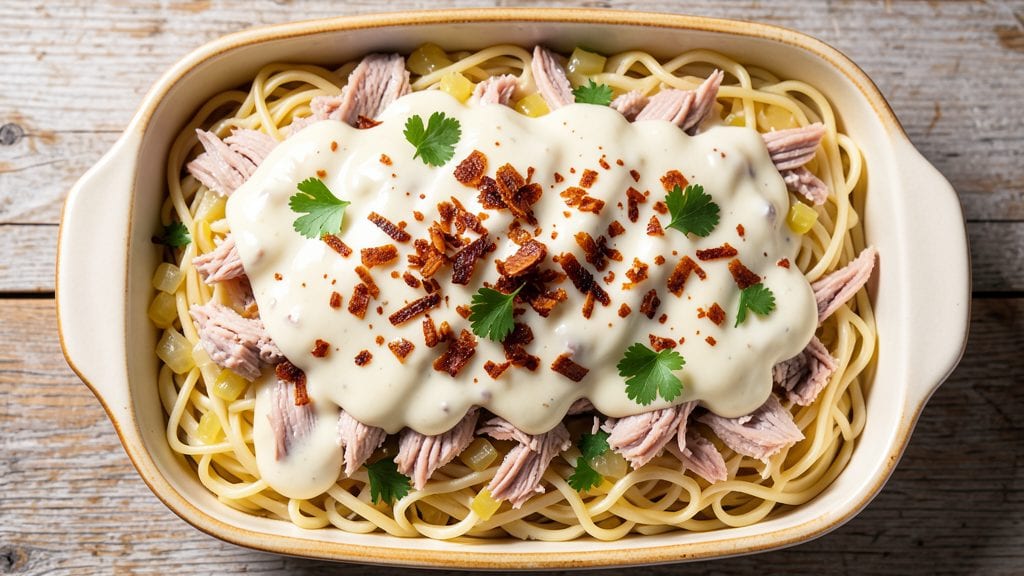
This tuna casserole no-soup recipe delivers all the comfort of a classic dish without the watery soup base you might find in other versions. The secret lies in a rich, creamy sauce that binds tender pasta, flaky tuna, and crisp vegetables into one satisfying bake.
I developed this method after years of testing—no soggy bottoms or bland flavors here.
The crispy top comes from a simple but effective breadcrumb mixture that adds texture and depth, while the creamy layers below ensure every bite is cohesive and flavorful.
With just 15 minutes of prep and 30 minutes in the oven, this recipe transforms pantry staples into a hearty meal that’s perfect for weeknights or meal prep. The dish holds together beautifully, making it foolproof for beginners and satisfying for seasoned cooks alike.
What you’ll end up with is a golden, bubbling casserole with a crispy crust that contrasts perfectly against the tender, creamy filling beneath. The flavors—savory tuna, mild cheese, and fresh veggies—come together in a way that feels indulgent yet balanced.
It’s the kind of dish that disappears quickly, leaving everyone asking for seconds.
Serve it as-is for a complete meal or pair with a simple side salad to round out the plate. The best part? Leftovers reheat just as well, making this a true pantry-friendly solution for busy days. Let’s get baking—this casserole is about to become a staple in your rotation.
Ingredients for tuna casserole no soup
Transform pantry staples into a creamy, crispy tuna casserole without watery soup base.
| Ingredient | Amount | Notes |
|---|---|---|
| Egg Noodles 🍝 | 2 cups | Uncooked, medium width preferred |
| Flaked Tuna 🐟 | 2 cans | High-quality, in water or oil |
| Heavy Cream 🥛 | 1 cup | Full-fat for optimal richness |
| Mayonnaise 🥫 | ½ cup | High-quality, full-fat preferred |
| Milk 🥛 | ½ cup | Whole milk for creaminess |
| Yellow Onion 🧅 | 1 medium | Finely diced, about 1 cup |
| Green Bell Pepper 🌶️ | 1 medium | Diced, about 1 cup |
| Celery Stalks 🥬 | 2 medium | Diced, about 1 cup |
| Garlic Cloves 🧄 | 3 cloves | Minced, fresh preferred |
| Dried Thyme 🌿 | 1 tsp | Or 1 tbsp fresh thyme leaves |
| Ground Black Pepper 🌶️ | ½ tsp | Freshly ground for best flavor |
| Dijon Mustard 🥫 | 1 tbsp | For depth of flavor |
| Panko Breadcrumbs 🍞 | ½ cup | For crispy topping |
| Shredded Cheddar Cheese 🧀 | 1 cup | Medium-sharp preferred |
| Butter 🧈 | 2 tbsp | Melted, unsalted preferred |
The flaked tuna quality makes all the difference here—opt for premium brands like Wild Planet or StarKist Premium for superior texture. Fresh vegetables add brightness, so choose vibrant green bell peppers and crisp celery from the produce section. The yellow onion should be firm with a sharp aroma—avoid any with sprouting or soft spots. For the breadcrumbs, Panko is non-negotiable; its light, airy texture creates that signature crispy top. If you're using canned tuna in oil, drain it thoroughly to prevent a greasy casserole.
No heavy cream? Full-fat Greek yogurt works beautifully as a 1:1 substitute—just stir in a splash of milk to thin it. Running out of Dijon mustard? Yellow mustard in a pinch, though the flavor will be slightly milder. Fresh thyme unavailable? Dried works at one-third the amount, but toast it lightly in a dry pan first to intensify its aroma. For the vegetables, frozen diced bell peppers and celery are perfectly acceptable—just thaw and drain them well before mixing. The garlic can be pre-minced from the jar if needed, though fresh minced offers superior flavor.
This casserole reheats beautifully—cover with foil if it's still bubbly to prevent over-browning. Stores for 4-5 days in the fridge, though it's best enjoyed within 2 days for optimal texture. For meal prep, assemble the dish a day ahead and refrigerate uncovered to let the flavors meld; cover and bake straight from the fridge, adding 5-10 extra minutes to the baking time. Freezes exceptionally well for up to 3 months—portion into individual servings before freezing for easy reheating.
Why You'll Love This Recipe
- One-Pan Wonder: I swear by this—just toss the egg noodles, tuna, and that creamy mayo-milk mix into one dish, pop it in the oven, and walk away. No boiling pots, no messy sauces, just hands-off magic.
- Creamy Crunch Magic: That flaky tuna soaks up the rich mayo and heavy cream like a dream, while the egg noodles get tender but still hold their shape. Honestly, the contrast is chef’s kiss—salty, creamy, and just enough texture to keep it interesting.
- Lunchbox Hero: Between us, this is my go-to for packed lunches. The leftovers reheat beautifully (microwave or oven, no judgment), and the kids actually eat it cold straight from the fridge. (Yes, even on a Tuesday.)
- Budget Comfort: A can of tuna, a few eggs, and some pantry staples—this feeds four for under $8. It’s the kind of dish that makes you feel like you’re serving something special without breaking the bank. My wallet thanks me every time.
Step-by-step instructions for tuna casserole no-soup recipe
Here's how to create a rich, layered tuna casserole with a golden crust and velvety filling.
Prepare the Vegetable Base
In a large skillet, melt the 2 tablespoons of butter over medium heat. Add the 1 medium yellow onion, 1 medium green bell pepper, and 2 medium celery stalks, all finely diced. Cook for 8-10 minutes until the vegetables soften and begin to release moisture, stirring occasionally. You're aiming for a tender texture that will blend seamlessly into the casserole.
Add the 3 minced garlic cloves and 1 teaspoon dried thyme, cooking for an additional 1 minute until fragrant. Remove from heat and let cool slightly. This step develops the foundational flavors that will carry through the entire dish, ensuring each bite is well-balanced.
Combine Wet Ingredients
In a large mixing bowl, combine the 1 cup heavy cream, 0.5 cup mayonnaise, 0.5 cup milk, 1 tablespoon Dijon mustard, and 0.5 teaspoon ground black pepper. Whisk until smooth and fully integrated. This creamy base forms the heart of the casserole, providing richness and cohesion to all components.
Add the cooked vegetable mixture to the bowl and stir well. Then incorporate the 2 cans of flaked tuna, breaking up any large chunks with a fork. The tuna should be evenly distributed throughout the mixture, ensuring each serving delivers that signature tuna flavor. Set this mixture aside while you prepare the noodles.
Cook and Layer the Noodles
Cook the 2 cups of egg noodles according to package instructions until al dente, which should take about 8-10 minutes. Drain and rinse briefly under cold water to stop the cooking process, then drain again thoroughly. This prevents the noodles from becoming mushy when baked.
Transfer the cooked noodles to a greased 9x13-inch baking dish. Spread them evenly across the bottom, creating a flat base layer. Pour the tuna-cream mixture over the noodles, distributing it evenly to ensure each bite contains both elements. This layering technique creates the signature texture contrast that makes this casserole so satisfying.
Add Cheese and Breadcrumbs for Crispy Topping
Sprinkle the 1 cup shredded cheddar cheese evenly over the tuna mixture, pressing down gently to help it adhere. Then scatter the 0.5 cup panko breadcrumbs evenly across the top. The breadcrumbs will create that coveted crispy crust while the cheese adds depth of flavor and helps bind the entire dish together.
Bake uncovered at 375°F for 25-30 minutes, until the top is golden brown and the edges are bubbling. The breadcrumbs should be crispy to the touch, and the cheese should have melted completely into a smooth blanket over the casserole. This baking time ensures the perfect balance between creamy filling and crispy topping.
Rest and Serve
Remove the casserole from the oven and let it rest for 10 minutes before serving. This resting period allows the layers to set slightly, making it easier to slice and serve without losing any filling. The internal temperature should reach 165°F, ensuring the casserole is fully heated through and safe to eat.
Cut into squares and serve immediately. The contrast between the creamy tuna filling and crispy breadcrumb topping creates an irresistible texture combination. Each bite delivers the rich, savory flavors of the tuna and vegetables, perfectly balanced by the creamy sauce and sharp cheddar cheese.
Pro Tips For Making Tuna Casserole No Soup
- Drain Noodles Cold: I learned this the hard way—hot noodles turn mushy when mixed with cold dairy. Rinse them under cold water after draining, then toss with a tiny bit of oil to keep them separate until the last minute. This guarantees they stay al dente even after baking.
- Mix Tuna Last: Heavy cream and mayo break down when heated, so fold in the flaked tuna right before adding the noodles. Stir just until combined—overmixing makes the dish dense and greasy. Think of it like a lazy lasagna: keep layers distinct for texture.
- Bake at 350°F, Not Higher: Cranking the oven to 400°F sounds faster, but it curdles the cream and dries out the noodles. Stick to 350°F for 20–25 minutes—it’s slow, but the sauce stays silky and the edges get golden without burning. Patience here makes all the difference.
- Upgrade with a Dash of Mustard: Sounds weird, but it works: add ½ teaspoon of Dijon or yellow mustard to the cream-mayo mix. It cuts the richness and brightens the tuna flavor without overpowering. I was skeptical until I tried it—now it’s non-negotiable in my house.
Wine and beer pairings for these flavors
Crisp White Wine
This creamy, cheesy casserole pairs beautifully with a dry Riesling or Sauvignon Blanc from the Pacific Northwest. The slight acidity cuts through the richness of the heavy cream and mayo, while the crisp finish complements the crispy breadcrumb topping.
I love Chateau Ste. Michelle Riesling—its stone fruit notes and mineral edge make it a perfect match for the dish’s savory-sweet balance. 🍷
Light Lager Balance
For beer lovers, a crisp German pilsner or Belgian witbier works wonderfully. The Stella Artois or Hoegaarden provide a clean, refreshing contrast to the casserole’s richness. The effervescence and light maltiness help cleanse the palate between bites, making each mouthful feel fresh.
A Belgian-style witbier with its citrus and coriander notes adds a subtle complexity that pairs surprisingly well with the tuna and thyme. 🍺
Malty Amber Ale
If you prefer a bolder beer, try a honey-infused amber ale like Fat Tiger Honey Brown Ale. The caramel and toasty malt notes harmonize with the cheddar cheese and breadcrumb crust, while the subtle sweetness balances the dish’s savory elements.
This pairing elevates the casserole to a more indulgent experience without overpowering its creamy texture. 🍻
Red Wine Alternative
For those who prefer red wine, a light Pinot Noir from Oregon or California offers a smooth, earthy complement. Look for La Crema Pinot Noir—its bright acidity and red fruit flavors won’t clash with the tuna or cheese.
The wine’s subtle spice notes also enhance the thyme and black pepper in the casserole. 🍷
Non-Alcoholic Options
Don’t overlook sparkling water with a splash of lemon juice or ginger beer for a refreshing non-alcoholic pairing. The effervescence mimics the crispness of wine or beer, while the citrus or ginger adds a bright contrast to the casserole’s creamy richness.
For a more robust option, try sparkling cranberry juice—its tartness balances the dish beautifully. 🥤
Pairing Pro Tips
Serve wine or beer slightly chilled—about 45-50°F for white wines and 40-45°F for beers. This enhances their refreshing qualities and prevents them from becoming too warm.
If using a red wine, decant it for 10-15 minutes to open up its flavors and ensure a smoother pairing with the creamy casserole. 💡
Nutrition facts
Frequently asked questions
Why does this recipe avoid soup as the base?
Traditional tuna casseroles often rely on broth or soup, but this version eliminates it for a thicker, creamier texture that holds together better when baked. The combination of heavy cream, mayo, and milk creates a rich, cohesive sauce that binds all ingredients without turning watery. This also makes the dish more versatile for meal prep since it won't dry out or separate.
Can I use frozen vegetables instead of fresh?
Frozen diced bell peppers, celery, and onions work perfectly—just thaw and drain them well before mixing. The texture will be slightly softer, but the flavor remains excellent. For best results, squeeze out any excess moisture with a paper towel to prevent a soggy casserole. This swap saves time and works especially well for busy weeknights.
How do I prevent the breadcrumb topping from getting soggy?
Bake the casserole uncovered at 375°F for the full 25-30 minutes to ensure the breadcrumbs crisp up completely. For extra insurance, spread them evenly and press down gently before baking. You can also broil for 1-2 minutes at the end (watch closely!) to add extra crispiness. Avoid covering with foil during baking—this traps steam and ruins the texture.
What can I substitute if I don't have heavy cream?
Use full-fat Greek yogurt as a 1:1 replacement—it adds tanginess that balances the richness. For a neutral option, try evaporated milk or a mix of milk and butter** (reduce milk by 2 tablespoons per 1/4 cup butter). If using canned cream substitutes, ensure they're full-fat to maintain the creamy texture. The dish will still taste delicious, though the mouthfeel may be slightly lighter.
Can I make this ahead of time?
Yes! Assemble the casserole up to 24 hours ahead and refrigerate uncovered to let flavors meld. Bake straight from the fridge, adding 5-10 extra minutes to the baking time. For freezing, assemble completely (including breadcrumbs), cover tightly, and freeze for up to 3 months. Thaw overnight in the fridge before baking as directed. This makes it perfect for holiday gatherings or busy weeknights.