
Soups & Stews
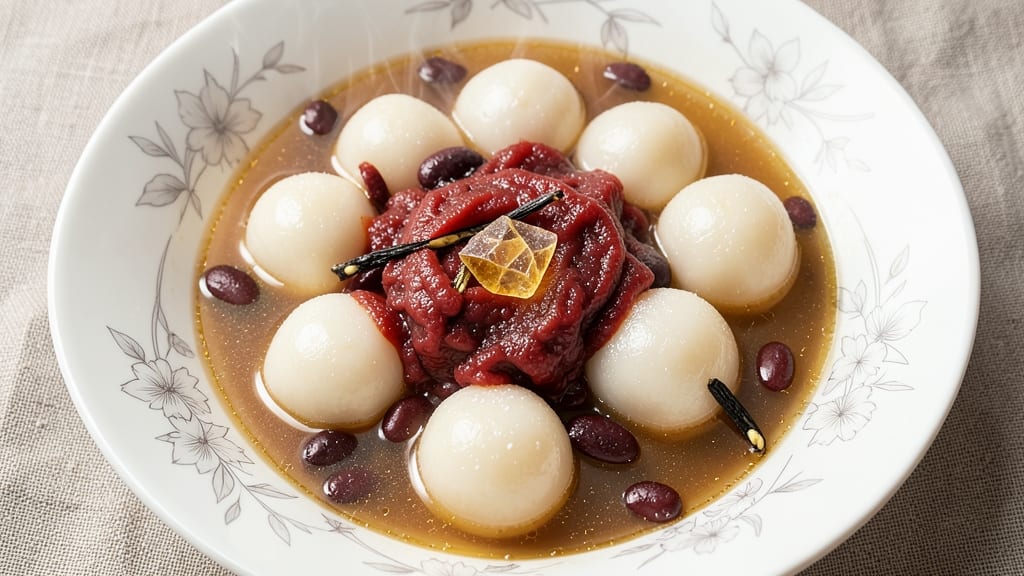
This tang yuan soup recipe brings the heart of Chinese New Year to your kitchen with its delicate glutinous rice balls floating in fragrant red bean broth. The contrast between the chewy, translucent rice balls and the creamy, sweet-savory filling creates a dish that’s both comforting and celebratory.
I first made this during Lunar New Year when my grandmother insisted it was essential for family gatherings—now I make it whenever I crave something nostalgic yet elegant.
The key to perfect tang yuan lies in the dough’s elasticity and the broth’s balance of sweetness and depth. You’ll need 30 minutes to prepare the dough and filling, followed by 15 minutes of gentle boiling to achieve those signature translucent balls.
The red bean broth, simmered with rock sugar and a touch of vanilla, transforms a simple soup into a symphony of flavors that’s both visually stunning and deeply satisfying.
What you’ll end up with is a bowl of golden, glossy rice balls bobbing in a rich, ruby-red broth that’s sweet enough to please children but complex enough to impress adults.
The filling—whether classic red bean paste or a modern twist like black sesame—adds a creamy contrast that makes every bite irresistible. This isn’t just dessert; it’s a centerpiece for festivals, family dinners, or quiet moments of indulgence.
For those who love tradition, stick to the classic red bean filling, but feel free to experiment with lotus paste or even savory options like minced pork and mushrooms. The beauty of tang yuan is its adaptability—let’s make yours unforgettable.
Ingredients for tang yuan soup
Sweet rice flour and fragrant beans—this is your pantry checklist for authentic tang yuan.
| Ingredient | Amount | Notes |
|---|---|---|
| Glutinous Rice Flour 🍚 | 2 cups | Sweet rice flour for elasticity |
| Water 💧 | 1 ½ cups | Room temperature preferred |
| Red Bean Paste 🌱 | 1 ½ cups | Classic filling, store-bought or homemade |
| Rock Sugar 🍯 | ½ cup | Or substitute white sugar (1:1) |
| Dried Red Beans 🌱 | 1 lb | Soaked overnight for broth |
| Vanilla Bean 🌿 | 1 whole | Seeded for aromatic depth |
| Water (for broth) 💧 | 4 cups | For soaking beans and cooking |
| Sesame Oil 🥜 | 1 tbsp | Toasted for nutty aroma |
| Salt 🧂 | ½ tsp | Adjust to taste |
| Lotus Root Paste (optional) 🌿 | ½ cup | For modern twist filling |
| Black Sesame Paste (optional) 🥜 | ½ cup | For nutty depth |
| Vegetable Oil 🫒 | 1 tbsp | For dough shaping |
| Sesame Seeds 🥜 | 1 tbsp | For garnish |
The glutinous rice flour is non-negotiable—it’s what gives those rice balls their signature chew. Bob’s Red Mill or Asian grocery stores carry it, but if you can’t find it, sweet rice flour from a Chinese market works best. For the red beans, soak them overnight—this cuts cooking time and makes the broth richer. I always double-check the rock sugar isn’t clumped; if it is, pulse it in a food processor. The vanilla bean? Splurge on a real one—it’s worth the extra few cents for that deep aroma.
No red bean paste? Mash cooked red beans with a pinch of sugar—it’s labor-intensive but authentic. Swapping in lotus root paste or black sesame? Use half the amount of red bean paste to balance sweetness. The sesame oil can be skipped if you’re sensitive to its flavor, but trust me, that toasted aroma is key. For the dough, wet your hands slightly when shaping to prevent sticking—it makes all the difference when rolling those balls.
Keep the dough covered in a damp towel to prevent drying—it’s ready in 30 minutes. The broth can be made a day ahead; just reheat gently before adding the rice balls. Store leftover rice balls in the fridge for 2 days, covered in water to keep them from drying. Freeze the dough balls (unfilled) for up to 3 months
Why You'll Love This Recipe
- Five-Ingredient Magic: I swear by this recipe—just flour, water, beans, and sugar. No fancy prep, no stress, and the dough comes together faster than I can boil water. Honestly, the hardest part is resisting the urge to eat them straight out of the bowl.
- Sweet Chewy Bliss: That first bite? The outside stays just firm enough to hold its shape, while the inside melts into a pillowy, sweet cloud—especially with the red bean paste swirled inside. (Yes, even on a Tuesday night.) The rock sugar caramelizes into the broth, turning it into a cozy, lightly sweet hug.
- Holiday or Everyday: I make this for Lunar New Year, but it’s just as welcome on a lazy Sunday. The dried red beans add depth, while the bright broth keeps it light enough for summer. My kids ask for it year-round—proof it’s not just a seasonal showstopper.
- Zero-Waste Comfort: The broth gets richer with each reheat, and the dough balls keep perfectly in the fridge for days. I’ll be real: I often make a double batch because it’s cheap to feed a crowd, and the leftovers taste just as good cold in lunchboxes. Minimal effort, maximum return.
Step-by-step instructions for tang yuan soup
Here's how to make these chewy, sweet rice balls with a fragrant red bean broth—simple but impressive.
Prepare the Red Bean Broth
First, soak the 1 lb dried red beans in 4 cups water (for broth) overnight or at least 8 hours. This ensures they soften completely and infuse the broth with rich flavor. Drain and rinse them thoroughly before cooking.
In a large pot, combine the soaked beans with fresh 4 cups water (for broth) and bring to a boil. Once boiling, reduce heat to medium-low and simmer uncovered for 1.5 to 2 hours until the beans are tender and the broth thickens slightly. Skim off any foam that rises to the surface during cooking to keep the broth clear.
About 30 minutes before the broth is ready, split the 1 whole vanilla bean lengthwise and scrape out the seeds. Add the seeds and scraped vanilla pod to the simmering beans. Stir in the 0.5 cup rock sugar and 0.5 tsp salt, letting the mixture steep for the final 30 minutes of cooking. This creates a fragrant, naturally sweetened broth that perfectly complements the rice balls.
Make the Tang Yuan Dough
In a large bowl, combine the 2 cups glutinous rice flour and 1.5 cups water. Using a fork or chopsticks, gently mix until just combined—you want a thick, shaggy dough that holds together when pressed but still feels slightly sticky. Overmixing will make the dough tough.
Cover the bowl with plastic wrap and let the dough rest for 30 minutes. This resting period allows the gluten to relax slightly, making it easier to shape later. If the dough feels too dry after resting, add 1 tsp water at a time until it reaches a pliable consistency.
For the filling, divide the 1.5 cups red bean paste into 4 equal portions. If using, mix 0.5 cup lotus root paste (optional) and 0.5 cup black sesame paste (optional) into separate portions of the red bean paste for variety. Set aside until ready to use.
Shape the Rice Balls
Lightly oil your hands with 1 tbsp vegetable oil to prevent sticking. Take a small piece of dough—about 1.5 tablespoons—and flatten it into a thin circle. Place 1 tablespoon of filling in the center, then gently fold the dough over the filling and pinch the edges together to seal completely. Roll the sealed ball between your palms to create a smooth, round shape.
Here's the thing—don't worry if they're not perfect. The key is to keep the filling inside while creating a uniform shape. If the dough tears, simply patch it with a tiny bit of extra dough. Place the shaped balls on a plate dusted with glutinous rice flour to prevent sticking. Repeat until all the dough is used.
For extra flavor, heat 1 tbsp sesame oil in a small pan over low heat until fragrant (about 1 minute). Brush the warm sesame oil lightly over the rice balls before cooking for a nutty aroma.
Cook the Tang Yuan
Bring the prepared red bean broth to a gentle simmer—it should be hot but not boiling vigorously. Carefully add the rice balls in a single layer, using a slotted spoon to prevent them from sticking together. Cook for 8 to 10 minutes, then gently stir them to prevent sticking to the bottom of the pot.
You'll know they're done when the rice balls float to the surface and develop a slightly translucent appearance. If any balls stick to the pot, use a slotted spoon to gently lift them. Remove the vanilla pod after cooking to prevent bitterness.
Ladle the hot broth and rice balls into bowls, garnishing each serving with 1 tbsp sesame seeds. Serve immediately while the broth is warm and the rice balls are perfectly chewy. The contrast of the warm, fragrant broth with the cool, sweet rice balls makes every bite special.
Pro Tips For Making Tang Yuan Soup
- Boil Water First: Don’t just toss the tang yuan into cold water—bring a pot of water to a rolling boil first. The high heat helps the dumplings seal properly, so they don’t fall apart when you add them. (Yes, it takes an extra 2 minutes, but it’s worth it.)
- Soak Dried Beans Overnight: Skip the quick-soak hacks—soak dried red beans in cold water for at least 8 hours (or overnight). This ensures they cook evenly and don’t turn to mush, which is especially important if you’re using them as filling or broth base.
- Test Dumpling Density: Before shaping, drop a small ball of dough into boiling water—if it floats immediately, your batter’s too loose. If it sinks like a rock, add 1-2 teaspoons more water. Aim for a slow, steady float (about 30 seconds) for perfect texture.
- Simmer, Don’t Boil: Once the tang yuan are floating, reduce heat to a gentle simmer. Boiling too hard makes them burst open, and you end up with a soup full of broken bits. A low simmer keeps them intact while letting flavors meld. (Trust me, your soup will taste cleaner.)
Essential equipment for this recipe
Dough Prep Essentials
You’ll need a large mixing bowl with high sides to contain the sticky dough—12-inch diameter is ideal. I use a stainless steel bowl from OXO Good Grips because it’s non-reactive and easy to clean.
For mixing, a pair of chopsticks or a flexible silicone spatula works best to avoid overworking the dough. A food scale (like Escali Primo) ensures precise measurements for the 2 cups glutinous rice flour and 1.5 cups water. 🍚
Broth Simmering Tools
A heavy-bottomed pot (I recommend All-Clad Stainless Steel) is essential for even heat distribution during the 1.5-2 hour broth simmer. A fine-mesh strainer helps remove foam while cooking, and a wooden spoon prevents scratching the pot.
For sweetening, a small saucepan is perfect for melting 0.5 cup rock sugar into a syrup before adding it to the broth. Don’t skip the vanilla bean splitter—a simple kitchen tool that makes scraping seeds effortless. 🌿
Shaping Station Setup
Set up a dedicated shaping station with a lightly oiled plate (use 1 tbsp vegetable oil) to prevent sticking. A rolling pin (like J. L. Chef’s) helps flatten dough pieces evenly, but your palms work too. Keep a small bowl of glutinous rice flour nearby for dusting.
For extra flavor, a small sauté pan is needed to toast 1 tbsp sesame oil—just heat it until fragrant (1 minute) before brushing onto the shaped balls. 🥜
Cooking & Serving Gear
A slotted spoon (preferably stainless steel) is your best friend for gently lowering rice balls into the broth without breaking them. Use a fine-mesh skimmer to remove cooked balls and prevent sticking. For serving, wide, shallow bowls (like Japanese donabe-style) showcase the rice balls beautifully.
A small sieve helps strain any stray sesame seeds for garnish. Keep a kettle nearby to maintain broth temperature if needed. ✨
Optional Upgrades
For a modern twist, a high-speed blender (like Vitamix) purees homemade red bean paste in 10 minutes. A thermometer ensures the broth stays at 185-195°F—ideal for gentle cooking. If you love presentation, edible gold leaf or pomegranate seeds elevate the dish for special occasions.
For storage, glass airtight containers (like Pyrex) keep leftovers fresh for 2 days in the fridge. 💫
Nutrition facts
Frequently asked questions
Can I make tang yuan dough ahead of time?
The dough keeps well in the fridge for 2 days when wrapped tightly in plastic. For longer storage, freeze unfilled dough balls (uncooked) for up to 3 months. Just thaw overnight in the fridge before shaping and filling. The key is keeping it moist—store with a damp towel between layers.
What if my rice balls stick together while cooking?
This happens when the broth isn't hot enough or the balls are overcrowded. Use a slotted spoon to gently separate them in the broth. For prevention, cook in batches and maintain a gentle simmer (185-195°F). A splash of cold water can also help loosen stuck balls without breaking them.
How do I adjust the sweetness level?
Start with the 0.5 cup rock sugar called for, then taste the broth before serving. For less sweetness, reduce by 1-2 tablespoons. For more, add sugar gradually—it's easier to adjust than remove. The red bean filling already contains natural sweetness, so balance both components.
Can I use store-bought red bean paste?
Yes! High-quality store-bought paste works perfectly—just check for added sugar. For homemade, simmer 1 lb dried red beans with 1 cup water and 1 tbsp sugar until soft (1.5 hours), then mash. The broth recipe already accounts for this, so no adjustments are needed.
What's the best way to serve tang yuan?
Serve immediately in wide, shallow bowls with warm broth to highlight the translucent rice balls. Garnish with sesame seeds and a drizzle of toasted sesame oil. For special occasions, add edible gold leaf or fresh mint leaves. The contrast of warm broth and cool rice balls is key to the experience!