
Soups & Stews
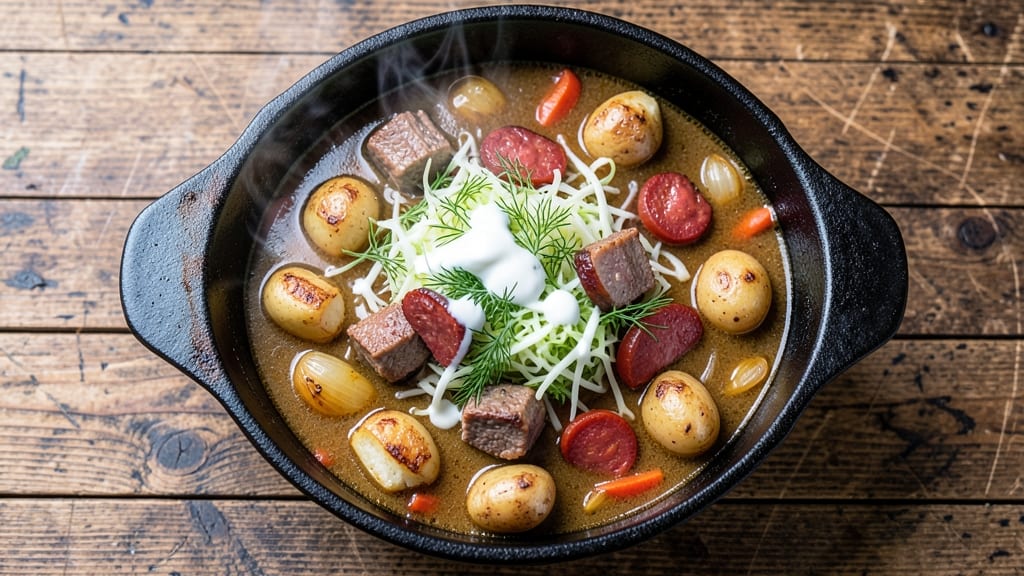
This solyanka soup recipe brings bold Russian flavors to your kitchen table with its deep, smoky character and tangy pickle punch. After years of perfecting the balance between savory meat, briny pickles, and rich broth, I’ve created a version that delivers restaurant-quality heartiness without requiring a specialty market.
The key lies in slow simmering—letting flavors meld while maintaining that signature tangy brightness.
Traditionally made with beef or pork, this soup transforms tough cuts into fork-tender meat through hours of gentle cooking. Pickles—whether dill, cucumber, or tomato—add the signature tang that cuts through the richness, while cabbage and carrots provide texture and sweetness.
The broth develops layers of depth as it simmers, creating a soup that’s equal parts comforting and complex.
What you’ll end up with is a steaming bowl of solyanka that’s packed with smoky, tangy, and umami-rich flavors—each spoonful delivering a perfect harmony of textures and tastes.
The aroma alone will have everyone gathering at the table, and the first bite delivers that satisfying balance of hearty meat, briny pickles, and velvety broth.
Serve with crusty bread to soak up every last drop of that flavorful broth, or pair it with a simple green salad to cut through the richness. This recipe is designed to impress, whether you’re feeding a crowd or treating yourself to a cozy weeknight meal.
Ingredients for solyanka soup
Heartiness meets tang in this smoky Russian soup—just 14 ingredients for bold flavors.
| Ingredient | Amount | Notes |
|---|---|---|
| Beef Chuck Roast 🥩 | 2 lb | Tough cut for tenderizing |
| Smoked Sausage 🌭 | 1 lb | Kielbasa or smoked pork |
| White Cabbage 🥬 | ½ head | Medium size, shredded |
| Carrots 🥕 | 4 medium | Peeled, sliced into rounds |
| Yellow Onions 🧅 | 2 large | Chopped, for depth of flavor |
| Russet Potatoes 🥔 | 4 medium | Peeled, cubed for heartiness |
| Tomato Paste 🍅 | ½ cup | Canned, for rich base |
| Dill Pickles 🥒 | 1 cup | Chopped, for tangy bite |
| Beef Broth 💧 | 6 cups | Homemade or quality store-bought |
| Apple Cider Vinegar 🍏 | ¼ cup | For tangy brightness |
| Bay Leaves 🌿 | 2 whole | For aromatic depth |
| Black Peppercorns 🌶️ | 1 tbsp | Crushed, for heat |
| Salt 🧂 | 1 ½ tsp | Kosher or sea salt |
| Fresh Parsley 🌿 | ¼ cup | Chopped, for garnish |
The beef is non-negotiable. Chuck roast from the butcher counter (not pre-cut) gives you the best marbling for flavor and texture. Costco or local meat markets usually have it at a good price—look for bright red color and visible fat. Smoked sausage adds depth, but kielbasa or smoked pork works too. The cabbage should be firm and heavy for its size—green or purple works best. If you can't find fresh dill pickles, brined cucumbers in a jar are a good swap, but they won't have the same punch. Carrots can be baby carrots if that's what you've got, but the flavor's better with the full-size ones.
No smoked sausage? Substitute with extra beef or pork shoulder—just increase the cooking time. Running low on vinegar? Lemon juice works in a pinch, but it won't have the same depth. The tomato paste can be the squeeze-tube kind from Trader Joe's—it's perfect for this. Fresh parsley is ideal, but dried parsley at one-third the amount gets you close. For the broth, homemade is best, but even the good store-bought stuff like Kitchen Basics or Swanson will work. If you're using a slow cooker, you can toss in a beef bouillon cube to boost the flavor.
This soup tastes even better the next day—make a double batch if you can. Keeps 4-5 days in the fridge, and freezes beautifully for up to 6 months. I like to portion it into ziplock bags with the broth and meat separate—just thaw and reheat. The pickles and parsley can be added fresh when serving. For a lighter version, save some broth to serve on the side instead of pouring it all over the top.
Why You'll Love This Recipe
- One-Pot Magic: I swear by this recipe—just dump everything into one pot, let it simmer, and walk away. No chopping like a fine-dining chef, no last-minute stress. The beef chuck roast practically melts into tender shreds while the cabbage and onions caramelize right in the broth.
- Smoky Depth Bomb: That smoked sausage isn’t just filling—it’s the secret weapon. The smoky, slightly spicy kick cuts through the richness of the beef, while the tangy vinegar (if you use it) balances everything into something dangerously addictive. Honestly, I’ve never tasted a soup where every spoonful feels like a hug.
- Crowd-Pleaser Always: Between us, this is the soup that gets my picky-eating teen to finish their plate. The hearty beef and sausage satisfy the meat lovers, the cabbage and carrots keep it veggie-friendly, and the depth of flavor means even the "I don’t like soup" people ask for seconds. (Yes, even on a Tuesday night.)
- Leftovers That Taste Better: I make a double batch on Sundays because the flavor actually improves after sitting overnight. The beef gets even more tender, the broth deepens, and reheating it is just stirring and warming—no sad, watery second helpings here. Budget win, too: a chuck roast stretches farther than you’d think.
Step-by-step instructions for smoky pickle-packed Russian heartiness
Here's how to build this rich, tangy solyanka with layers of smoky sausage and bright pickles.
Brown the Meat for Deep Flavor
Cut the 2 lb beef chuck roast into 1-inch cubes and pat them dry with paper towels. Heat a large Dutch oven over medium-high heat and add the beef in batches, leaving space between pieces. Let them sear undisturbed for 3-4 minutes until a deep brown crust forms. This step develops the rich, meaty foundation.
Remove the beef and set aside. In the same pot, add the 1 lb smoked sausage cut into half-moons. Cook for 4-5 minutes until lightly browned, stirring occasionally. The sausage will release its smoky flavors into the pot—this is where the soul of your solyanka begins. Keep the browned bits in the pot; they'll create a flavorful base for the soup.
Build the Vegetable Base
Add the 2 large yellow onions and 4 medium carrots cut into thick rounds to the Dutch oven. Cook for 5 minutes, stirring occasionally, until the onions soften slightly. Add the 4 medium russet potatoes cut into 1-inch cubes and the 0.5 head white cabbage shredded into thin strips. Stir everything together and cook for another 3 minutes to let the vegetables begin to meld.
Here's where the tang comes in: Stir in the 0.5 cup tomato paste and cook for 2 minutes until it darkens slightly. Add the 1 cup chopped dill pickles and the 0.25 cup apple cider vinegar. The vinegar will brighten the flavors and cut through the richness of the meat and sausage. Let everything cook together for 5 minutes while you prepare the broth.
Simmer the Soup to Perfection
Pour in the 6 cups beef broth, making sure to scrape up any browned bits from the bottom of the pot. Add the 2 whole bay leaves and the 1 tbsp crushed black peppercorns. Bring the soup to a boil, then reduce heat to low and let it simmer uncovered for 1 hour and 15 minutes. You want the vegetables to be tender but still hold their shape—this is the hearty texture that makes solyanka special.
After simmering, return the beef to the pot and cook for another 20 minutes. The beef should be fork-tender but still hold together. Taste the soup and adjust seasoning with the 1.5 tsp salt if needed. The broth should be rich and flavorful, with a balance of smoky, tangy, and savory notes.
Finish and Serve
Remove the bay leaves and stir in the 0.25 cup chopped fresh parsley. This adds a fresh, bright finish that cuts through the richness of the soup. Ladle the solyanka into bowls, making sure each serving gets a good portion of meat, vegetables, and pickles. The soup will thicken slightly as it cools, so serve it while it's still hot.
This solyanka is best enjoyed with a slice of crusty bread to soak up every last drop of that smoky, tangy broth. The combination of tender beef, smoky sausage, and bright pickles creates a flavor profile that's both comforting and exciting—perfect for a hearty meal that feels special without being fussy.
Pro Tips For Making Solyanka Soup
- CRACK THE MEAT FIRST: Solyanka demands deep flavor, and that starts with the beef chuck. After browning, add it to cold water (not hot) and bring to a boil twice—once to blanch off impurities, then again to break down collagen. I learned this the hard way when my first batch tasted bland; the double boil extracts more gelatin, which thickens the broth naturally.
- SAUTE ONIONS LOW AND SLOW: Don’t rush the onions—they’re the backbone of solyanka’s depth. Cook them in butter over medium-low for 15–20 minutes until they’re a deep golden caramel, not crispy. I used to rush this and wondered why my soup lacked richness. Patience here makes a real difference, especially when paired with the cabbage later.
- SHRED CABBAGE FINE: Thin, even shreds cook faster and blend better into the soup. Use a mandoline or knife to cut them into matchstick-thin pieces—no thick chunks. I skipped this once and ended up with a soup where cabbage was still crunchy after hours. Uniform size = consistent texture.
- ADD SAUSAGE LAST: Smoked sausage loses its snap and flavor when simmered too long. Toss it in only in the final 10 minutes to keep it firm and smoky. I was skeptical until I tried it—now I resist the urge to add it earlier, even when the recipe says otherwise. The contrast of tender meat and crisp sausage is what makes solyanka special.
Regional styles of this recipe
Russian Heartland Style
The most authentic version of solyanka comes from Moscow and St. Petersburg, where it’s traditionally made with beef, pork, and smoked meats like kielbasa. The key difference here is the pickle selection—Russians use a mix of cucumber, tomato, and dill pickles for that signature tang.
I like to add 1 tbsp of capers too, for extra briny depth that balances the richness. Serve it with a dollop of sour cream on top—it’s a must in Russian homes. 🥄
Ukrainian Carpathian Twist
In western Ukraine, especially in the Carpathian region, solyanka gets a heartier touch with potatoes and sauerkraut replacing some of the cabbage. The broth is often enriched with mushrooms or bone marrow for extra richness.
I’ve seen versions where they add a splash of cherry vinegar instead of apple cider—it gives a fruity tang that’s completely unique. Pair it with rye bread for the full Ukrainian experience.
Belarusian Country Version
Belarusian solyanka is all about simplicity and rustic flavors. They often use pork shoulder instead of beef and skip the smoked sausage, relying on more vinegar and a touch of honey to balance the acidity.
The vegetables are simpler too—just onions, carrots, and potatoes, with a handful of fresh dill stirred in at the end. It’s lighter but still deeply satisfying, perfect for a cold winter’s day. 🌱
Modern American Adaptation
For a quicker weeknight version, many American cooks swap the beef for shredded chicken or pulled pork, and use jarred pickles instead of fresh. I’ve even seen versions with shrimp or crab for a seafood twist—just add them at the very end to keep them tender.
The broth can be instant beef bouillon in a pinch, though homemade is always better. This adaptation keeps the tangy, smoky soul while making it more approachable for busy schedules.
Lithuanian Baltic Variation
Lithuanian solyanka often includes barley or pearl onions for texture, and sometimes a splash of beer in the broth for depth. They also use more vinegar and less tomato paste, giving it a sharper, brighter profile.
The meat is usually pork or a mix of pork and beef, and the soup is often served with dark rye bread to soak up the broth. It’s a great way to add a Baltic twist to your Russian classic. 🍺
Vegetarian-Friendly Version
For a plant-based take, replace the meat with mushrooms, lentils, and smoked tofu—I like to use king oyster mushrooms for a meaty texture. Keep the pickles, vinegar, and tomato paste for that tangy brightness, and add extra umami with a splash of soy sauce or miso paste.
Serve with crusty sourdough to round out the meal. It’s not traditional, but it’s a delicious modern adaptation that keeps the soul of solyanka alive. 🌿
Nutrition facts
Frequently asked questions
Can I make solyanka without vinegar?
The vinegar is essential for that signature tangy brightness that cuts through the richness. For a milder version, try 1 tbsp of lemon juice instead, but it won't be as authentic. If you're avoiding vinegar entirely, boost the pickle quantity to 1.5 cups to compensate for the lost acidity.
What's the best way to tenderize the beef?
Choose a tough cut like chuck roast—it's perfect for slow cooking. The key is searing it first to develop flavor, then letting it simmer for at least 1 hour and 15 minutes in the broth. If your beef is extra tough, add 1 tsp of baking soda to the water when boiling it (if pre-boiling) to help break down the fibers.
How do I store and reheat leftovers?
Store in an airtight container in the fridge for 4-5 days or freeze for up to 6 months. To reheat, warm on the stove over medium-low heat until bubbling, then add a splash of water or broth to restore consistency. Never microwave—it breaks the texture and dulls the flavors.
Can I make solyanka in a slow cooker?
Brown the meat first, then transfer everything to a slow cooker and cook on low for 6-7 hours or high for 3-4 hours. The slow cooker method actually enhances the tenderness of the beef. Just add 1 beef bouillon cube to boost the broth flavor if needed.
What if my solyanka tastes too sour?
Balance the acidity by adding a small potato or a splash of heavy cream to mellow the flavors. If it's still too sharp, stir in 1 tsp of sugar or honey to round out the taste. The key is to adjust gradually—taste as you go!