
Soups & Stews
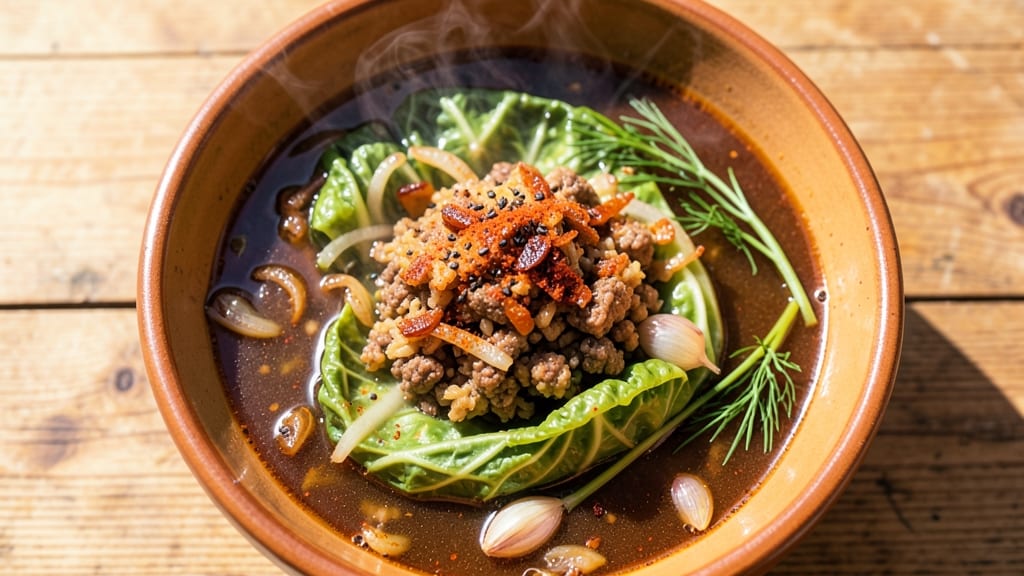
This Hungarian stuffed cabbage soup brings the hearty flavors of Eastern Europe to your table with tender cabbage leaves wrapped around savory meat, all simmered in a rich, paprika-spiced broth. The traditional technique of rolling cabbage leaves around seasoned filling creates a comforting, one-pot meal that’s perfect for chilly evenings.
What makes this recipe special is the balance of textures—soft cabbage, tender meat, and a broth that’s both flavorful and nourishing.
The filling typically includes ground pork or beef combined with onions, rice, and a blend of spices including paprika, caraway, and bay leaf. The cabbage leaves are blanched to soften slightly before being stuffed and simmered in a tomato-based broth until everything is perfectly tender.
This method ensures every bite delivers a harmonious blend of flavors and textures that define Hungarian comfort food.
By the end of your cooking time, you’ll have a steaming bowl of soup where each cabbage roll is packed with flavorful meat and rice, all swimming in a deeply aromatic broth.
The paprika adds warmth, while the sour cream garnish at the end provides a cooling contrast. This dish is hearty enough for a family dinner but elegant enough for a special occasion.
Serve with crusty bread to soak up every last drop of that rich broth, and pair with a green salad for a complete meal. The leftovers reheat beautifully, making this an ideal recipe for meal prep. Let’s get started on creating this classic Hungarian dish in your own kitchen.
Ingredients for hungarian stuffed cabbage soup
Fifteen essential ingredients transform simple cabbage leaves into a hearty Hungarian masterpiece.
| Ingredient | Amount | Notes |
|---|---|---|
| Green Cabbage 🥬 | 1 whole | Large head, leaves separated |
| Ground Beef 🥩 | 1 ½ lb | 80% lean, finely ground |
| Yellow Onion 🧅 | 1 whole | Medium, finely chopped |
| White Rice 🍚 | 1 cup | Long-grain, uncooked |
| Sweet Paprika 🌶️ | 2 tbsp | Hungarian variety preferred |
| Ground Caraway Seeds 🌿 | 1 tsp | Freshly ground preferred |
| Bay Leaves 🍃 | 2 whole | Dried, standard size |
| Tomato Paste 🍅 | ½ cup | High-quality, no salt added |
| Beef Broth 💧 | 4 cups | Low-sodium preferred |
| Water 💧 | 2 cups | Fresh, room temperature |
| Salt 🧂 | 1 ½ tsp | Kosher or sea salt |
| Black Pepper 🌶️ | ½ tsp | Freshly ground preferred |
| Sour Cream 🥛 | ½ cup | Full-fat, for garnish |
| Fresh Parsley 🌿 | ¼ cup | Chopped, for garnish |
| Olive Oil 🫒 | 2 tbsp | Extra-virgin, for cooking |
The cabbage is the foundation—choose a firm, heavy head with vibrant green leaves. Whole Foods or local markets often carry the freshest, but any grocery store will do if you pick one with crisp, unblemished leaves. The beef should be finely ground (80% lean)—this ensures even cooking and maximum flavor absorption. For the paprika, Hungarian sweet paprika (like Rajka) delivers that authentic depth, though regular sweet paprika works in a pinch. Caraway seeds are key—toast them lightly in a dry pan before grinding for an extra layer of aroma.
No Hungarian paprika? Smoked paprika at half the amount adds warmth, but the flavor will differ slightly. Swap beef for pork if preferred—just reduce cooking time by 10 minutes. The rice can be any long-grain variety, but jasmine or basmati absorb flavors beautifully. For the tomato paste, San Marzano is ideal, but any high-quality brand works. Short on beef broth? Chicken broth with an extra bay leaf gets you close. The sour cream should be full-fat—it’s worth the extra richness for that final touch. Fresh parsley brightens the dish, but dried parsley at one-third the amount works if needed.
Prep the cabbage ahead—blanch leaves for 3 minutes to soften slightly before stuffing. The filling keeps well in the fridge for 2 days before assembling, making this a great make-ahead dish. Once cooked, the soup reheats beautifully—simmer on low for 10 minutes to restore its rich texture. Store leftovers in an airtight container with a layer of broth on top to preserve moisture. Freezes for 3 months, though the cabbage may soften slightly upon thawing.
Why You'll Love This Recipe
- One-Pot Magic: I swear by this recipe when I’m too tired to wash dishes—just brown the beef, sauté onions, stuff the cabbage leaves, and let it simmer. No extra pans, no fuss, and that sweet paprika smell fills the whole kitchen like a cozy hug.
- Paprika Powerhouse: That single spoon of sweet paprika? It’s the secret weapon here. It turns the rice-and-beef filling into something rich and slightly smoky, while the cabbage stays tender but holds its shape. Honestly, the first time I tasted it, I thought, “Why haven’t I been making this all along?”
- Leftovers That Beg for Seconds: This soup only gets better the next day—maybe because the flavors meld, or maybe because it’s just that good. I’ll be real: my lunchbox gets packed with it for days, and my kids (who usually refuse veggies) ask for it by name. (Yes, even on a Tuesday night.)
- Budget-Friendly Family Feast: Ground beef stretches far, cabbage is dirt cheap, and rice fills you up without breaking the bank. I’ve fed six people for under $10 with this—no fancy ingredients, just honest, hearty comfort. Plus, it’s one of those dishes that makes you look like a hero at potlucks.
Step-by-step instructions for Hungarian stuffed cabbage soup
This method delivers hearty, flavorful stuffed cabbage rolls with tender meat and perfectly seasoned cabbage leaves.
Prepare the Cabbage Leaves
Core the whole green cabbage by removing the tough outer leaves and cutting out the dense core at the base. Place the cabbage in a large pot and cover with water. Bring to a boil over high heat, then immediately reduce to medium-high and simmer for 5-7 minutes until the leaves soften and separate easily. Drain and let cool slightly.
Gently separate the leaves, discarding any that tear or remain tough. Lay each leaf flat on a clean work surface and place 1 tablespoon of cooked white rice near the stem end. This will help hold the filling in place during cooking. Keep the leaves covered with a damp towel to prevent drying.
Cook the Filling Mixture
In a large skillet, heat the 2 tablespoons olive oil over medium heat. Add the finely chopped yellow onion and cook for 3-4 minutes until softened and translucent. Add the 1.5 pounds ground beef and cook, breaking it apart with a wooden spoon, until no longer pink and the meat releases from the pan.
Stir in the 2 tablespoons sweet paprika, 1 teaspoon ground caraway seeds, 1.5 teaspoons salt, and 0.5 teaspoon black pepper. Cook for 2 minutes until fragrant. Add the 0.5 cup tomato paste and cook for 3 minutes, stirring constantly, until the mixture darkens slightly and thickens. Remove from heat and let cool for 5 minutes.
Stuff and Assemble the Cabbage Rolls
Spoon 1-2 tablespoons of the cooled filling mixture onto each cabbage leaf, starting about 1 inch from the stem end. Fold the sides inward, then roll tightly from the bottom up, tucking the stem end in as you go. Place each stuffed cabbage roll seam-side down in a large Dutch oven or heavy pot.
In the same pot, combine the 4 cups beef broth, 2 cups water, and the 2 whole bay leaves. Bring to a gentle simmer over medium heat. Arrange the stuffed cabbage rolls upright in the broth, ensuring they are fully submerged. Cover and simmer for 45-50 minutes, until the cabbage leaves are tender and the filling is cooked through.
Finish and Serve
Once the cabbage rolls are tender, carefully remove them to a serving platter. Skim any excess fat from the broth and return it to the pot. Stir in the 0.5 cup sour cream and simmer for 2-3 minutes until slightly thickened. Taste and adjust seasoning if needed.
To serve, ladle the broth over the stuffed cabbage rolls. Garnish each portion with 1 tablespoon chopped fresh parsley. This dish is best served hot, with crusty bread to soak up the rich, paprika-infused broth. The cabbage leaves should be tender yet hold their shape, and the filling should be flavorful and well-seasoned.
Pro Tips For Making Hungarian Stuffed Cabbage Soup
- CUT CABBAGE THICKER THAN THIN: I used to slice those cabbage leaves paper-thin following recipes, but they’d turn mushy before the filling even cooked. Now I cut them about ½-inch thick—thick enough to hold shape but still tender enough to eat. (Yes, it looks like a toddler’s art project, but it works.)
- BROWN THE BEEF UNTIL IT’S DARK: That ground beef needs to go from raw to deep brown before adding anything else—we’re talking 5-7 minutes on medium-high, stirring only once or twice. Skimp here, and your soup will taste like a meatloaf instead of a rich, savory stew. (Trust me, your nose will know when it’s done.)
- SALT THE CABBAGE WATER LIKE THE SEA: The cabbage leaves need a generous salt bath (about 2 tablespoons per quart of water) to soften properly. I learned this the hard way—under-salted water means tough, chewy leaves that ruin the whole dish. Boil it hard for 3-4 minutes, then drain before stuffing.
- USE LESS RICE THAN YOU THINK: Stuffing cabbage leaves with rice that’s still al dente is a gamble—it’ll either stay grainy or turn to mush. I now use about ¼ cup uncooked rice per pound of beef (instead of the full ½ cup recipes suggest) and cook it just until tender. The filling stays light and soaks up flavor instead of turning gluey. (Your future self will thank you.)
Make-ahead tips for this dish
Prep Ahead Strategy
Start by blanching the cabbage leaves 1-2 days ahead—simmer them for 3 minutes in salted water, then cool and store in an airtight container with a damp paper towel.
This softens them slightly, making rolling easier. The filling mixture can also be prepped separately and refrigerated for 24 hours—just bring it to room temperature before stuffing. 💡
Freezer-Friendly Assembly
For a month-ahead meal, assemble the stuffed cabbage rolls completely, place them in a single layer in a freezer-safe container, and cover with broth. Freeze for up to 3 months.
When ready to cook, transfer the frozen rolls directly to a pot with fresh broth and simmer for 10-15 minutes longer than fresh (about 55-60 minutes).
Broth Booster Tip
Make a double batch of broth and freeze it in 1-cup portions for future use. This ensures you always have flavorful liquid on hand—just thaw and use as needed.
I keep mine in Silicone Molds for easy portioning. The extra broth also works perfectly for reheating leftovers or making a quick soup base. 💧
Reheating Perfection
To reheat, place the soup in a pot over medium-low heat and simmer for 10 minutes, stirring occasionally. Avoid high heat, which can make the cabbage leaves tough.
If the broth seems too thick, add ¼ cup water or broth to restore its richness. Garnish with fresh sour cream and parsley right before serving. 🔥
Portion Control
Divide the soup into individual portions before freezing or storing. Use glass Pyrex containers with snap-on lids—they’re microwave-safe and preserve flavors better than plastic. Label each container with the date and reheating instructions for convenience. This makes serving a breeze, especially for large gatherings. ✨
Garnish Prep
Chop the fresh parsley and measure out the sour cream 1 day ahead of serving. Store them separately in small airtight containers in the fridge. This saves time on the day you serve and ensures your garnishes stay fresh.
A quick drizzle of olive oil over the sour cream just before serving adds an extra layer of richness. 🥛
Nutrition facts
Frequently asked questions
Can I use pork instead of beef for the filling?
Pork works beautifully in this recipe. Use the same amount (1.5 pounds) and reduce the cooking time by about 10 minutes since pork cooks faster than beef. For extra flavor, add a pinch of nutmeg to the filling mixture.
How do I prevent the cabbage rolls from falling apart?
Start by blanching the cabbage leaves for just 3 minutes to soften them slightly without overcooking. Place a small spoonful of cooked rice near the stem end before rolling—this acts as a natural glue. Roll tightly and tuck the stem end securely to keep everything in place during simmering.
What if I can't find Hungarian sweet paprika?
No problem! Use smoked paprika at half the amount (1 tbsp instead of 2) for a deeper flavor, or regular sweet paprika for a milder taste. For extra warmth, add a pinch of cayenne pepper. The dish will still be delicious—just slightly different in character.
Can I make this soup vegetarian?
Yes, but with some adjustments. Replace the meat with 1 cup cooked lentils or mushrooms (finely chopped) plus ½ cup crumbled feta for richness. Use vegetable broth and add 1 tsp soy sauce to enhance umami. The texture will differ slightly, but the dish will still be hearty and flavorful.
Why does my broth taste too thin after simmering?
This usually happens if you used too much liquid or didn't reduce the broth enough. After removing the cabbage rolls, simmer the broth uncovered for 5-10 minutes to thicken it naturally. For extra richness, stir in 1 tbsp cornstarch mixed with 2 tbsp cold water and simmer for 2 minutes.