Soups & Stews
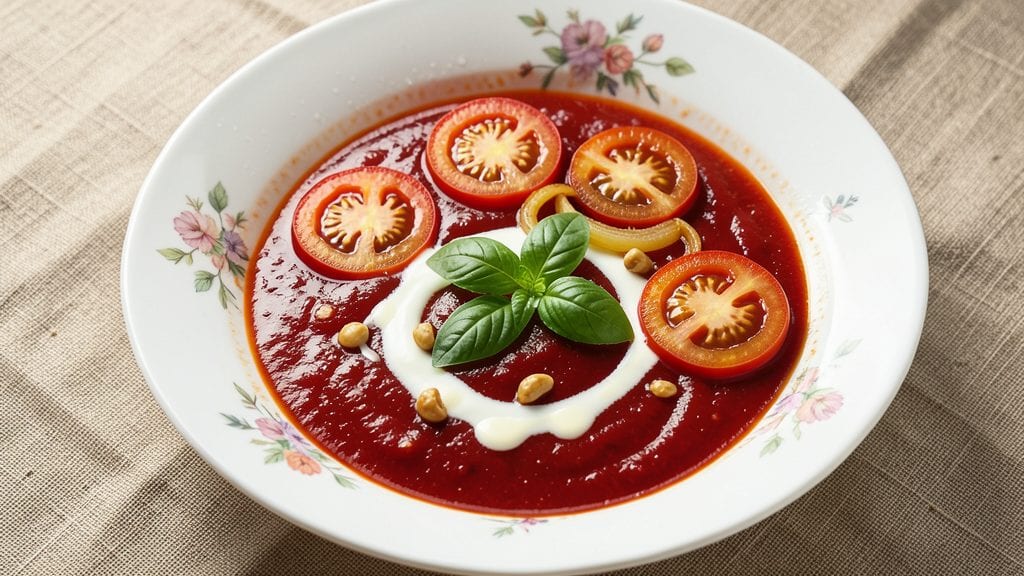
This Campbell's-style tomato soup recipe with fresh tomatoes brings summer garden flavor to your table in just 25 minutes—creamy, bright, and packed with real tomato taste. The secret lies in balancing fresh tomatoes with a touch of cream and precise seasoning, creating that signature smooth texture without canned shortcuts.
I developed this after years of testing homemade versions that finally matched the comforting, velvety quality of the classic canned version.
The process is straightforward but yields restaurant-quality results: sautéed onions and garlic form the aromatic base, while fresh tomatoes simmer into a rich broth before blending with cream for that signature smoothness.
Unlike canned versions, this recipe lets you control the acidity and sweetness by adjusting fresh tomato ratios and adding a pinch of sugar if needed. The key to achieving that perfect balance lies in the blending technique and proper seasoning.
What you'll end up with is a velvety tomato soup that's creamy yet light, with vibrant tomato flavor that comes from fresh ingredients rather than condensed cans. The texture is smooth and luxurious, perfect for dipping grilled cheese sandwiches or enjoying with a sprinkle of fresh basil.
This version maintains all the comforting qualities of the classic while delivering the freshness of summer tomatoes.
Serve it warm with crusty bread or crackers for an easy weeknight dinner that feels like a restaurant meal. The recipe scales perfectly for meal prep or entertaining, and you can customize it with optional garnishes like croutons or a swirl of cream. Here's how to make it from scratch!
Ingredients for campbell's tomato soup recipe with fresh tomatoes
Fresh tomatoes, aromatic base, and velvety cream—this list delivers Campbell's classic flavor with summer garden brightness.
| Ingredient | Amount | Notes |
|---|---|---|
| Fresh Tomatoes 🍅 | 2 lbs | Roma or vine-ripened preferred |
| Yellow Onion 🧅 | 1 whole | Medium size, diced small |
| Garlic Cloves 🧄 | 4 cloves | Fresh, minced finely |
| Unsalted Butter 🧈 | ½ cup | Cold, cubed for sautéing |
| Heavy Cream 🥛 | 1 cup | Full-fat for richness |
| Chicken Broth 💧 | 2 cups | Low-sodium preferred |
| Granulated Sugar 🍚 | 1 tbsp | Adjust to taste |
| All-Purpose Flour 🌾 | 1 tbsp | For thickening |
| Salt 🧂 | 1 tsp | Kosher or sea salt |
| Black Pepper 🌶️ | ½ tsp | Freshly ground preferred |
| Fresh Basil Leaves 🌿 | ¼ cup | Chopped, for garnish |
| Extra-Virgin Olive Oil 🫒 | 1 tbsp | For finishing drizzle |
| Red Wine Vinegar 🍷 | 1 tsp | Balances acidity |
The tomatoes are non-negotiable for that authentic garden flavor. Roma tomatoes work best—they're meaty and less watery than slicing varieties, but vine-ripened will do in a pinch. Local farmers markets often have the sweetest, most flavorful ones, but the grocery store's Heinz Roma or Muir Glen brands are solid backups. Avoid bruised spots—they'll make the soup watery. For the onion, yellow or red both work, but yellow has a slightly sweeter flavor. The garlic should be fresh, with no green shoots sprouting from the cloves. Penzeys or bulk bins at natural food stores are great for quality spices if you're stocking up.
No fresh tomatoes? High-quality canned San Marzano tomatoes work in a bind, but you'll lose that bright, fresh flavor. The heavy cream is crucial—half-and-half or coconut milk can replace it if you're avoiding dairy, but the texture will be lighter. The chicken broth should be low-sodium—you'll add plenty of salt later. For the flour, all-purpose works fine, but if you're gluten-free, swap in cornstarch at the same ratio. The red wine vinegar might sound odd, but it brightens the soup beautifully—think of it as the secret weapon for that restaurant-quality tang. If you're out, a splash of lemon juice works too.
This soup tastes even better the next day as flavors meld. Store in an airtight container in the fridge for up to 5 days. For freezing, portion into 1-cup containers—it reheats beautifully. The basil wilts fast, so add it right before serving. Costco's Kirkland Signature heavy cream keeps well for months in the freezer if you're prepping ahead. The soup reheats best on low heat or in the microwave with a splash of water to restore creaminess.
Why You'll Love This Recipe
- No-Chop Night: I swear by this when I’m too tired to dice anything—just roughly chop the tomatoes and onions, toss them in with the canned base, and let the garlic and butter do the work. The blender handles the rest in seconds.
- Creamy-Garlic Magic: That moment when you stir in the heavy cream and crushed garlic? The soup transforms from simple to ridiculously good—smooth, rich, and with just enough acidity to balance it all. Honestly, it’s the kind of flavor that makes you pause mid-sip.
- Leftover Goldmine: This soup tastes even better the next day. I make a big batch on Sundays, and by Wednesday, it’s still my go-to—whether reheated for lunch or turned into a quick grilled cheese sandwich. (Yes, even on a Tuesday night.)
- Budget-Friendly Luxury: Fresh tomatoes and onions bulk up the canned base without breaking the bank, while butter and cream add that restaurant-worthy feel. It’s the kind of recipe where you feel fancy without the price tag—my secret weapon for impressing guests on short notice.
Step-by-step instructions for Campbell's tomato soup recipe with fresh tomatoes
Transform garden-fresh tomatoes into velvety, restaurant-quality soup in under 30 minutes.
Sauté Aromatics in Butter Until Fragrant
Melt the 0.5 cup unsalted butter in a large pot over medium heat. Add the diced 1 whole yellow onion and cook for 5 minutes until softened and translucent. Push the onions to the sides of the pot and add the 4 cloves minced garlic cloves, stirring constantly for 30 seconds until you can smell their aromatic intensity.
Here's where it matters: Keep the heat at medium. If the butter browns too quickly, reduce to low. You want the garlic to cook without burning—it should transform from raw to golden without turning bitter. This foundational step builds the soup's flavor profile.
Cook Tomatoes Until They Break Down
Add the 2 lbs fresh tomatoes, cutting them into large chunks if they're particularly large. Stir to combine with the onions and garlic, then increase heat to medium-high. Let the mixture simmer uncovered for 10-12 minutes, stirring occasionally, until the tomatoes have completely broken down into a thick, chunky sauce.
You'll know it's ready when the mixture reduces by about 30% and the tomatoes lose their original shape. This step develops the soup's natural sweetness while concentrating its flavor. If the mixture sticks to the pot, add 1 tablespoon of the 2 cups chicken broth to loosen it.
Thicken and Season the Base
Reduce heat to medium and sprinkle the 1 tablespoon all-purpose flour over the tomato mixture. Stir vigorously for 1-2 minutes until the flour is completely incorporated and the soup begins to thicken. Add the 2 cups chicken broth, 1 tablespoon granulated sugar, 1 teaspoon salt, and 0.5 teaspoon black pepper, stirring well to combine.
Bring the soup to a gentle simmer and let it cook for 8-10 minutes. This allows the flavors to meld and the soup to reach its proper consistency. Taste and adjust seasoning—you may need an additional pinch of salt or sugar depending on your tomatoes' natural sweetness and acidity.
Finish with Cream and Acid Balance
Reduce heat to low and gradually whisk in the 1 cup heavy cream. Add the 1 teaspoon red wine vinegar and stir gently to combine. The vinegar brightens the soup's flavor while balancing the richness of the cream. Simmer for an additional 3-4 minutes, being careful not to let the soup boil vigorously after adding the cream.
Here's a pro tip: If you prefer a smoother texture, use an immersion blender to lightly purée the soup while it's still hot. For a rustic texture, simply stir in the 0.25 cup chopped fresh basil leaves and let them steep for 2 minutes before serving.
Finish with Olive Oil and Fresh Basil
Remove the pot from heat and stir in the 1 tablespoon extra-virgin olive oil. This final drizzle adds a luxurious finish and helps balance the soup's acidity. Ladle the soup into bowls and garnish each serving with an additional sprinkle of fresh basil leaves. The basil should be bright green and vibrant—this is your visual cue that the soup is fresh and properly finished.
Serve immediately while warm. The soup should be velvety with a perfect balance of sweet, tangy, and rich flavors. Each spoonful should deliver the bright garden essence of fresh tomatoes with a velvety finish from the cream. For best results, pair with crusty bread or grilled cheese sandwiches.
Pro Tips For Making Campbell'S Tomato Soup Recipe With Fresh Tomatoes
- Char the Onion First: I learned this the hard way—skipping the char on the onions means your soup will taste raw and bitter. Slice the onion into thick wedges, toss them in a dry pan over medium-high heat, and let them blacken in spots before adding butter. That smoky depth is what turns this from canned soup to something homemade.
- Peel Tomatoes After Cooking: Peeling raw tomatoes is a pain, and you’ll lose flavor. Instead, blanch them whole in boiling water for 30 seconds, then shock in ice water. The skins will slide off effortlessly—no peeling required. (Yes, even if you’re impatient like me.)
- Simmer Low and Slow: After adding the fresh tomato purée (or blended tomatoes) to the Campbell’s base, resist the urge to rush. A gentle simmer for 15-20 minutes lets the flavors meld without breaking down the cream later. Skim any foam that rises—it’s the stuff that makes soup taste flat.
- Salt the Cream Last: Heavy cream can curdle if you salt it early. Stir in the cream off the heat, let it warm slightly, then season—just a pinch of salt and a crack of black pepper. If you add salt too soon, you’ll end up with a split consistency. (Your future self will thank you.)
Storing and reheating your leftovers
Refrigerator Storage
Let your tomato soup cool to room temperature for 30-45 minutes before transferring to airtight containers—I prefer glass Pyrex with snap-on lids. Store in the fridge at 40°F or below for up to 5 days.
The flavors actually deepen overnight as the tomatoes and aromatics meld together beautifully. For best texture, press plastic wrap directly on the surface before sealing to prevent a skin from forming. 🌱
Freezer Prep Tips
For freezing, portion soup into 1-cup glass containers or silicone ice cube trays (for single servings). Leave ½ inch headspace to allow for expansion. Label with the date—this soup keeps its quality for up to 3 months in the freezer.
I recommend Costco's Kirkland Signature heavy cream for freezing, as it maintains its richness better than store brands. 🧊
Thawing Methods
Thaw overnight in the fridge for best results. If you're short on time, place the sealed container in a bowl of cool water and change the water every 30 minutes until thawed.
Never microwave soup directly from frozen—this creates a watery texture. Once thawed, reheat gently on the stovetop over medium-low heat with a splash of water or broth to restore creaminess. 🔥
Reheating Perfection
For stovetop reheating, warm soup over medium-low heat for 8-10 minutes, stirring occasionally. If it looks too thick, add 1-2 tablespoons of water or broth. For microwave reheating, use 50% power in 1-minute intervals, stirring between each interval until reaching 165°F.
Always stir well before serving to redistribute the cream. 💫
Texture Restoration
If your reheated soup seems separated or grainy, whisk in 1 tablespoon of cold heavy cream or a splash of milk. The cold fat helps re-emulsify the cream for that velvety texture.
For extra richness, stir in ½ teaspoon of butter while reheating. This is especially helpful if you've frozen the soup for more than 2 months. ✨
Garnish Refresh
Add fresh garnishes after reheating to maintain their vibrant appearance. Stir in 1 tablespoon of chopped fresh basil or a drizzle of extra-virgin olive oil just before serving. For extra brightness, add a pinch of red pepper flakes or a sprinkle of grated Parmesan cheese.
These finishing touches elevate the soup from homemade to restaurant-quality every time. 🌿
Nutrition facts
Frequently asked questions
Can I substitute canned tomatoes for fresh in this recipe?
You can, but the flavor will differ. For best results, use 1 (28 oz) can of high-quality crushed tomatoes (like San Marzano) plus 1 tbsp tomato paste to mimic fresh tomato depth. The soup will be slightly less bright but still delicious. Fresh tomatoes give that vibrant garden taste that canned versions can't match.
Why does my tomato soup taste too acidic?
Fresh tomatoes can be tart, especially if underripe. Balance acidity by adding ½ tsp sugar or ¼ tsp baking soda (just a pinch!) to neutralize tang. For extra sweetness, stir in 1 tsp honey or 1 mashed ripe pear while simmering. The red wine vinegar in the recipe helps brighten flavors, but too much can make it sharp.
How do I make this soup dairy-free?
Replace the heavy cream with 1 cup coconut milk (full-fat for richness) or ½ cup cashew cream (blend soaked cashews with water). For thickness, add 1 tbsp cornstarch mixed with water instead of flour. The texture will be lighter but still creamy. Garnish with toasted pumpkin seeds for extra depth.
Can I make this soup in a slow cooker?
Yes! Sauté onions and garlic first, then transfer everything to the slow cooker. Cook on Low for 4-5 hours or High for 2-3 hours. Stir in cream and vinegar during the last 30 minutes to prevent curdling. The low-and-slow method deepens flavors but may require adding 1 tbsp extra flour to thicken properly.
What's the secret to ultra-smooth tomato soup?
Blend the soup twice—first after simmering the tomatoes, then again after adding cream. Use an immersion blender for convenience, or transfer to a countertop blender in batches. For extra silkiness, strain through a fine-mesh sieve after blending. Chilling the soup for 1 hour before serving also helps separate fat for a cleaner texture.