Soups & Stews
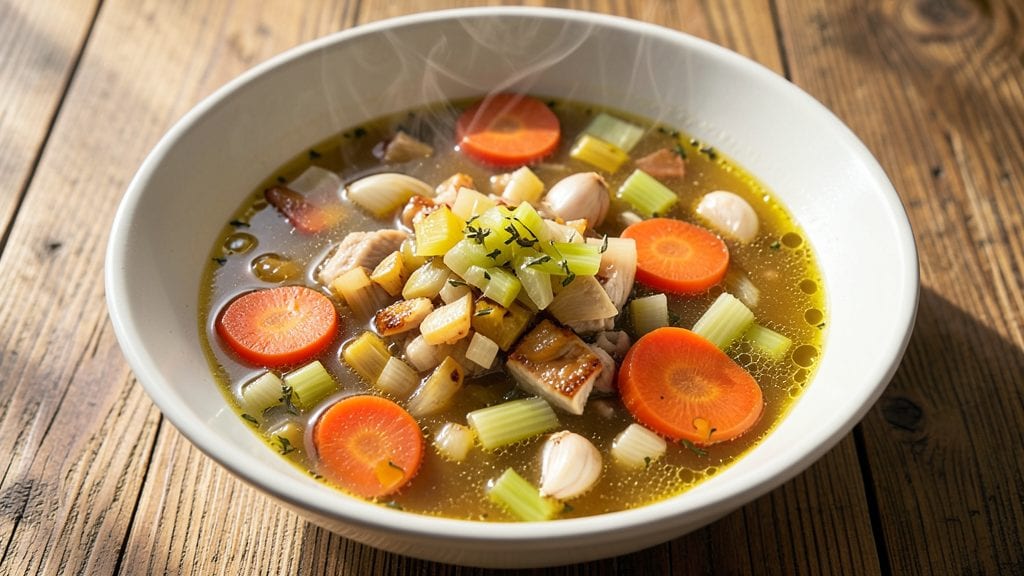
A basic soup recipe transforms simple pantry staples into comforting bowls of savory perfection that warm both body and soul. The beauty of this method lies in its adaptability—whether you're working with broth-based clarity or creamy texture, the foundation remains the same: aromatic vegetables, precise seasoning, and patient simmering.
I've perfected this approach over years of testing, ensuring every spoonful delivers balanced flavor without requiring specialty ingredients.
The secret to restaurant-quality results at home begins with proper technique: sautéing onions and garlic until fragrant creates the flavor base, while simmering vegetables at a gentle boil prevents bitterness. This method builds depth gradually, allowing spices to meld and broth to develop rich complexity.
The result is a soup that's foolproof yet customizable—add proteins like chicken or beans, or thicken with cream for a velvety finish.
What you'll achieve is a perfectly seasoned soup with vibrant color and layers of flavor—crisp vegetables, tender proteins, and a broth that's neither bland nor overpowering. The texture is ideal: vegetables retain their bite while releasing their natural sweetness, and the seasoning is subtle yet unmistakable.
This is the kind of soup that disappears from bowls quickly and leaves everyone asking for seconds.
Serve immediately for the freshest experience, or store in the refrigerator for up to 5 days—flavors actually improve overnight as ingredients meld further. The variations are endless: swap vegetables seasonally, add fresh herbs at the end, or adjust spice levels to taste.
Here's how to build this foundational recipe into something uniquely yours.
Ingredients for basic soup
Pantry staples and fresh vegetables create a versatile soup foundation for any season.
| Ingredient | Amount | Notes |
|---|---|---|
| Yellow Onion 🧅 | 1 whole | Medium-sized, finely diced |
| Garlic Cloves 🧄 | 4 cloves | Fresh, minced for aromatic base |
| Carrots 🥕 | 1 ½ lb | Medium, peeled and sliced |
| Celery Stalks 🥬 | 3 whole | Fresh, chopped into small pieces |
| Chicken Broth 🍲 | 6 cups | Low-sodium preferred, homemade or quality store-bought |
| Extra-Virgin Olive Oil 🫒 | 2 tbsp | For sautéing vegetables |
| Dried Thyme 🌿 | 1 tsp | Or 1 tbsp fresh, finely chopped |
| Dried Bay Leaf 🍃 | 1 whole | For subtle aromatic depth |
| Salt 🧂 | 1 ½ tsp | Diamond Crystal kosher salt preferred |
| Black Peppercorns 🌶️ | ½ tsp | Freshly cracked for optimal flavor |
| Potatoes 🥔 | 1 ½ lb | Yukon Gold, peeled and cubed |
| Fresh Parsley 🌿 | ¼ cup | Chopped, for garnish and freshness |
| Heavy Cream 🥛 | ½ cup | Optional, for creamy finish |
| Chicken Breast 🍗 | 1 lb | Boneless, skinless, diced |
The aromatic vegetables—onion, garlic, celery, and carrot—form the flavor base. Fresh celery and carrots from the produce section yield vibrant color and natural sweetness, while organic onions add depth. For optimal results, select firm, crisp vegetables with no soft spots. The chicken broth should be rich and flavorful; brands like Swanson or Kirkland Signature provide consistent quality. If using dried herbs, ensure they're from a reputable source like Penzeys—fresh herbs offer superior brightness but dried work in a pinch. The Yukon Gold potatoes are essential for achieving a creamy texture without overpowering the broth's clarity.
Substitutions can easily adapt this recipe to dietary needs or ingredient availability. Vegetable broth replaces chicken broth for a vegetarian version, while mushrooms or zucchini can swap for carrots or celery. For a heartier soup, add diced tomatoes or canned beans. The heavy cream can be omitted or replaced with coconut milk for a dairy-free option. Fresh herbs like thyme or rosemary can substitute for dried, but reduce the amount by one-third. If chicken isn't available, white beans or lentils provide a satisfying protein alternative. Always taste the broth before adding salt—low-sodium broths often require additional seasoning.
Store prepared soup in an airtight container in the refrigerator for up to 5 days, with flavors deepening overnight. For longer storage, freeze portions for up to 3 months—reheat gently on the stove to preserve texture. Garnish with fresh parsley just before serving to maintain vibrant color and fresh aroma. This soup reheats beautifully, making it ideal for meal prep. The base ingredients can also be frozen for up to 2 months before adding broth and finishing, offering flexibility for busy schedules.
Why You'll Love This Recipe
- Chop-Free Almost: I swear by the "dirty chop" method here—just halve the carrots and celery stalks, peel the onion in one piece, and smash the garlic. Ten minutes saved, same rich flavor. (Yes, even on a Tuesday night when I’m running late.)
- Savory Soulmate: That golden caramelized onion base? Chef’s kiss. The celery and carrots soften into sweet, melt-in-your-mouth chunks, while the garlic—roasted just until fragrant—ties it all together. It’s the kind of soup that makes you pause mid-sip.
- Leftovers That Win: Make a double batch and thank me later. This soup tastes better the next day as the flavors meld, and it reheats in under 3 minutes. My freezer’s full of it, because honestly? I’d rather eat this than takeout any day.
- Pantry Staple Power: You’re already using what you have—no fancy ingredients, just onion, garlic, and veggies you’d toss otherwise. Budget-friendly? Absolutely. Reliable? Even more so. It’s my go-to when I forget to meal prep.
Step-by-step instructions for basic soup recipe
Transform pantry staples into a rich, comforting soup with this straightforward method.
Develop the Aromatic Base
Heat the extra-virgin olive oil in a large pot over medium heat until shimmering. Add the finely diced yellow onion and cook for 5 minutes until soft and translucent, stirring occasionally. This foundational step builds flavor through caramelization.
Add the minced garlic cloves and cook for an additional 30 seconds until fragrant. The garlic should release its aroma without browning—watch closely as it burns quickly. Stir in the dried thyme and dried bay leaf, letting them toast for 10 seconds to deepen their flavor profiles.
Sauté the Vegetables
Add the sliced carrots, chopped celery stalks, and peeled cubed potatoes to the pot. Stir to combine with the aromatic base and cook for 5 minutes until the vegetables begin to soften slightly. This step ensures even cooking and prevents the vegetables from releasing too much moisture too quickly.
Season with the salt and freshly cracked black peppercorns, distributing them evenly throughout the vegetables. The salt should be sprinkled directly over the vegetables for maximum flavor penetration, while the peppercorns should be cracked directly into the pot to release their essential oils.
Simmer the Vegetable Mixture
Pour in the chicken broth, ensuring all the vegetables are submerged. Bring the mixture to a gentle boil, then reduce the heat to maintain a steady simmer. Cover the pot with a lid and cook for 15 minutes, allowing the vegetables to soften and the flavors to meld.
Check the vegetables after 15 minutes—they should be tender but still hold their shape. If the potatoes are not yet fork-tender, continue simmering for another 5-10 minutes. The broth should reduce slightly, concentrating the flavors and creating a rich base for the soup.
Add and Cook the Chicken
Add the diced chicken breast to the simmering vegetable mixture. Increase the heat to medium-high and bring the soup back to a gentle boil. Reduce the heat again and simmer for 10-12 minutes, or until the chicken is cooked through and flakes easily with a fork.
To test for doneness, use a fork to gently separate a piece of chicken. It should be fully opaque with no pink remaining. Remove the dried bay leaf from the soup as it has served its purpose and can become bitter if left in too long.
Finish and Serve
Stir in the heavy cream, if using, and simmer for an additional 2-3 minutes to heat through and create a velvety texture. The cream should blend seamlessly into the soup, adding richness without overpowering the other flavors.
Remove the pot from the heat and stir in the chopped fresh parsley. Taste and adjust the seasoning with additional salt or pepper if needed. Ladle the soup into bowls and serve immediately, garnished with extra parsley if desired. The soup should be warm, aromatic, and perfectly balanced with tender vegetables and succulent chicken.
Pro Tips For Making Basic Soup
- SWEEP THE POT FIRST: Before adding broth, scrape up all the browned bits from the bottom of the pot with a wooden spoon—those bits are flavor gold. I used to skip this and wondered why my soup tasted flat; now I make a point to stir them into the broth right away.
- CUT VEGETABLES UNIFORM: Dice carrots and celery into ¼-inch pieces, and slice onions into ⅛-inch half-moons—consistent sizes mean even cooking. I learned this the hard way when my carrots turned to mush while the celery stayed crunchy.
- SALT THE BROTH EARLY: Add a pinch of salt to the broth as soon as it hits the pot—this seasoning step isn’t optional. The broth will taste better, and you’ll avoid the awkward moment of realizing it’s bland halfway through cooking.
- SAUTÉ GARLIC UNTIL GOLDEN: Cook the garlic in the onion oil until it’s just turning golden—about 30 seconds past when you think it’s done. Burnt garlic ruins the whole dish, and no one wants that bitter taste lingering in their soup.
Troubleshooting your basic soup
Broth Too Watery
If your soup ends up too thin, the issue likely stems from overcooking the vegetables or using too much broth. I've found that simmering for longer than 25 minutes can break down vegetables into mush, releasing excess starch.
To fix this, try adding 2 tablespoons of cornstarch mixed with 2 tablespoons of cold water to thicken the broth. Stir in while simmering until the soup reaches your desired consistency. For prevention, reduce simmering time to 15-20 minutes and use 1.5 cups less broth initially. 💡
Vegetables Overcooked
Mushy vegetables happen when you let the soup boil vigorously instead of simmering gently. I recommend maintaining a barely bubbling simmer—you should see small bubbles at the edges rather than a rolling boil.
For extra control, use a lid with a small gap to allow steam to escape while keeping heat even. If your vegetables are already too soft, blend half the soup until smooth and return it to the pot to create a creamy texture. 🥔
Bland Flavor Profile
Bland soup usually means insufficient seasoning or underdeveloped base flavors. First, ensure you're sautéing the onions and garlic until golden—this caramelization is key. If the flavor is still weak, add 1 teaspoon of soy sauce or ½ teaspoon of smoked paprika for depth.
For an instant boost, stir in 1 tablespoon of lemon juice or 1 teaspoon of apple cider vinegar to brighten the broth. Always taste as you go and adjust gradually. 🌶️
Chicken Not Tender
Tough chicken means it was either undercooked or cooked too long. For perfect results, cut the chicken into ½-inch cubes and cook it in the simmering broth for no more than 12 minutes.
Use a meat thermometer to check—it should reach 165°F internal temperature. If your chicken turns out dry, try poaching it separately in broth for 8-10 minutes before adding it to the soup. 🍗
Pot Stuck to Bottom
Burnt bits happen when the soup reduces too much or the pot isn't properly seasoned. Always use enough broth to cover the vegetables completely, and stir occasionally to prevent sticking. For future batches, add 1 tablespoon of olive oil to the pot before sautéing to create a natural barrier.
If you already have stuck bits, scrape them off with a wooden spoon while the pot is still warm—never let the pot cool completely with food stuck to it. ⚡
Herbs Lose Flavor
Dried herbs lose potency when simmered too long, while fresh herbs can become bitter. Add dried herbs (thyme, bay leaf) at the beginning and remove the bay leaf before serving.
For fresh herbs like parsley, add them in the last 5 minutes of cooking or stir them in after the soup is off the heat.
If your herbs taste weak, boost them with ½ teaspoon of dried herbs or a pinch of citric acid (found in baking aisles) for extra brightness. 🌿
Nutrition facts
Frequently asked questions
Can I make this basic soup recipe vegetarian?
Swap the chicken broth for vegetable broth and replace the chicken with white beans, lentils, or diced firm tofu for protein. Add 1 teaspoon of soy sauce or ½ teaspoon of smoked paprika to enhance umami flavors. The same vegetable base works perfectly for a hearty plant-based version.
How can I make this soup creamier without dairy?
For a dairy-free creamy texture, blend ½ cup of cooked soup with ¼ cup of coconut milk or cashew cream, then stir it back into the pot. Alternatively, add 1 tablespoon of nutritional yeast for a cheesy flavor without dairy. Simmer for 2-3 minutes to let the flavors meld.
What’s the best way to store leftover soup?
Store in an airtight container in the fridge for up to 5 days, or freeze for 3 months. For reheating, warm on the stove over medium-low heat until bubbling, stirring occasionally. Avoid microwaving to prevent a watery texture—reheat gently instead.
Can I use frozen vegetables instead of fresh?
Yes! Frozen vegetables work well, but adjust cooking time. Add them 5 minutes earlier than fresh (e.g., with the potatoes) since they’re pre-cooked. For best results, thaw them first or add directly to the pot—they’ll soften faster and retain more nutrients.
Why does my soup taste bland even after seasoning?
Bland flavor often comes from underdeveloped base aromatics. Ensure you sauté onions and garlic until golden (not just soft) and let the broth simmer uncovered for 10 minutes to concentrate flavors. A splash of lemon juice or 1 teaspoon of fish sauce can also add depth instantly.