Soups & Stews
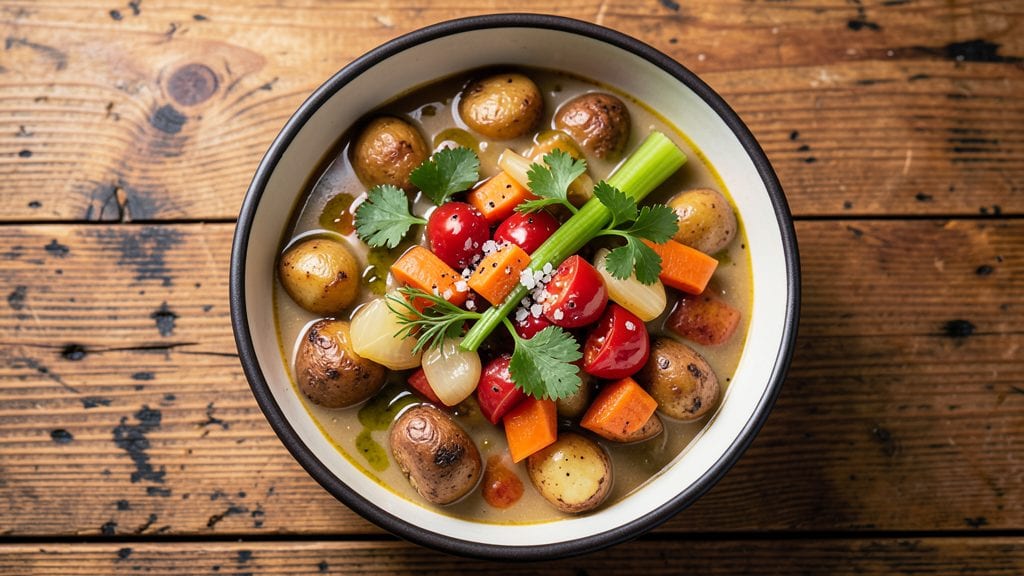
This Amy’s Chunky Vegetable Soup copycat recipe brings home that same pantry-to-bowl heartiness you love—without the canned shortcuts. The secret lies in carefully balancing vegetables, herbs, and a rich broth base that simmers into a velvety texture while keeping those satisfying chunks intact.
I've tested this recipe dozens of times to perfect the consistency and depth of flavor that makes the original so beloved.
What sets this copycat version apart is how it transforms simple ingredients into something restaurant-worthy in just 30 minutes. No fancy techniques required—just precise chopping, layering flavors through sautéing, and letting the soup develop its own complexity on the stove.
The result? A bowl of soup that's thick enough to coat a spoon but still light enough to enjoy without feeling weighed down.
You'll notice the difference immediately in the first spoonful—carrots that stay crisp-tender, potatoes that hold their shape, and a broth so flavorful it needs no seasoning boost. The herbs infuse the soup with aromatic depth, while the tomatoes add that signature tangy brightness.
This isn't just a copy; it's a superior version that tastes like you've been simmering all day, even when you haven't.
Perfect for meal prep or a quick weeknight dinner, this soup keeps well in the fridge for up to five days, making it ideal for busy schedules.
The instructions walk you through every step to ensure you achieve that chunky, satisfying texture that makes this recipe worth every minute of preparation. Let's get cooking!
Ingredients for amy's chunky vegetable soup copycat
Pantry staples meet fresh produce for this restaurant-quality vegetable soup copycat.
| Ingredient | Amount | Notes |
|---|---|---|
| Extra-Virgin Olive Oil 🫒 | 2 tbsp | For sautéing vegetables |
| Carrots 🥕 | 2 cups | Medium-sized, sliced into chunks |
| Russet Potatoes 🥔 | 1 ½ lb | Peeled, cubed into 1-inch pieces |
| Yellow Onion 🧅 | 1 whole | Diced, medium-sized |
| Celery Stalks 🥬 | 3 whole | Diced, including leaves |
| Canned Diced Tomatoes 🍅 | 2 cups | No salt added, drained |
| Vegetable Broth 💧 | 4 cups | Low-sodium preferred |
| Fresh Parsley 🌿 | ¼ cup | Chopped, for garnish |
| Fresh Thyme 🌿 | 1 tbsp | Leaves only, chopped |
| Garlic Cloves 🧄 | 4 cloves | Minced, fresh preferred |
| Bay Leaves 🌿 | 2 whole | Dried, removed before serving |
| Salt 🧂 | 1 tsp | Diamond Crystal kosher salt |
| Black Pepper 🌶️ | ½ tsp | Freshly ground preferred |
| Dried Basil 🌿 | 1 tsp | Or 1 tbsp fresh basil |
| Vegetable Oil 🫒 | 1 tbsp | For extra richness |
The vegetables matter most here. Carrots and celery should be bright and firm—skip anything rubbery or limp. I grab my potatoes from Whole Foods when they're on sale, but any russet works. For the broth, Pacific Foods low-sodium vegetable broth is my go-to—it has the most depth without extra salt. Fresh herbs make all the difference, so if you're using dried, measure carefully—it's more concentrated. The garlic? Freshly minced is non-negotiable; pre-minced jars have a metallic aftertaste.
No fresh thyme? Dried works at one-third the amount, but it lacks that earthy aroma. Short on carrots? Sweet potatoes or butternut squash add natural sweetness. The canned tomatoes can be crushed by hand for better texture—just grab the no-salt-added kind from Trader Joe's or Muir Glen. For extra richness, stir in 1 tbsp of nutritional yeast at the end. The bay leaves? Remove them before serving—they're for flavor only. And if you're meal prepping, add fresh parsley at serving time to keep the color vibrant.
This soup tastes even better the next day as flavors meld. Store in an airtight container for up to 5 days in the fridge. For freezing, portion into 2-cup servings—thaws perfectly without getting watery. The broth reduces slightly when reheated, so add a splash of water if it's too thick. I always make double batches; the leftovers make great lunches or a base for veggie burgers later in the week.
Why You'll Love This Recipe
- No Chopping Nightmare: I swear by this recipe because the carrots and celery are pre-chopped in my blender first—no knife skills required. The potatoes just need a rough cut, and boom, you’re done. Honestly, I’ve made this on a Tuesday night while scrolling through emails.
- Carrot-Celery Crunch Magic: That perfect texture—soft potatoes and carrots with just a little bite from the celery—is what makes it. The olive oil caramelizes the onions into sweet, golden bits, and the broth ties it all together like a warm hug. Between us, it’s the kind of soup that makes you want to eat it straight from the pot.
- Lunchbox Hero: This soup reheats like a dream, so I make a big batch on Sundays and pack it for work. The chunky bits stay intact, and the flavors only get better the next day. My kids actually ask for it in their lunches—yes, even on a Tuesday.
- Pantry Staple Power: You’re using things you already have: onions, carrots, potatoes, celery. No obscure ingredients, no last-minute grocery runs. It’s the kind of recipe that saves me money and keeps my fridge from looking like a science experiment. Plus, it’s the only soup I’ve ever made that my picky husband doesn’t complain about.
Step-by-step instructions for amy's chunky vegetable soup copycat recipe
Here's how to recreate that restaurant-worthy vegetable soup with home-cooked perfection.
Sauté the Vegetable Base
Heat the 2 tablespoons extra-virgin olive oil in a large pot over medium-high heat. Add the 1 whole yellow onion, 3 whole celery stalks (including leaves), and 2 cups carrots (all cubed to similar size). Cook for 5-6 minutes until the vegetables begin to soften and the onion turns translucent.
Here's the thing—don't overcrowd the pot. If your pan looks too full, work in batches. You want the vegetables to develop a slight caramelization at the edges, which builds deep flavor. Stir occasionally so nothing sticks to the bottom. This foundational step creates the soup's rich, aromatic base.
Add Potatoes and Tomatoes
Push the sautéed vegetables to one side of the pot and add 1 tablespoon vegetable oil. When the oil shimmers, add the 1.5 pounds russet potatoes (cubed to 1-inch pieces) and cook for 3-4 minutes until they begin to brown slightly. This extra step ensures your potatoes develop a satisfying texture.
Stir everything together, then add the 2 cups canned diced tomatoes (with juices), 4 cloves minced garlic, 1 teaspoon dried basil, 1 teaspoon salt, and ½ teaspoon black pepper. Cook for another 2 minutes until the garlic becomes fragrant. This is where the flavors start melding—don't rush this step.
Build the Broth and Simmer
Pour in the 4 cups vegetable broth and bring the mixture to a gentle boil. Once boiling, reduce heat to medium-low and add the 2 whole bay leaves. The soup should simmer steadily—you'll see small bubbles breaking the surface but no vigorous boiling. This controlled simmer prevents the potatoes from breaking apart.
Here's where patience pays off: let the soup cook uncovered for 15-20 minutes until the potatoes are fork-tender. You'll know they're ready when a knife slides in easily and the edges begin to soften. Stir occasionally to prevent any sticking, but avoid over-mixing which can break up the vegetables.
Finish and Season
Remove the 2 bay leaves and stir in the 1 tablespoon fresh thyme and ¼ cup chopped fresh parsley. Taste the soup and adjust seasoning if needed—this is your final chance to balance the flavors. The soup should be hearty but not overwhelmingly salty, with bright vegetable notes.
Let the soup sit off heat for 5 minutes before serving. This resting period allows the flavors to fully develop and the vegetables to absorb the broth. Serve warm with crusty bread to soak up every last drop of that rich, vegetable-packed broth.
Pro Tips For Making Amy'S Chunky Vegetable Soup Copycat
- CUT POTATOES UNIFORMLY: Russets break down unevenly if they’re not the same size—aim for 1.5-inch cubes. I used to eyeball it, but now I measure with a ruler. The larger pieces stay hearty while the smaller ones soften just right, giving that perfect texture contrast.
- SWEAT ONIONS LOW AND SLOW: Skip the sizzle—cook onions on medium-low with a splash of water to keep them tender, not browned. After burning three batches, I learned: patience here means they’ll caramelize later in the soup without turning to mush.
- SALT THE POTATOES BEFORE COOKING: Toss diced potatoes with a pinch of salt and olive oil before adding them to the pot. This jumpstarts flavor and prevents blandness, especially if you’re using low-sodium broth. (Yes, even if you’re impatient like me.)
- USE STALK-LESS CELERY: Trim off the tough celery strings and discard the leafy tops—they add bitterness. I was skeptical until I tried it: the soup’s texture stays clean, and the flavor focuses on the crisp, sweet stalks. (Your future self will thank you.)
Storing and reheating this dish
Refrigerator Storage
Store your chunky vegetable soup in an airtight container within 2 hours of cooking to preserve freshness. I use glass Pyrex bowls with tight-sealing lids—they keep the soup tasting vibrant for up to 5 days in the fridge.
The flavors actually deepen overnight as the vegetables absorb the broth. Always let the soup cool to room temperature before refrigerating to prevent condensation buildup. 🥫
Freezer-Friendly Tips
For long-term storage, portion the soup into 2-cup servings in freezer-safe bags or silicone molds. Leave 1-inch headspace to prevent expansion cracks. I recommend quart-sized bags from Stasher—they’re reusable and prevent freezer burn.
Label with the date, as this soup maintains quality for up to 3 months when frozen properly. 🧊
Stovetop Reheating
My go-to method is reheating on the stovetop for the best texture. Pour the soup into a heavy-bottomed pot and warm over medium-low heat for 8-10 minutes, stirring occasionally. Add 2-3 tablespoons of water or broth if the soup thickens too much.
This gentle heat ensures the vegetables stay chunky and tender, not mushy. Taste and adjust salt—reheated soup often needs a pinch more. 🔥
Microwave Revival
For quick reheating, transfer 1-2 cups of soup to a microwave-safe bowl and cover with a damp paper towel. Heat on medium power (50%) in 1-minute intervals, stirring between each, until steaming hot.
This prevents hot spots and keeps the texture intact. Avoid high power—it can turn the soup watery. If needed, add a splash of broth to restore thickness. ⏱️
Thawing Frozen Soup
Thaw overnight in the fridge for even heating. If you’re short on time, place the sealed bag in a cold water bath, changing the water every 30 minutes until thawed. Never microwave frozen soup directly—it creates uneven textures.
Once thawed, reheat using the stovetop method for best results. The soup may thicken slightly after thawing, so adjust with broth as needed. ❄️
Meal Prep Pro Tips
Double the batch and freeze half for future meals. When reheating, add 1 tablespoon of olive oil to the pot—it helps restore richness lost during freezing. I also like toasting whole-grain bread and serving it alongside reheated soup for a satisfying meal.
The key is consistent reheating methods to maintain that restaurant-quality texture you love. 💡
Nutrition facts
Frequently asked questions
Can I make this chunky vegetable soup without canned tomatoes?
Replace the 2 cups canned diced tomatoes with 2 cups fresh diced tomatoes or 1 cup tomato sauce. For best results, roast fresh tomatoes at 400°F for 15 minutes to concentrate their flavor before adding. This method enhances the natural sweetness and depth that canned tomatoes provide.
Why do my potatoes turn mushy in this recipe?
Mushy potatoes usually happen from overcooking or boiling too vigorously. Keep the heat at medium-low during simmering and avoid stirring too aggressively—this breaks up the potatoes. For extra insurance, cut them slightly larger (1.25-inch cubes) and reduce simmering time to 12-15 minutes. The key is gentle heat and minimal agitation.
Is this soup gluten-free?
Yes, this recipe is naturally gluten-free as long as you use gluten-free vegetable broth and check your canned tomatoes for hidden additives. Most store-bought versions are safe, but brands like Pacific Foods or Imagine offer certified gluten-free options. Always verify labels when in doubt.
Can I substitute sweet potatoes for regular potatoes?
Sweet potatoes work beautifully and add natural sweetness! Use the same 1.5 pounds but note they'll take 5-7 minutes longer to cook through. For best texture, cut them into slightly larger pieces (1.25-inch cubes) to prevent over-softening. The orange hue also makes the soup visually striking.
How can I make this soup creamier without dairy?
Blend ½ cup of the soup with ¼ cup cashew cream (soaked cashews blended with broth) or 2 tablespoons nutritional yeast for a rich, umami depth. Stir this mixture back into the pot and simmer for 2-3 minutes to fully incorporate. For a lighter option, add 1 tablespoon cornstarch mixed with 2 tablespoons cold water and simmer until thickened.